

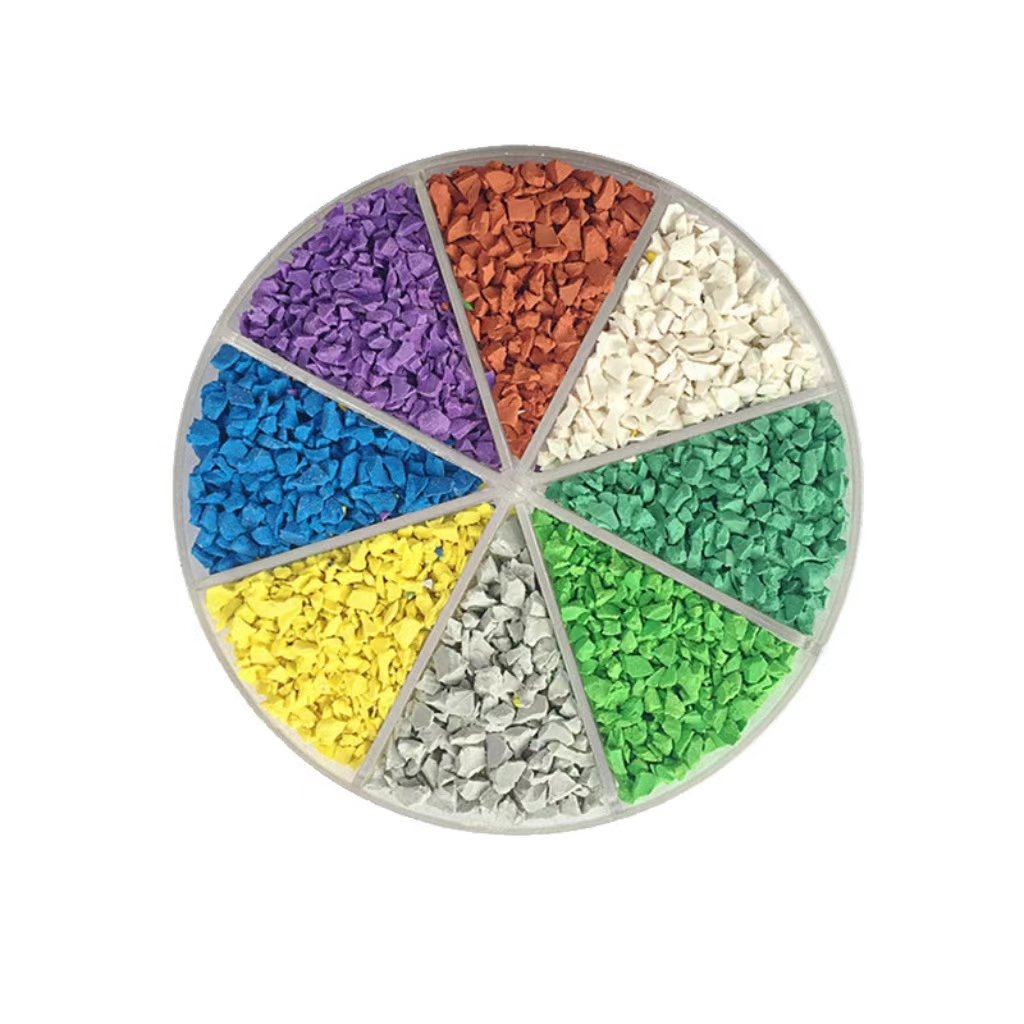
For most sports flooring projects, EPDM granules are the better choice — offering proven UV durability, wider color range, lower cost, and global supplier availability. TPV granules are worth specifying only when full recyclability or a sustainability certification is a hard project requirement. Here is the complete comparison.
TPV price premium
over EPDM
EPDM proven
outdoor lifespan
TPV recyclability
advantage
EPDM granules are better for the majority of sports flooring applications — playgrounds, running tracks, MUGA courts, and gym floors — due to lower cost, longer proven track record, and wider global availability. Choose TPV granules only when the project requires full end-of-life recyclability or a green building certification (BREEAM, LEED) mandates it.
For a full overview of EPDM granule specifications and supplier selection, see our EPDM Granules Complete Buyer’s Guide.
What Are EPDM and TPV Granules?
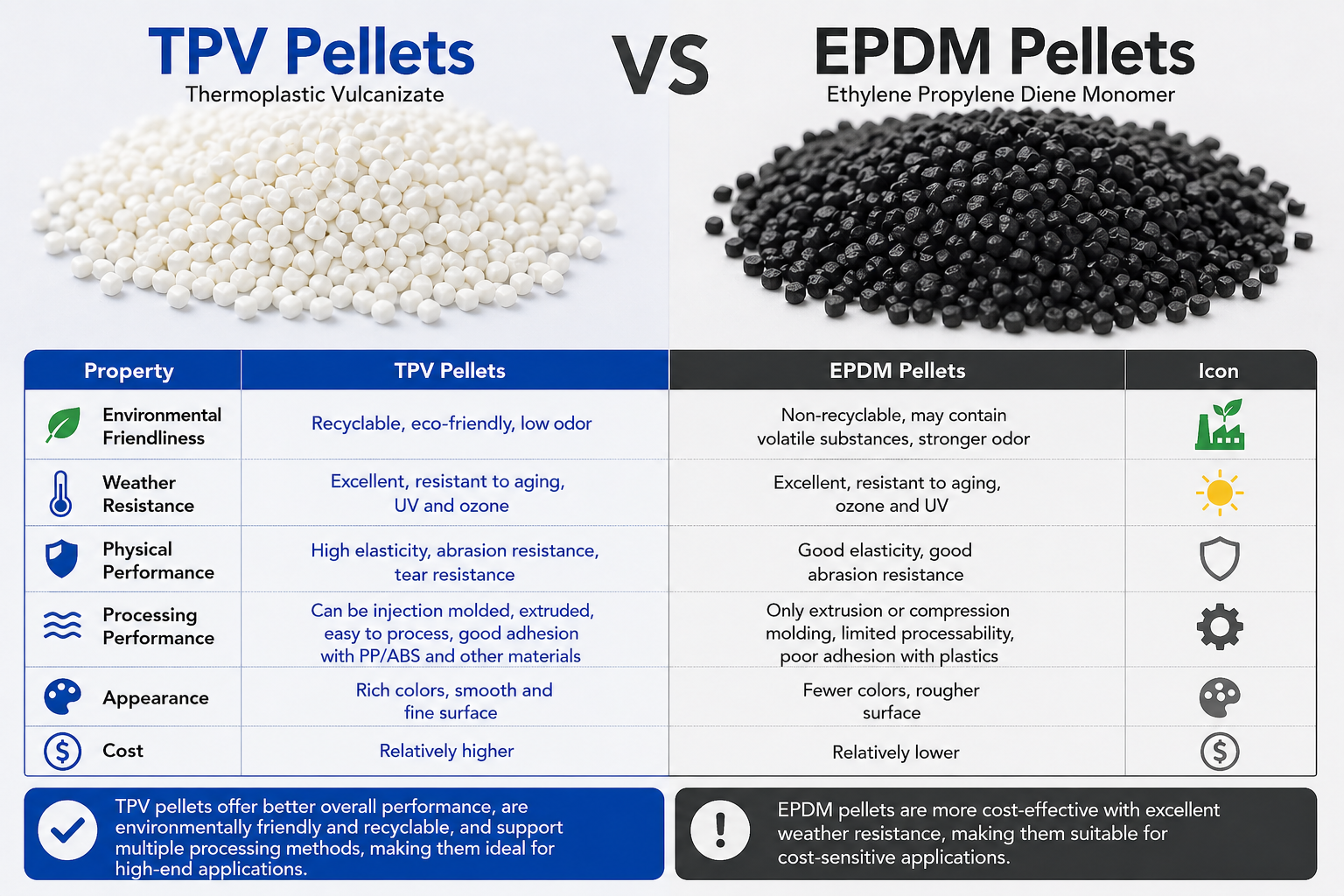
EPDM (Ethylene Propylene Diene Monomer) is a thermoset synthetic rubber that has been the global standard for sports and playground surfacing for over 30 years. Once vulcanized, the material cannot be re-melted — making it highly stable but not recyclable at end of life.
TPV (Thermoplastic Vulcanizate) is a newer class of elastomer that combines rubber-like performance with thermoplastic processability. Because it can be re-melted and reprocessed, TPV granules are fully recyclable — a significant advantage for sustainability-focused projects. However, the material costs more to produce and has a shorter field history than EPDM.
Both materials are used in the same way: bound with polyurethane (PU) binder to create wet-pour poured-in-place surfaces for playgrounds, running tracks, sports courts, and indoor gym flooring.
EPDM vs TPV: Full Head-to-Head Comparison
| Factor | EPDM Granules | TPV Granules | Winner |
|---|---|---|---|
| Cost | $0.60–$2.00/kg | $1.20–$3.50/kg | ✅ EPDM |
| UV Resistance | Very high — 30+ yr track record | High — 5–10 yr field data | ✅ EPDM |
| Color Vibrancy | Excellent — integral pigment | Excellent — integral pigment | 🤝 Equal |
| Color Range | 20–100+ standard colors | 10–40 standard colors | ✅ EPDM |
| Temperature Range | −40°C to +120°C | −50°C to +135°C | ✅ TPV (marginal) |
| Recyclability | Not recyclable (thermoset) | Fully recyclable | ✅ TPV |
| Supplier Availability | Global — hundreds of suppliers | Limited — fewer producers | ✅ EPDM |
| EN 1177 Compliance | Widely certified | Certified (fewer labs) | ✅ EPDM |
| Chemical Safety (PAH/REACH) | Certified (virgin) | Certified | 🤝 Equal |
| Installation Method | Standard PU binder system | Standard PU binder system | 🤝 Equal |
| Green Certification Support | Partial (low VOC, no heavy metals) | Strong (recyclable + low footprint) | ✅ TPV |
Which Is Better for Each Sports Flooring Application?
EPDM is the better choice. The EN 1177 certification database for EPDM is far more extensive, procurement teams are familiar with it, and the cost advantage means more budget is available for equipment or additional surfacing area. TPV can be specified for premium eco-label projects but adds cost without a meaningful safety benefit over certified EPDM.
Recommended: EPDM 1–3mm
EPDM is the standard. World Athletics (IAAF) certified tracks overwhelmingly use EPDM. The material’s consistent energy return, proven durability under spike traffic, and wide availability from certified manufacturers make it the de facto choice. TPV running track systems exist but remain rare and significantly more expensive.
Recommended: EPDM 1–3mm
EPDM is preferred. MUGA courts prioritize slip resistance, color accuracy for line markings, and durability. EPDM’s wider color range makes it easier to specify exact line marking colors. TPV MUGA systems are available but not yet standard in most markets.
Recommended: EPDM 2–4mm
Either works well indoors. In indoor environments, UV exposure is minimal, so the UV resistance advantage of EPDM matters less. If the gym has a sustainability certification target (e.g., BREEAM Excellent, LEED Platinum), TPV’s recyclability may contribute meaningful credits. Otherwise, EPDM remains the cost-effective default.
EPDM for standard / TPV for eco-certified
TPV has a genuine advantage here. If your project is targeting BREEAM Outstanding, LEED Platinum, or a national green building certification that awards points for end-of-life recyclability, TPV granules are the correct specification. The premium is justified by the certification value it contributes.
Recommended: TPV
Cost Comparison: What Does the Price Difference Actually Mean?
The cost gap between EPDM and TPV is significant and affects total project budgets materially. Here is a real-world calculation for a typical 500m² playground wear layer (13mm depth):
| Item | EPDM Granules | TPV Granules |
|---|---|---|
| Granule consumption (500m² × 13mm) | ~3,250 kg | ~3,250 kg |
| Granule price (mid-range, Asia origin) | $1.20/kg | $2.00/kg |
| Granule material cost | $3,900 | $6,500 |
| PU binder (14–16%, ~520kg) | ~$1,300 | ~$1,300 |
| Total material cost (wear layer) | $5,200 | $7,800 |
| Cost premium for TPV | — | +$2,600 (+50%) |
On a standard 500m² playground, choosing TPV over EPDM adds approximately $2,500–$3,500 to material costs alone, before installation labor. For most public sector and commercial projects without a specific sustainability certification requirement, this premium is difficult to justify on performance grounds alone.
When Should You Specify TPV Instead of EPDM?
BREEAM, LEED, and equivalent certifications award credits for materials with documented end-of-life recyclability. TPV granules can contribute to these credits; EPDM cannot. If the certification target is part of your brief, TPV is worth the premium.
Valid Reason
Some corporate clients, international schools, and public bodies now mandate thermoplastic or recyclable surfacing materials as part of their procurement policy. If your client’s brief specifically requires recyclable surfacing, TPV is the correct answer.
Valid Reason
TPV’s lower cold temperature rating (−50°C vs EPDM’s −40°C) gives it a marginal advantage in arctic or subarctic climates. For most projects globally, this is not a relevant differentiator.
Marginal Reason
For premium private developments, luxury resorts, or international schools where the project narrative includes sustainability as a selling point, TPV’s recyclability can be a marketing advantage worth the additional cost.
Optional Reason
Frequently Asked Questions
Verdict: EPDM for Most Projects, TPV When Recyclability Matters
The choice between EPDM and TPV granules comes down to one question: does your project have a recyclability or green certification requirement? If yes, TPV is worth the premium. If no, EPDM delivers better value, broader color choice, deeper supplier availability, and a longer proven track record — making it the right choice for the vast majority of sports flooring projects globally.
Article #3 · Series: best EPDM granules supplier · ← Back to Pillar Guide
Need Certified EPDM Granules for Your Sports Flooring Project?
We supply virgin EPDM granules with full EN 1177, REACH, and PAH documentation. Free physical samples available. Competitive FOB pricing from 500kg per color.