

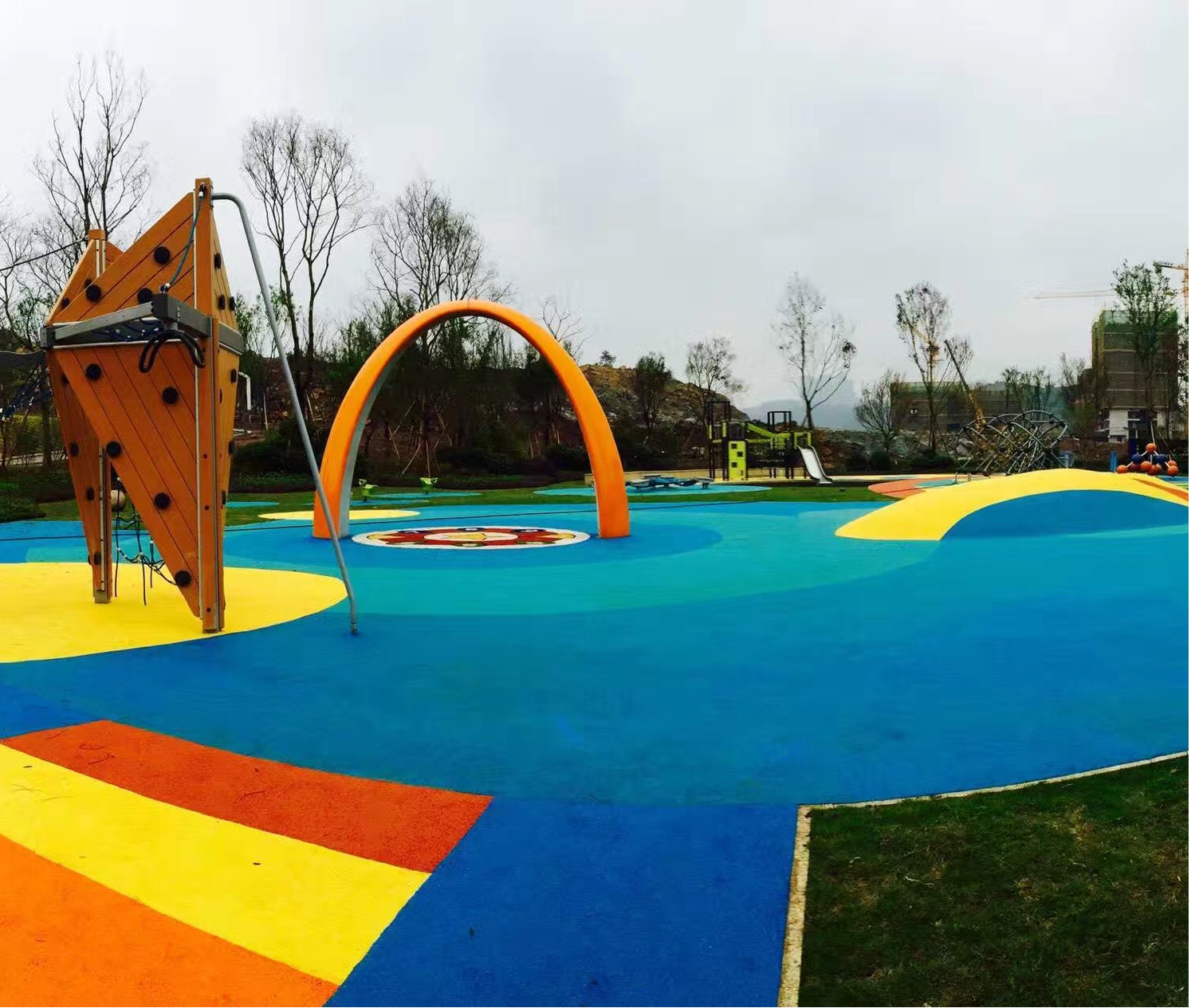
Virgin EPDM granules are safe for children’s playgrounds — but recycled EPDM blends and recycled SBR rubber present real chemical safety risks that every buyer must understand before specifying. This guide explains the difference, what the science says, and how to ensure the surface you install is genuinely child-safe.
PAH compounds tested
under ZEK 01.4-08
Virgin EPDM content
required for safety compliance
Mandatory safety standard
for playground surfacing
Virgin EPDM granules: yes, safe — when certified to EN 1177, REACH, and PAH (ZEK 01.4-08) standards, virgin EPDM granules are non-toxic and safe for children’s skin contact. Recycled EPDM blends or recycled SBR rubber: potentially unsafe — recycled tire-derived rubber may contain PAH compounds, heavy metals, and other substances at levels that exceed child safety limits. Never use uncertified recycled rubber on a children’s playground.
For full supplier selection guidance and certification requirements, see our EPDM Granules Complete Buyer’s Guide.
Virgin EPDM vs Recycled Rubber: The Safety Difference
The confusion around EPDM granule safety often comes from conflating two very different materials: virgin EPDM (freshly manufactured synthetic rubber) and recycled rubber (typically crumb rubber from shredded car tires, also known as SBR — Styrene-Butadiene Rubber). These are not the same material, and their safety profiles are very different.
| Factor | Virgin EPDM Granules | Recycled SBR / Tire Crumb | Recycled EPDM Blend |
|---|---|---|---|
| PAH Content | ✅ Below ZEK 01.4-08 limits | 🚩 May exceed limits | ⚠ Depends on blend ratio |
| Heavy Metals | ✅ Not present (no tire-derived content) | 🚩 Zinc, lead possible | ⚠ Depends on source |
| VOC Emissions | ✅ Low — REACH compliant | ⚠ Variable — may off-gas in heat | ⚠ Variable |
| EN 1177 Certification | ✅ Widely certified | ⚠ Available but less common | ⚠ Must verify per product |
| REACH Compliance | ✅ Standard for virgin EPDM | ⚠ Not always available | ⚠ Must verify |
| Child Skin Contact | ✅ Safe when certified | 🚩 Not recommended for wear layer | ⚠ Only if PAH certified |
| Appropriate for Playground Wear Layer | ✅ Yes | 🚩 No — base layer only | ⚠ Only if fully certified |
What Are PAH Compounds and Why Do They Matter?
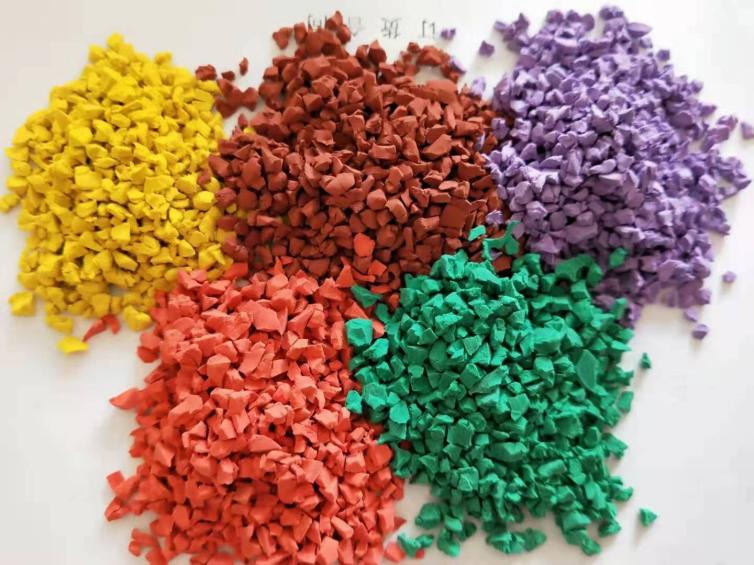
Polycyclic Aromatic Hydrocarbons (PAHs) are a group of chemical compounds that form during the incomplete combustion of organic materials — including the petroleum products used to make car tires. They are classified as carcinogenic, mutagenic, and toxic to reproduction by the EU and are subject to strict limits in consumer products with skin contact.
Recycled tire rubber (SBR crumb) can contain elevated PAH levels because car tires are manufactured with petroleum-derived oils that remain in the rubber after shredding. Children playing on a surface made with high-PAH recycled rubber are exposed through skin contact, hand-to-mouth behavior, and inhalation of rubber dust — all of which are elevated risk pathways for young children.
The ZEK 01.4-08 standard (referenced in EU REACH regulation) sets limits for 18 individual PAH compounds in rubber products with skin contact. The most restrictive limits apply to products intended for children — benzo[a]pyrene, for example, must be below 1 mg/kg. A full 18-PAH test from an accredited laboratory is the only way to confirm compliance. Supplier declarations alone are not sufficient.
The Role of Recycled SBR in Playground Systems
This is where nuance matters: recycled SBR rubber does have a legitimate role in playground surfaces — in the base layer, not the wear layer.
In a standard two-layer wet-pour playground system, the base cushion layer (35–100mm deep) is typically made from recycled SBR granules bound with PU binder. This layer is buried under the EPDM wear layer and has no direct skin contact. At this depth and with this covering, the PAH content of the SBR base layer is not a direct child safety concern — it is separated from children by 12–15mm of virgin EPDM.
| Layer | Material | Skin Contact? | PAH Risk? | Verdict |
|---|---|---|---|---|
| Wear Layer (top 12–15mm) | Virgin EPDM granules | ✅ Direct | ✅ Low — certified virgin | Safe when certified |
| Base / Cushion Layer (35–100mm) | Recycled SBR rubber | None — buried | Lower risk — no direct contact | Acceptable in base layer |
The real danger is not SBR in the base layer — it is SBR secretly blended into the EPDM wear layer. Some suppliers reduce costs by mixing recycled SBR content into their EPDM granule product without disclosure. This produces granules that look identical to virgin EPDM but contain elevated PAH levels. The only protection is a PAH test report from an accredited lab issued specifically for the product you are buying.
What “Recycled EPDM” Actually Means
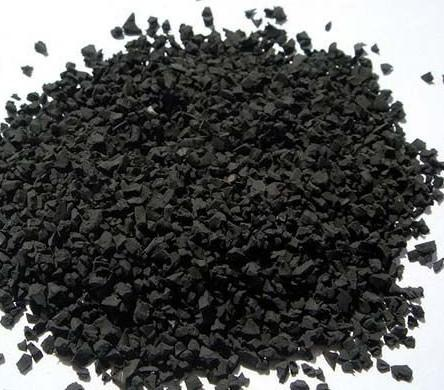
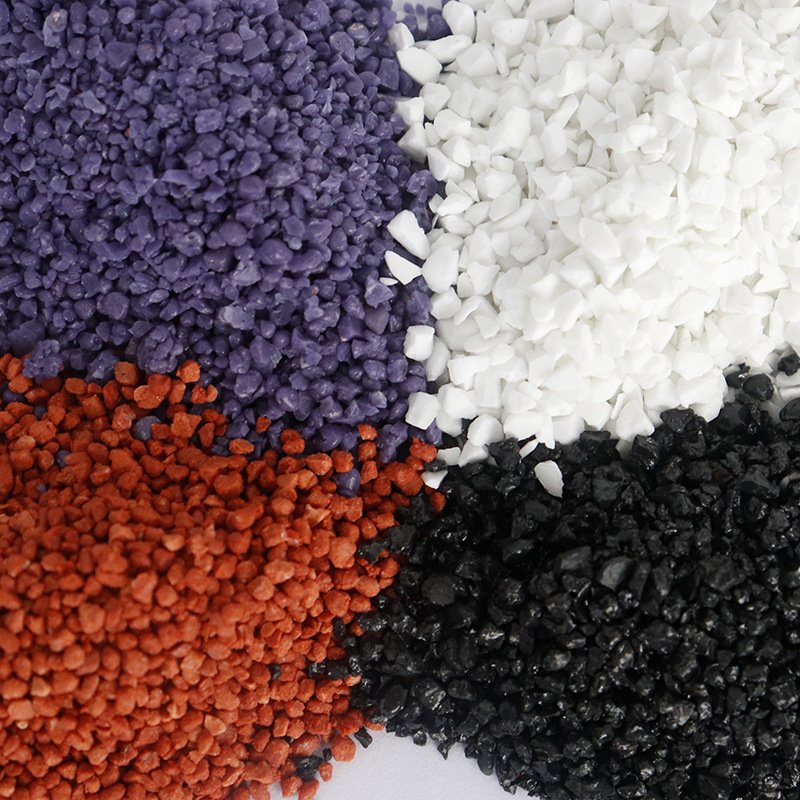
Some suppliers market “recycled EPDM” granules — made from post-production EPDM waste rather than virgin polymer. This is different from tire crumb SBR. Recycled EPDM from clean EPDM production waste can be acceptable if it carries full PAH and REACH certification, but it presents two practical problems:
Recycled EPDM production waste comes in mixed colors. Even when re-pigmented, the base color variation means that color accuracy and batch-to-batch consistency are significantly worse than virgin EPDM. For any project with specific color requirements or multi-color designs, recycled EPDM is not a viable option.
Significant Quality Issue
Unless the recycled EPDM source is tightly controlled and documented, there is a risk that non-EPDM rubber content — including SBR or other compounds — is present in the waste stream. Without full PAH testing per batch, this risk cannot be managed. Reputable suppliers of recycled EPDM test every production batch — request batch-specific PAH reports, not product-level reports.
Certification Required Per Batch
How to Confirm Your EPDM Granules Are Child-Safe
Ask the supplier to confirm in writing that the product contains 100% virgin EPDM polymer with no recycled SBR content. This should be a formal document, not just an email statement. Legitimate manufacturers provide this as standard documentation alongside their product datasheets.
The PAH test report must be issued by an ISO/IEC 17025 accredited laboratory, must cover all 18 PAH compounds tested under ZEK 01.4-08, and must specifically identify the product you are buying (color, granule size, material type). A report for one color does not cover other colors — request color-specific reports.
A current REACH Substances of Very High Concern (SVHC) declaration confirms that no restricted chemicals are present above threshold limits. This should be updated annually or whenever the product formulation changes. Check the declaration date — documents older than 18 months should be refreshed.
EN 1177 impact attenuation certification confirms the surface system is safe from a fall injury perspective. While not directly a chemical safety certification, it confirms the surface has been tested by an accredited body — an important quality signal. Verify the report covers the specific granule + binder + depth system you are installing.
Before bulk order, request 200–500g physical samples. A simple quality indicator: place the sample on white paper and check for color consistency and absence of visible impurities. A strong chemical odor on fresh EPDM granules may indicate high solvent content — request a VOC emission test if odor is present.
Frequently Asked Questions
Summary: Child Safety on Playground Surfaces
The safety of EPDM granules for children comes down to one thing: virgin content and verified certification. Virgin EPDM granules with current EN 1177, REACH, and PAH documentation are safe. Uncertified recycled rubber blends — whether called “EPDM” or not — carry a risk that no responsible buyer should accept for a children’s playground.
Article #8 · Series: best EPDM granules supplier · ← Back to Pillar Guide
Supply Safe, Certified EPDM Granules for Your Playground
We supply 100% virgin EPDM granules with full EN 1177, REACH, PAH, and material composition documentation. Free physical samples and full certification package available before order.