

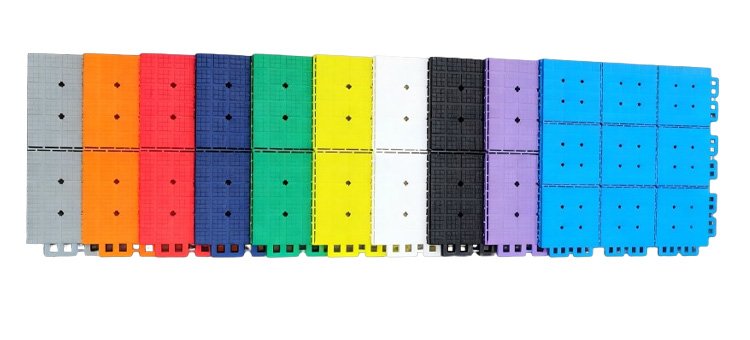
Virgin EPDM interlocking rubber tiles are safe for children when certified to PAH (ZEK 01.4-08), REACH, and EN 1177 standards. The critical distinction is between virgin EPDM — which contains no recycled tire content — and uncertified or recycled-blend rubber tiles, which may contain PAH compounds at levels harmful to children. This guide explains the science, the certifications, and exactly what to ask for.
under ZEK 01.4-08
required for safe certification
for child contact surfaces
Quick Answer Virgin EPDM interlocking tiles: safe — when certified to EN 1177, PAH (ZEK 01.4-08), and REACH standards, virgin EPDM tiles are non-toxic and safe for children’s direct skin contact.
Recycled rubber or uncertified tiles: verify carefully — tiles containing recycled tire rubber (SBR) may contain PAH compounds at levels that exceed child safety limits. Never use uncertified rubber tiles on a children’s playground or in any area with prolonged child skin contact.
For the full buyer’s guide including pricing, installation, and supplier selection, see our EPDM Interlocking Rubber Tiles Complete Buyer’s Guide.
Why Child Safety Starts with Material Composition
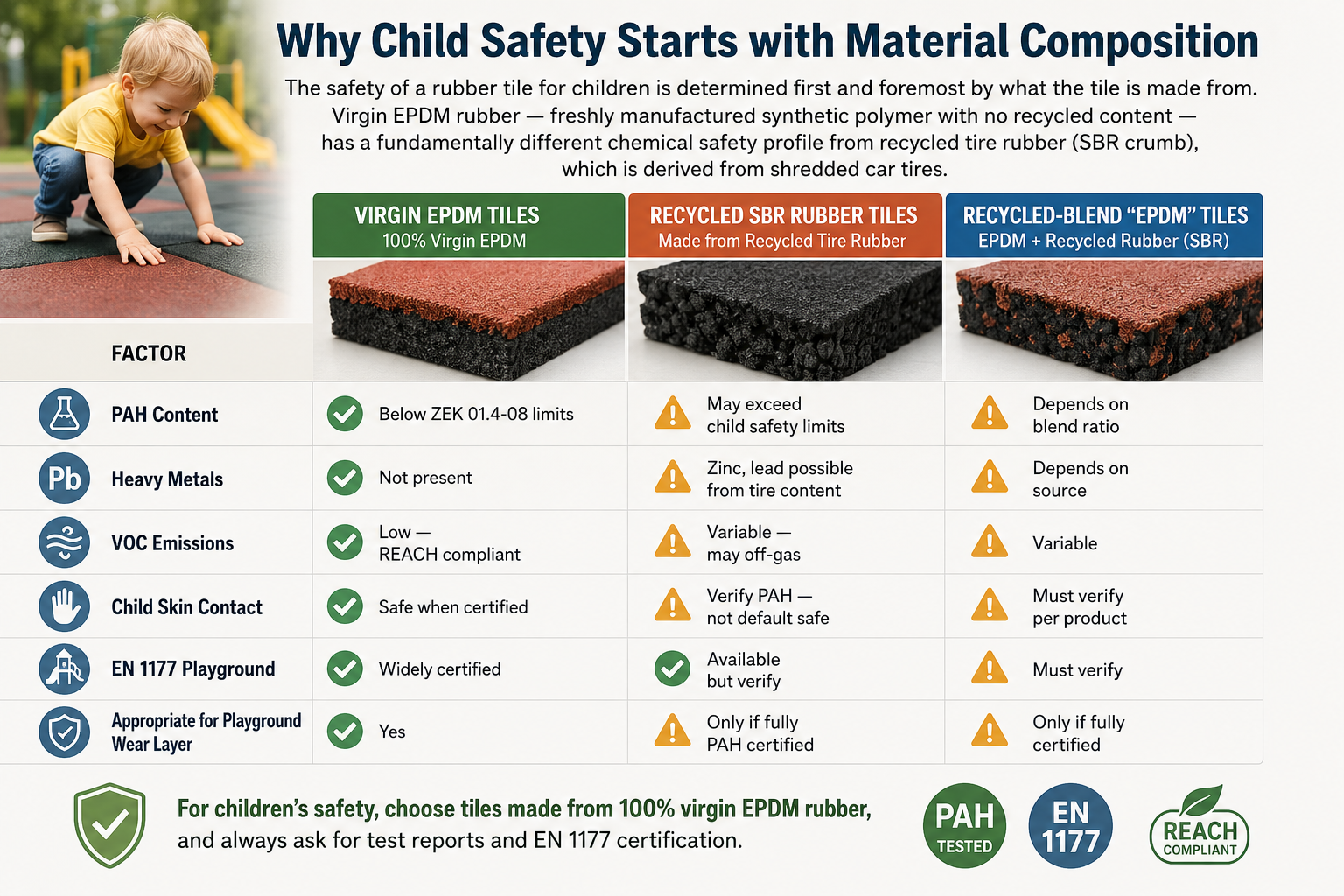
The safety of a rubber tile for children is determined first and foremost by what the tile is made from. Virgin EPDM rubber — freshly manufactured synthetic polymer with no recycled content — has a fundamentally different chemical safety profile from recycled tire rubber (SBR crumb), which is derived from shredded car tires.
| Factor | Virgin EPDM Tiles | Recycled SBR Rubber Tiles | Recycled-Blend “EPDM” Tiles |
|---|---|---|---|
| PAH Content | ✅ Below ZEK 01.4-08 limits | ⚠ May exceed child safety limits | ⚠ Depends on blend ratio |
| Heavy Metals | ✅ Not present | ⚠ Zinc, lead possible from tire content | ⚠ Depends on source |
| VOC Emissions | ✅ Low — REACH compliant | ⚠ Variable — may off-gas | ⚠ Variable |
| Child Skin Contact | ✅ Safe when certified | ⚠ Verify PAH — not default safe | ⚠ Must verify per product |
| EN 1177 Playground | ✅ Widely certified | ✅ Available but verify | ⚠ Must verify |
| Appropriate for Playground Wear Layer | ✅ Yes | ⚠ Only if fully PAH certified | ⚠ Only if fully certified |
What Are PAH Compounds and Why Do They Matter for Children?
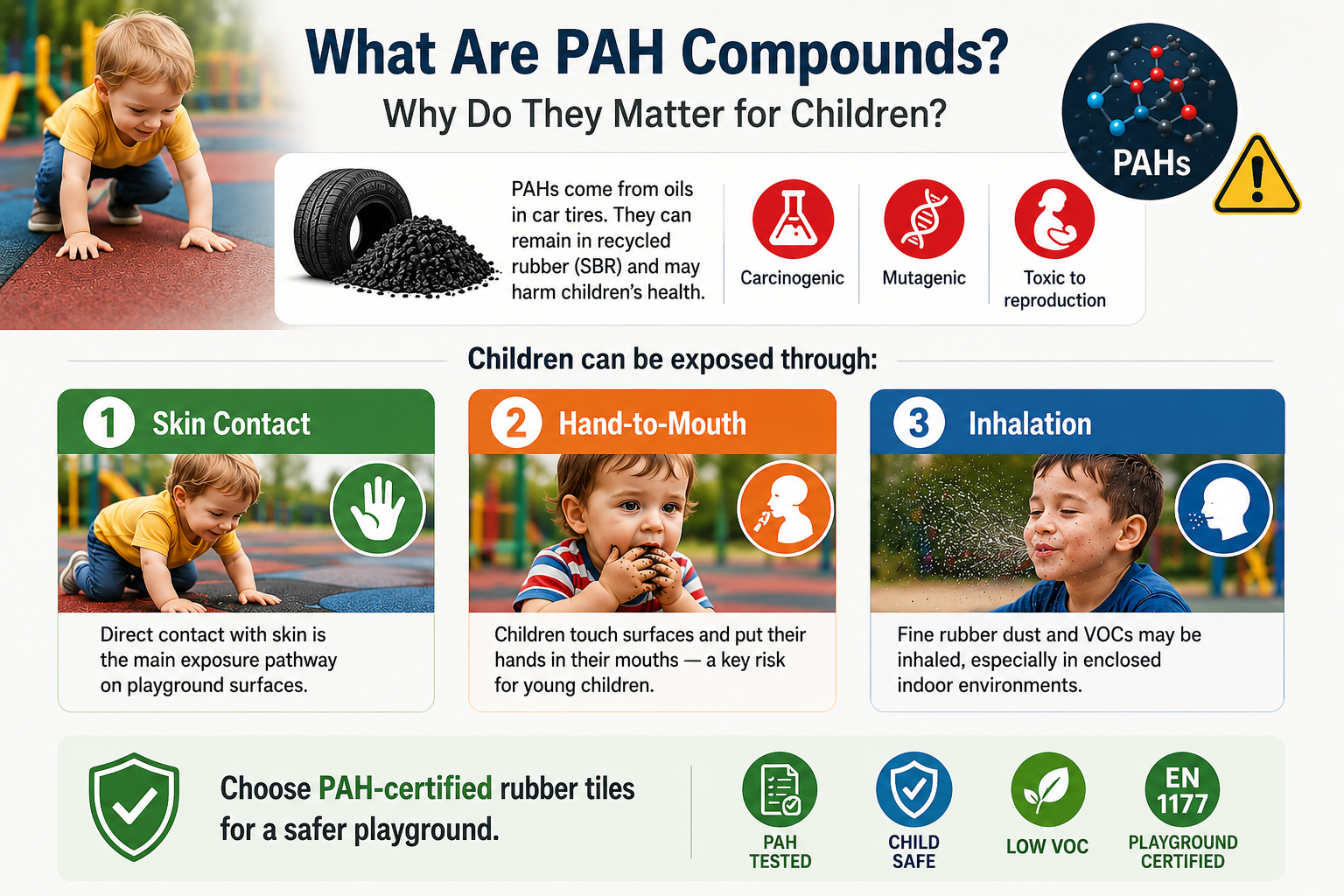
Polycyclic Aromatic Hydrocarbons (PAHs) are a group of chemical compounds formed during the incomplete combustion of organic materials — including the petroleum-based oils used in car tire manufacturing. They are classified as carcinogenic, mutagenic, and toxic to reproduction by the EU, and are subject to strict limits in consumer products with skin contact.
Car tires contain residual processing oils that remain in the rubber after the tire is shredded into crumb rubber (SBR). These oils can contain elevated PAH levels. Children playing on PAH-contaminated surfaces face exposure through:
Children crawling, sitting, and playing directly on rubber surfaces have prolonged skin contact — the primary PAH exposure pathway for playground surfaces. Young children spend significantly more time in direct contact with flooring surfaces than adults, and their skin surface area relative to body weight is higher — both factors that increase relative exposure.
Primary Risk Pathway
Young children frequently touch surfaces and then put their hands in their mouths — a normal developmental behavior that creates an ingestion exposure pathway for surface contaminants. For playground surfaces where toddlers and young children play, this pathway makes PAH content in the surface material a genuine safety consideration, not just a regulatory formality.
High Risk — Young Children
In hot weather, rubber surfaces can emit low levels of VOCs, and fine rubber particles generated by surface wear can become airborne. While this is a minor exposure pathway compared to direct contact, it becomes relevant in enclosed indoor play environments or for children spending extended periods on rubber surfaces — such as sensory play rooms and indoor playgrounds.
Minor — Outdoor Use
The Three Certifications That Confirm Child Safety
The most directly relevant child safety certification. ZEK 01.4-08 sets individual limits for all 18 regulated PAH compounds in rubber products with skin contact. The most restrictive limits apply to products for children — benzo[a]pyrene, for example, must be below 1 mg/kg. Request a full 18-PAH test report from an ISO/IEC 17025 accredited laboratory, color-specific for every tile color in your project. A report for one color does not cover other colors even from the same product line.
Confirms no Substances of Very High Concern — including certain PAHs, heavy metals, and plasticisers — are present above EU threshold limits. Request a current Declaration of Conformity updated to the latest SVHC candidate list. This document provides broader chemical safety assurance beyond the 18 PAH compounds covered by ZEK 01.4-08.
Written confirmation from the manufacturer of 100% virgin EPDM polymer content with no recycled SBR content. This is the document that confirms the tiles have no inherent PAH risk from tire-derived compounds. Virgin EPDM with no recycled content cannot contain tire-derived PAHs by definition — the PAH test then serves as verification of the pigment and additive system rather than the base polymer.
Confirms impact attenuation performance for the specific tile product and thickness. While not a chemical safety certification, EN 1177 compliance confirms the tile has been tested by an accredited body — an important quality signal. For playground applications, all four documents are required; for other child contact applications (indoor play, sensory areas), the first three are sufficient.
How to Verify Your EPDM Tiles Are Child-Safe
Full 18-PAH test report from ISO/IEC 17025 accredited lab — color specific
REACH SVHC Declaration of Conformity — current date
Material composition certificate confirming 100% virgin EPDM
EN 1177 system test report (for playground applications)
Physical tile sample — inspect for odor and visual consistency
PAH report is not color-specific or comes from unaccredited lab
Supplier cannot provide material composition certificate
Price is significantly below market — likely recycled blend
Certifications only available “after order” — never acceptable
Sample has strong persistent chemical or tire odor
Frequently Asked Questions
Summary: Child Safety Checklist for EPDM Interlocking Tiles
Article #8 · Series: best EPDM interlocking rubber tiles · ← Back to Buyer’s Guide
Child-Safe Certified EPDM Interlocking Tiles
We supply 100% virgin EPDM interlocking tiles with full PAH, REACH, EN 1177, and material composition documentation. Free physical samples. Healthcare specification packages available.
Request Child Safety Documentation Read the Full Buyer’s Guide