

EPDM Granules for Hospital & Sensory Play Areas: Specification Guide
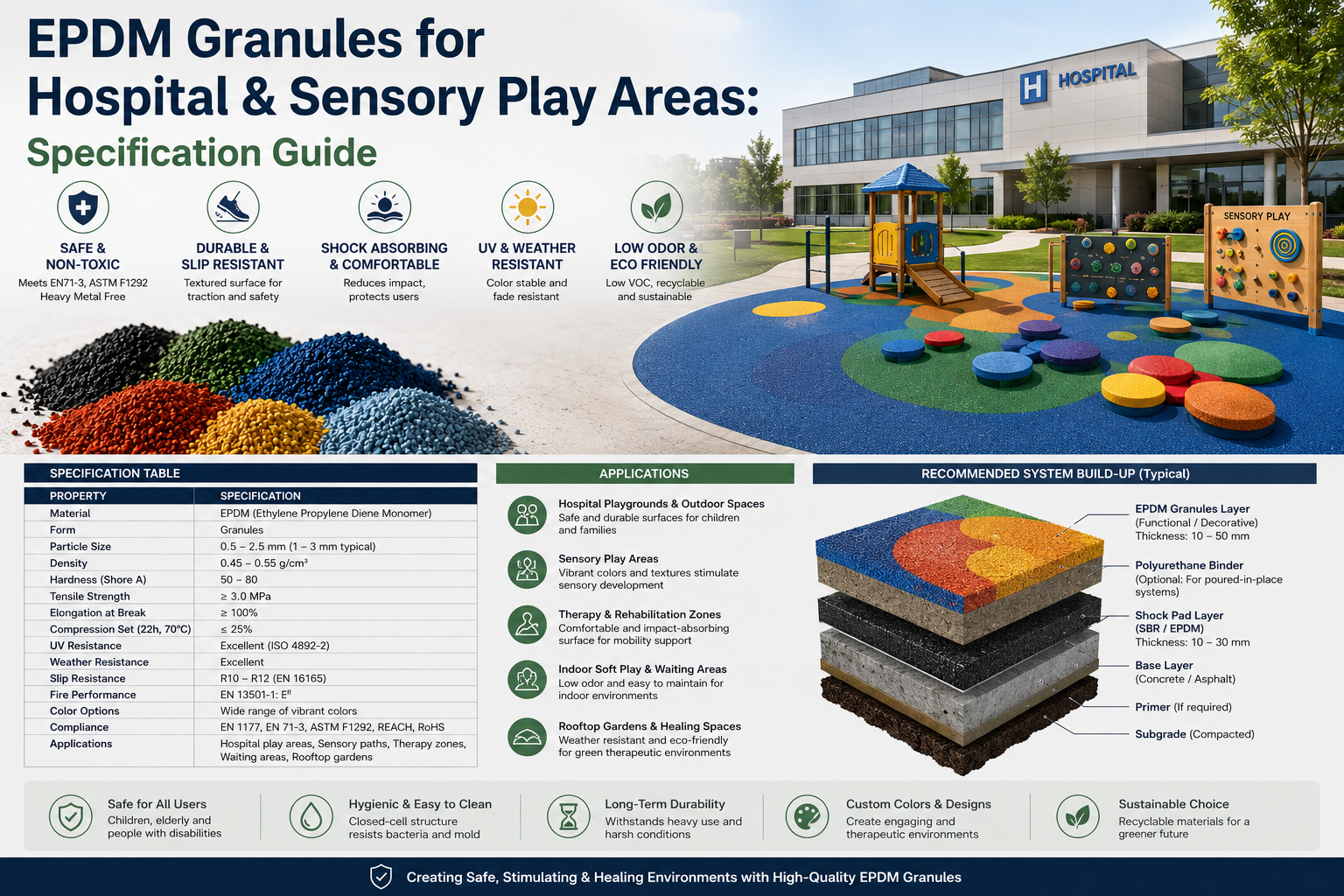
Hospital playgrounds, sensory gardens, rehabilitation outdoor areas, and therapeutic play spaces have the strictest specification requirements of any EPDM application. Chemical safety, surface smoothness, accessibility compliance, and calming color palettes are all critical — and getting any one of them wrong creates a safety or therapeutic failure. This guide covers the exact specification approach for healthcare and sensory environments.
For hospital and sensory play areas, specify 1–2mm fine virgin EPDM granules (the finest grade available) for the smoothest possible surface finish. Chemical safety is paramount — EN 1177, PAH (ZEK 01.4-08), REACH, and RoHS certification are all required. Color selection should follow therapeutic design principles — soft blues, greens, and muted earth tones rather than high-contrast primaries. Wheelchair accessibility requires careful surface levelness specification and a minimum DDA-compliant threshold design.
For full EPDM granule specifications and supplier guidance, see our EPDM Granules Complete Buyer’s Guide.
Why EPDM Is the Preferred Choice for Healthcare Environments
Healthcare and sensory play environments require a surfacing material that satisfies medical-grade safety standards while delivering sensory and therapeutic benefits. EPDM wet-pour excels in this context because it is the only surfacing system that simultaneously meets impact safety, chemical safety, accessibility, and therapeutic design requirements in a single material.
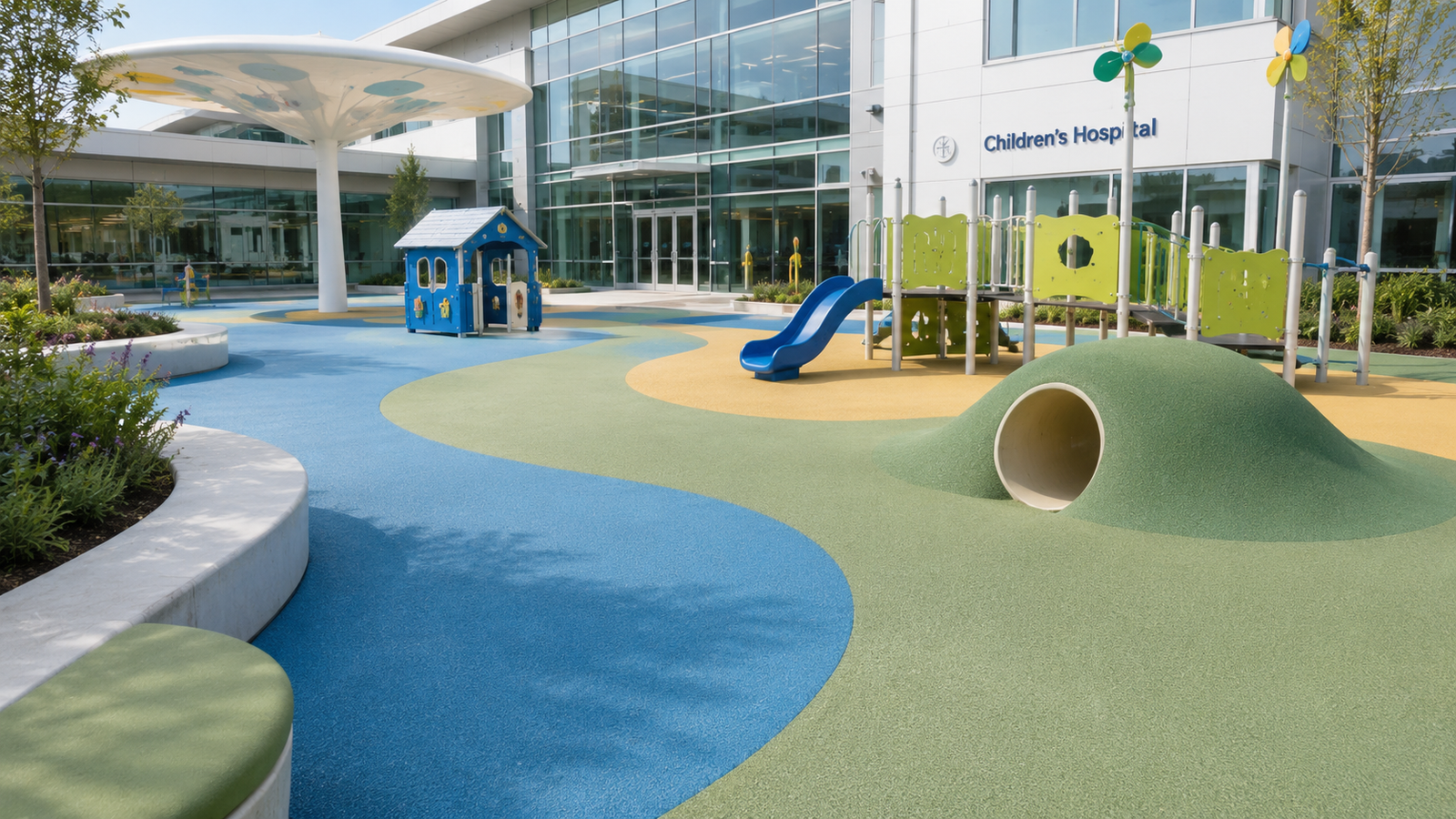
Highest chemical safety requirements. Children with compromised immune systems. EN 1177 mandatory. 1–2mm fine EPDM for smooth wheelchair access. Calming color palette essential.
1–2mm fine EPDM
Full EN 1177 + PAH + REACH + RoHS
Soft therapeutic colors
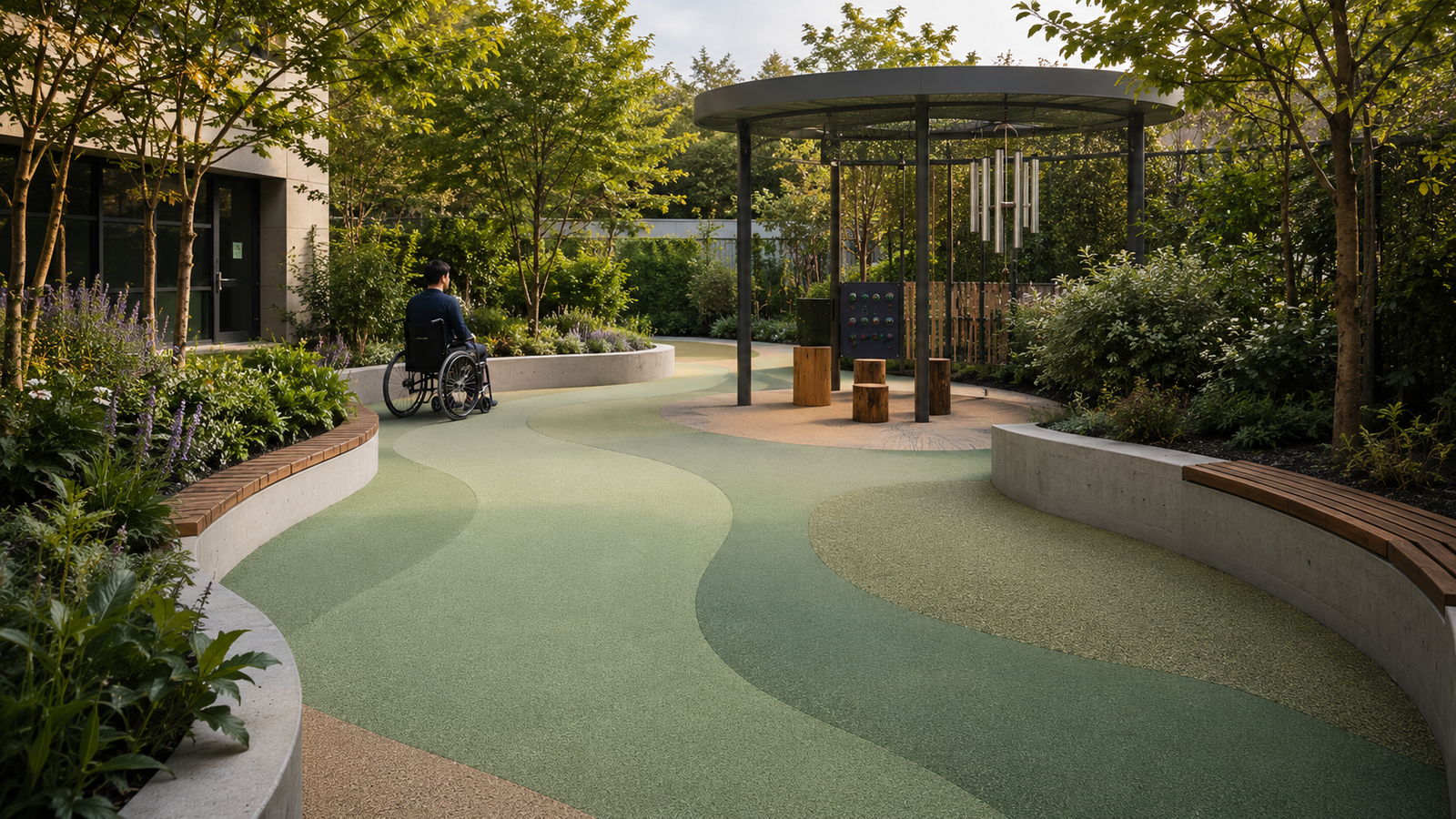
Therapeutic outdoor space for autism, dementia, or mental health users. Color, texture, and spatial design all contribute to therapeutic outcomes. Smooth EPDM surface supports sensory exploration.
1–2mm fine EPDM
Multi-texture zoning
Calm, nature-inspired colors
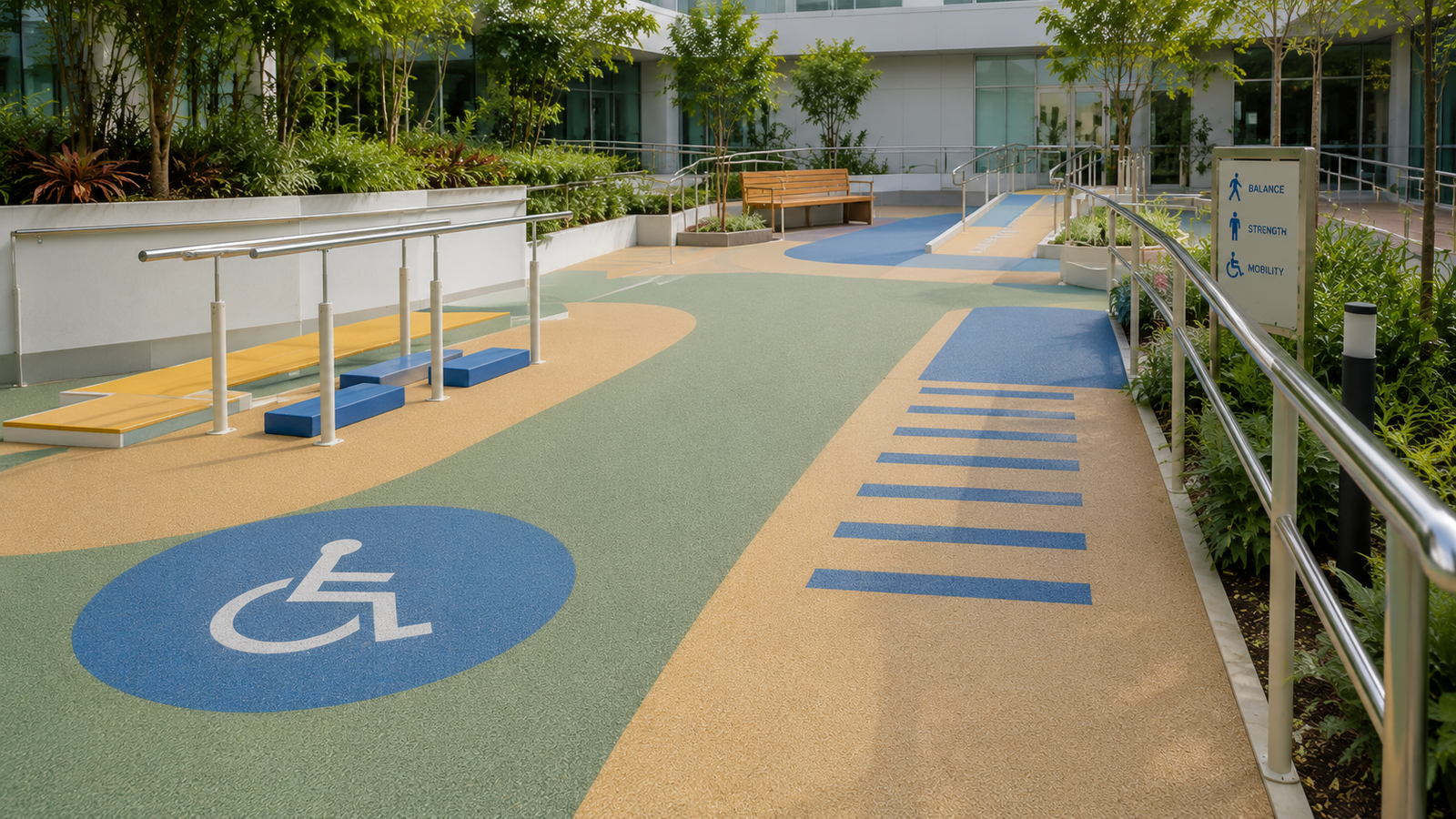
Used by patients relearning mobility. Wheelchair and walking frame access critical. Even, level surface with no joints or lips. Slip resistance when wet a priority.
1–3mm EPDM bound system
DDA / accessibility compliant install
Non-slip texture
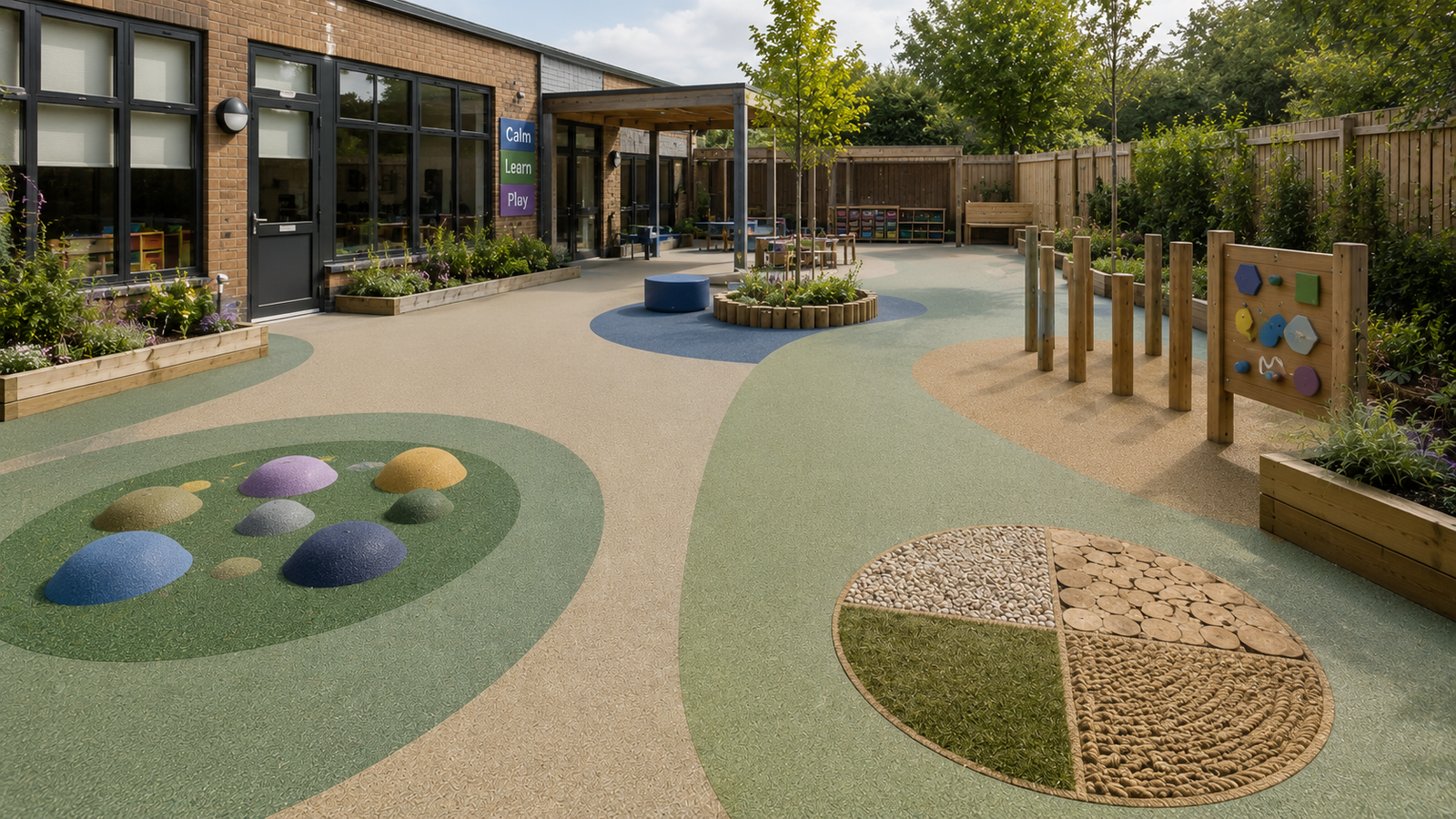
Special Educational Needs and Disabilities schools. Sensory design with tactile zones. Color used as a therapeutic and navigational tool. All surfaces must meet EN 1177 and full chemical certification.
1–2mm fine EPDM
Therapeutic color zones
Full EN 1177 + PAH certification
Technical Specification for Healthcare & Sensory Environments
| Parameter | Standard Playground | Hospital / Sensory Play | Reason for Difference |
|---|---|---|---|
| Granule size | 1–3mm | 1–2mm fine | Smoother surface for wheelchair access and barefoot sensory contact |
| PU binder ratio | 14–16% | 16–18% | Finer granules need more binder; denser surface better for wheelchair rolling resistance |
| EN 1177 | Required | Required + re-tested annually | Healthcare settings have higher duty-of-care obligations |
| PAH testing | Required | Required per batch | Immunocompromised children have lower safe exposure thresholds |
| REACH | Required | Required | Standard for any EU installation |
| RoHS | Recommended | Required | Healthcare procurement standards demand it |
| Surface levelness | Standard install tolerance | ±3mm over 2m (DDA) | Wheelchair and walking frame access requires tighter flatness |
| Color selection | Any standard colors | Therapeutic palette only | High-contrast primaries can cause sensory overload in clinical environments |
Therapeutic Color Design for Sensory Environments
Color in healthcare and sensory environments is not decorative — it is functional. Research in environmental psychology consistently shows that color choices in therapeutic spaces affect mood, anxiety levels, orientation, and sensory processing in clinical populations. The following principles apply:
Accessibility Requirements for Healthcare EPDM Surfaces
EPDM wet-pour’s seamless, joint-free surface is inherently superior to paving or tiles for wheelchair access — there are no lips, joints, or level changes to impede wheel movement. The key installation requirement is tight flatness tolerance: ±3mm over 2 metres per BS 8300 / DDA guidelines. Specify this tolerance explicitly in your installation contract.
For healthcare environments, a Pendulum Test Value (PTV) of 36+ in wet conditions is the minimum requirement under UK Health Building Note guidance. Fine 1–2mm EPDM at correct binder ratio achieves this comfortably. Specify PTV testing as part of the installation handover documentation for healthcare projects.
Frequently Asked Questions
The material is identical — virgin EPDM granules — but the specification is tighter in three areas: granule size (1–2mm fine grade for smoother surface), chemical certification requirements (PAH per batch, RoHS required not just recommended), and installation tolerances (DDA-compliant flatness). The design approach also differs significantly — therapeutic color palettes and sensory zoning replace the vibrant multi-color designs typical of standard school playgrounds.
Yes — 100% virgin EPDM granules with current PAH (ZEK 01.4-08) and REACH certification are safe for immunocompromised children. The critical requirement is that the product is confirmed virgin EPDM with no recycled SBR content, and that PAH testing is conducted per batch rather than per product line. For NHS and major healthcare providers, request the most recent batch-specific PAH test report rather than a generic product certificate.
Yes — but the SBR base layer depth must be calculated specifically for the equipment’s Critical Fall Height, exactly as for standard playgrounds. In-ground trampolines typically require a 1.5–2.0m CFH rating around the perimeter, which requires an 80–100mm SBR base layer. Always calculate CFH requirements from actual equipment specifications and confirm with a certified EN 1177 installer before specifying base depths.
NHS procurement specifications for outdoor surfaces typically require: EN 1177:2018 system certification; PAH testing to ZEK 01.4-08 per color per batch; REACH SVHC Declaration of Conformity; RoHS compliance declaration; ISO 9001 factory certification; DDA/BS 8300 accessible design compliance; PTV slip resistance test results at handover; and a 12-month installation warranty. Request all documentation before handover — not just at tender stage. Consult NHS Estates guidance for your specific trust’s procurement requirements.
Summary: Healthcare & Sensory EPDM Specification
We supply 1–2mm fine virgin EPDM granules with full EN 1177, PAH (per batch), REACH, and RoHS documentation. Therapeutic color range and custom palette matching available. Free physical samples.