

How to Choose EPDM Granules for Gym & Fitness Flooring: Buyer’s Guide
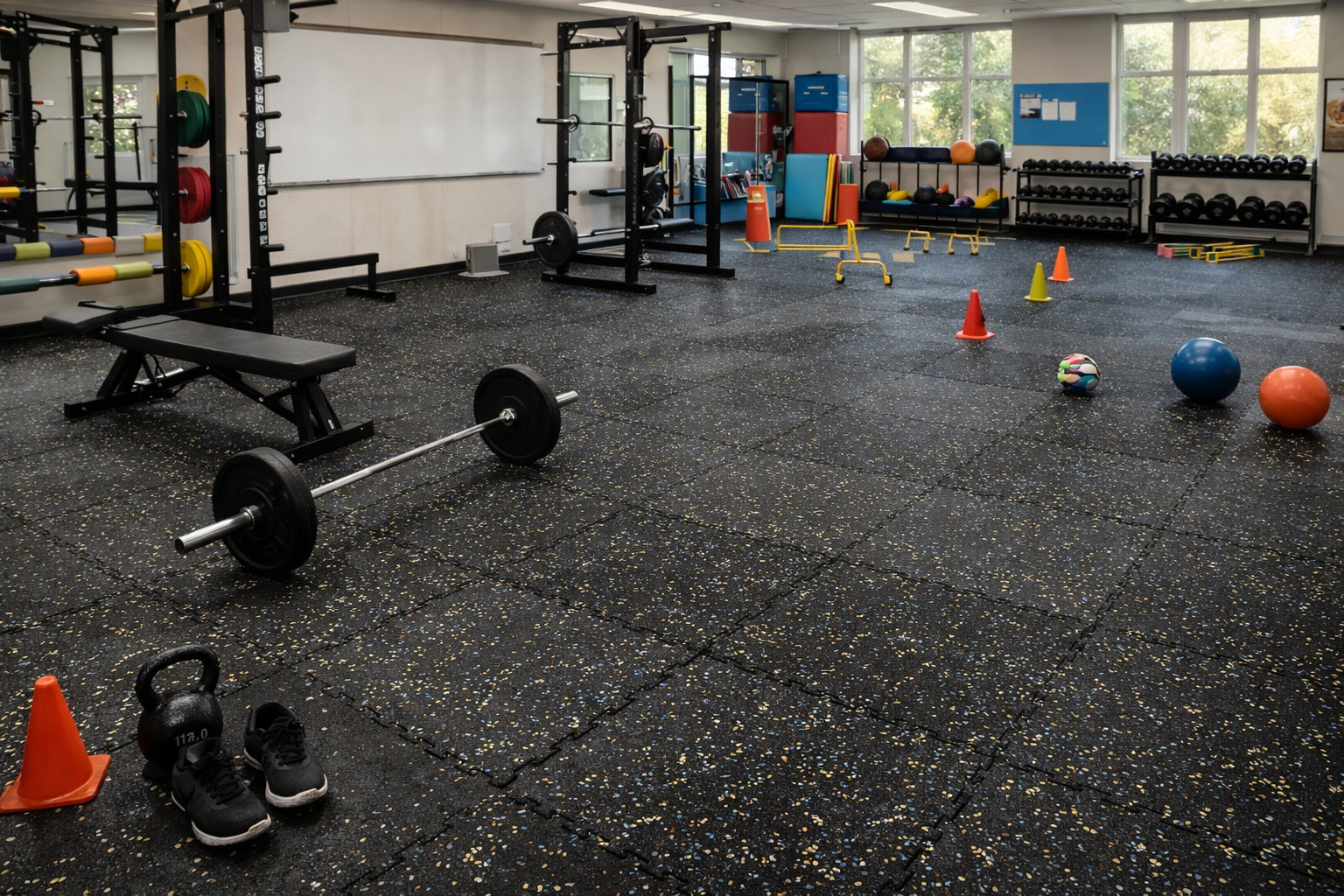
Gym and fitness flooring faces a unique combination of demands — heavy equipment impact, dropped weights, high foot traffic, chemical exposure from cleaning products, and often a requirement for a professional aesthetic. This guide covers the exact EPDM granule specification for every gym flooring application, from commercial fitness centres to outdoor exercise parks.
For gym and fitness flooring, specify 1–3mm virgin EPDM granules at 10–15mm wear layer depth, with a 40–60mm SBR base layer in high-impact zones (free weights, weightlifting platforms). Indoor gym floors are not exposed to UV — so color choice is purely aesthetic with no stability trade-off. Use a high-grade PU binder at 15–18% by weight for maximum durability under equipment loads. All materials should carry REACH compliance and PAH certification.
For full EPDM granule specifications, pricing, and supplier selection guidance, see our EPDM Granules Complete Buyer’s Guide.
EPDM Gym Flooring Applications
Gym and fitness facilities contain multiple distinct zones, each with different flooring demands. EPDM wet-pour is not always the right choice for every zone — but where impact absorption, seamless hygienic surfaces, and custom color zoning are required, it outperforms alternatives including rubber tiles and vinyl flooring.
Highest impact zone. Dropped weights and heavy foot traffic demand maximum impact absorption. Thick SBR base essential. EPDM wear layer protects subfloor and reduces noise.
1–3mm EPDM + 50–60mm SBR
High-grade PU binder 16–18%
Medium impact — treadmills, bikes, rowing machines. Thinner base layer adequate. Non-slip surface and anti-vibration properties key requirements.
1–3mm EPDM + 25–35mm SBR
Standard PU binder 14–16%
Low impact but high comfort requirement. Smooth 1–2mm EPDM finish preferred. Color zoning helps define activity areas within open-plan gym layout.
1–2mm EPDM + 15–20mm SBR
Smooth fine finish
Non-slip when wet is critical. Seamless EPDM surface prevents water and bacteria penetration. Chemical resistance to cleaning agents essential.
1–3mm EPDM, no base needed
Anti-slip texture finish
Full outdoor UV exposure — virgin EPDM UV stability matters here. Equipment impact zones need robust SBR base. Multi-color zoning popular for public outdoor gyms.
1–3mm EPDM + 40–60mm SBR
UV-stable colors
White / light pastels
Consistent energy return and spike resistance required. Same specification as outdoor athletics track wear layer. Dark red or blue standard colors.
1–3mm EPDM + 9–10mm SBR
Dark red / dark blue
EPDM Wet-Pour vs Rubber Tiles vs Vinyl: Gym Flooring Comparison
| Factor | EPDM Wet-Pour | Rubber Tiles (SBR) | Rubber Tiles (EPDM) | Vinyl / PVC |
|---|---|---|---|---|
| Seamless finish | ✅ Fully seamless | ❌ Joints visible | ❌ Joints visible | ⚠ Partial |
| Impact absorption | ✅ Excellent | ✅ Good | ✅ Very good | ❌ Poor |
| Custom colors / zoning | ✅ Unlimited | ⚠ Limited range | ⚠ Limited range | ✅ Wide range |
| Hygiene / cleanability | ✅ Excellent — no joints | ❌ Joints trap dirt | ❌ Joints trap dirt | ✅ Good |
| Chemical resistance | ✅ High | ⚠ Medium | ✅ High | ⚠ Medium |
| Repair / maintenance | ⚠ Patch repair possible | ✅ Easy tile replacement | ✅ Easy tile replacement | ✅ Easy section replacement |
| Installation cost | Higher — poured on site | ✅ Lower | ⚠ Medium | ✅ Lower |
| Lifespan (indoor) | ✅ 15–25 years | ⚠ 8–12 years | ✅ 12–18 years | ⚠ 8–15 years |
EPDM wet-pour is the best choice when: you need a seamless, hygienic surface across a large area; color zoning and brand aesthetics are important; the facility will be used for 15+ years without major renovation; or you need custom impact depth under specific equipment zones. Rubber tiles are preferable for small or temporary installations, phased buildouts, or facilities where individual zone replacement is likely.
Color Specification for Indoor Gym Flooring
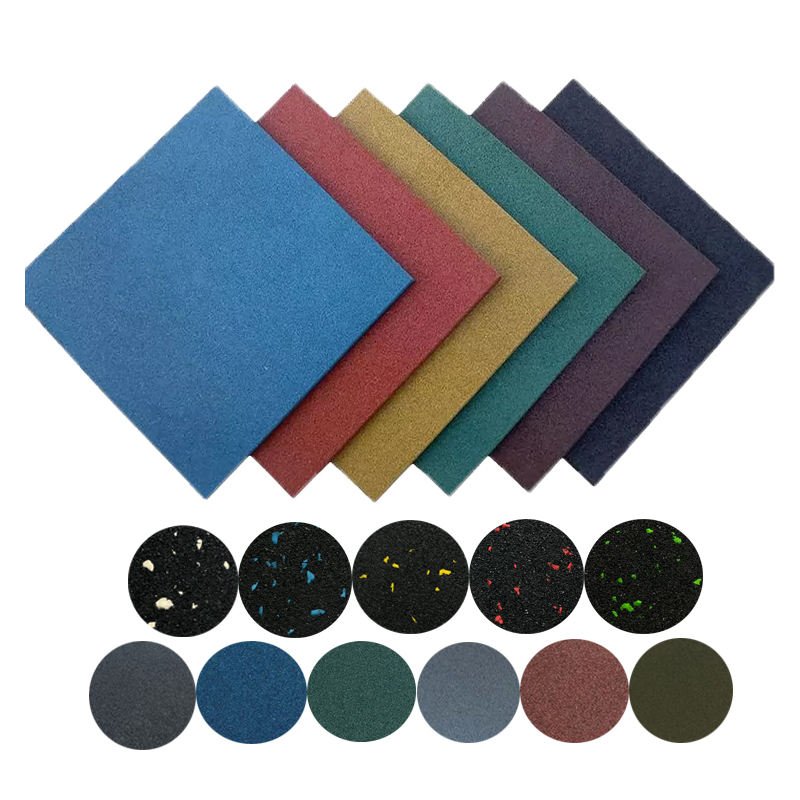
Indoor gym floors have one significant advantage over outdoor applications: there is no UV exposure, which means every color in the EPDM range performs equally in terms of longevity indoors. Color choice for gyms is entirely driven by brand identity, zoning logic, and client aesthetic preference.
Technical Specification by Gym Zone
| Gym Zone | Granule Size | Wear Layer | SBR Base | Binder Ratio |
|---|---|---|---|---|
| Free Weights / Olympic Lifting | 1–3mm | 13–15mm | 50–60mm | 16–18% |
| Cardio Equipment Zone | 1–3mm | 10–13mm | 25–35mm | 14–16% |
| Stretching / Yoga Area | 1–2mm | 10mm | 15–20mm | 14–16% |
| Indoor Running Track | 1–3mm | 13mm | 9–10mm | 14–16% |
| Changing Room / Wet Area | 1–3mm | 8–10mm | None | 16–18% |
| Outdoor Fitness Park | 1–3mm | 13mm | 40–60mm | 15–17% |
Frequently Asked Questions — Gym Flooring
Yes — with correct specification. The key is the SBR base layer depth: 50–60mm under free weight and Olympic lifting zones provides adequate impact absorption for dropped barbells and dumbbells. The EPDM wear layer itself is resilient enough to handle repeated impact without cracking or delaminating when the correct binder ratio (16–18%) is used. Installations in commercial weightlifting facilities with properly specified systems regularly exceed 15 years without resurfacing.
Yes — EPDM wet-pour surfaces maintain good slip resistance when wet, making them suitable for changing rooms, pool surrounds, and outdoor fitness areas in rain. The textured granule surface provides friction even when wet. For areas with continuous water exposure (pool decks, splash areas), specify a slightly coarser 2–4mm granule to maximise surface texture and drainage. Standard 1–3mm EPDM is adequate for most wet gym and changing room applications.
EPDM gym floors are low-maintenance. Daily: sweep or vacuum to remove debris and chalk dust. Weekly: mop with warm water and a pH-neutral cleaner — avoid acid or alkaline cleaners that can degrade the PU binder. Monthly: inspect for any cracks or delaminating edges. Annually: deep clean with a pressure washer at low pressure. Avoid solvent-based cleaning products and abrasive pads. Well-maintained EPDM gym floors require no resurfacing for 15–20 years in typical commercial use.
For standard colors (black, grey, dark green, dark red, blue), most suppliers accept 500–1,000 kg minimum per color. For custom colors (brand-matched shades), minimum order is typically 1,000–2,000 kg. A standard commercial gym of 500–1,000m² requires approximately 3,000–6,000 kg of EPDM granules for the wear layer — well above minimum order thresholds for bulk pricing.
Look for suppliers who can provide color samples in the dark, neutral tones popular for gym environments (charcoal, black, dark grey), along with REACH and PAH certification documentation. Our complete EPDM granules buyer’s guide covers the full supplier evaluation process including certifications, sampling, and pricing for commercial flooring projects.
Summary: Gym Flooring EPDM Specification Checklist
We supply virgin EPDM granules for commercial gym flooring in 50+ standard colors and custom shades. Full REACH and PAH documentation. Free physical samples. Competitive pricing from 500kg per color.