

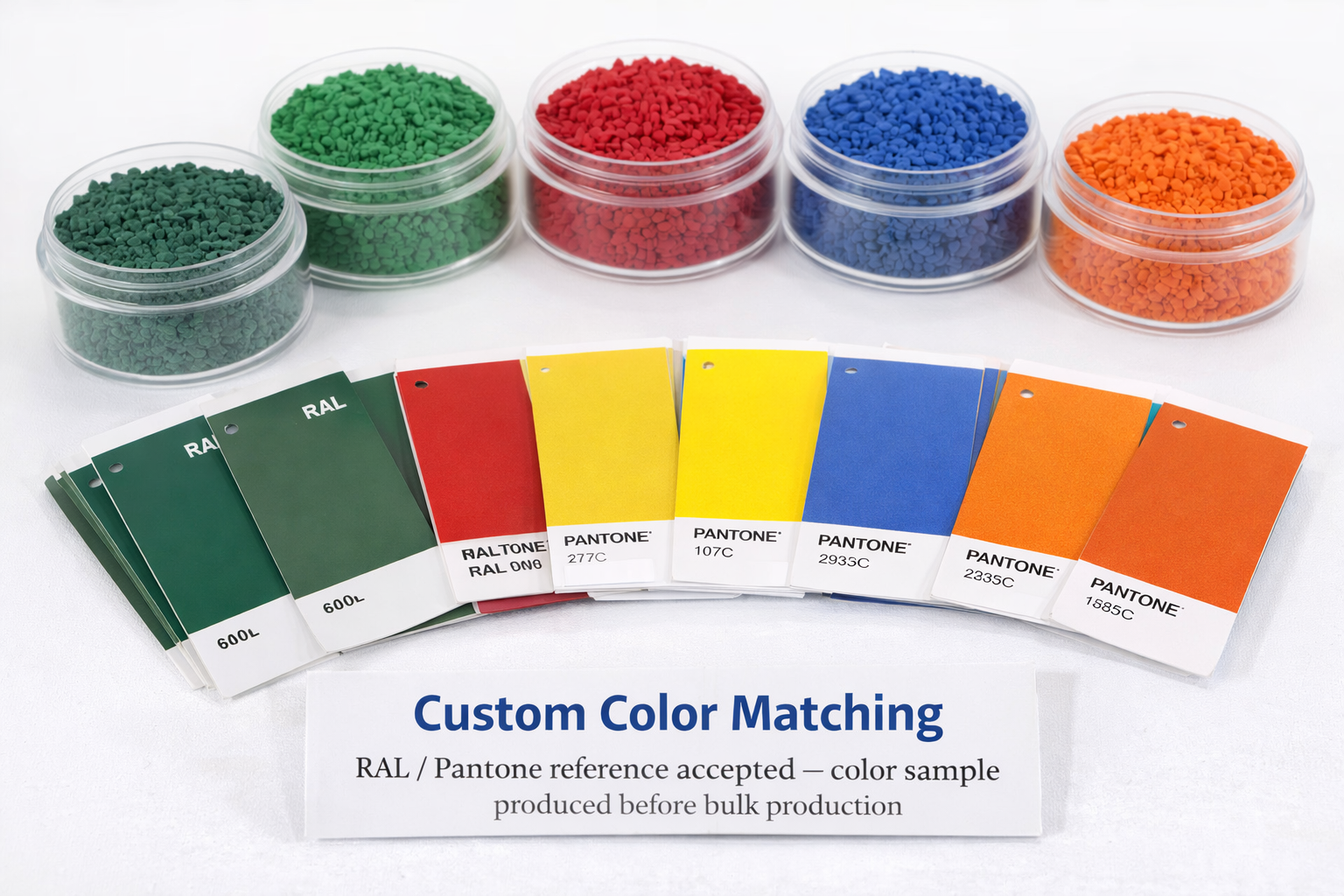
Selecting the right running track material is no longer just about colour and price. Schools and clubs that want consistent performance, lower injury risk and a surface that lasts beyond three seasons are increasingly turning to specialised EPDM granules manufacturers who supply genuine virgin colored EPDM granules rather than recycled alternatives.
How to Evaluate an EPDM Granules Manufacturer

Not every supplier claiming to sell EPDM granules produces material suitable for athletic tracks. The difference between a professional manufacturer and a trading company often only becomes visible after two or three years of outdoor use.
A serious EPDM granules manufacturer typically controls the full production chain: polymer compounding, pigment dispersion, granule sizing and quality testing. This control is what delivers consistent particle shape, stable colour and predictable shock absorption — three properties that directly affect both athlete safety and long-term appearance.
Why Colored EPDM Granules Outperform Other Options
Colour Stability Under Real Conditions
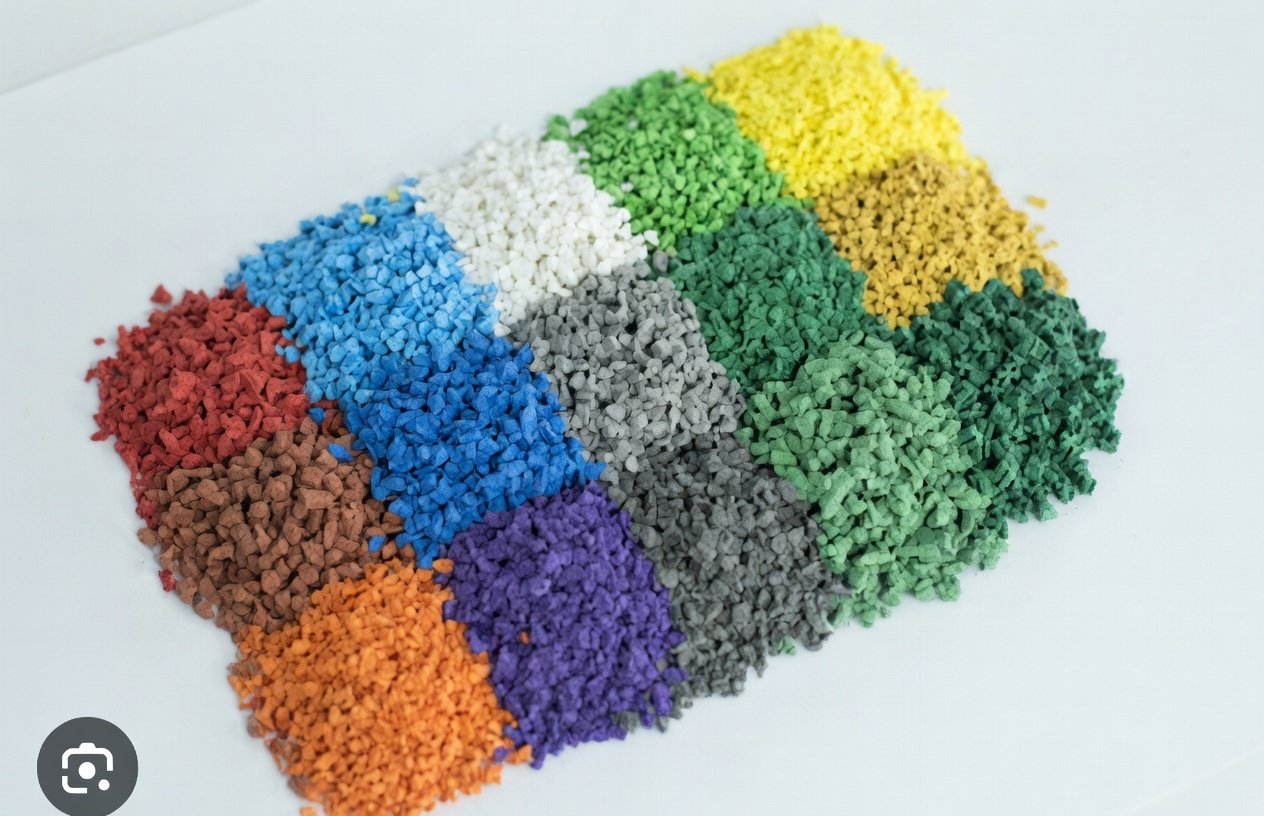
Traditional dark-red and terracotta shades remain the most popular for athletics because they hide dirt better and retain visual intensity longer. High-quality colored EPDM granules use UV-stable inorganic pigments that resist fading even under strong sunlight and repeated wet-dry cycles. Cheaper granules often rely on organic pigments that bleach within 18–24 months.
Impact Consistency and Joint Protection
Virgin EPDM has a more uniform molecular structure than recycled rubber. When correctly sized (usually 1–3 mm) and bound with outdoor-grade polyurethane, it delivers a medium-firm response that absorbs impact without feeling dead. This balance is difficult to achieve with mixed recycled content, which tends to produce either overly soft or overly hard zones across the same track.
Running Track Material Comparison: What Actually Lasts
| Material Type | Typical Lifespan | Colour Retention | Impact Consistency | Recommended Use |
|---|---|---|---|---|
| Recycled SBR mix | 3–5 years | Poor – fades quickly | Uneven | Temporary or low-budget only |
| Painted asphalt | 2–4 years | Very poor | Too hard | Not suitable for regular training |
| Economy coloured granules | 4–6 years | Moderate | Acceptable at start | Short-term school tracks |
| Virgin colored EPDM granules | 8–12 years | Excellent | Consistent | Schools, clubs & competition venues |
The table above reflects field experience rather than laboratory claims. When the running track material comes from a manufacturer that tests every batch for tensile strength, elongation and UV resistance, the higher initial cost is usually recovered through reduced maintenance and longer intervals between resurfacing.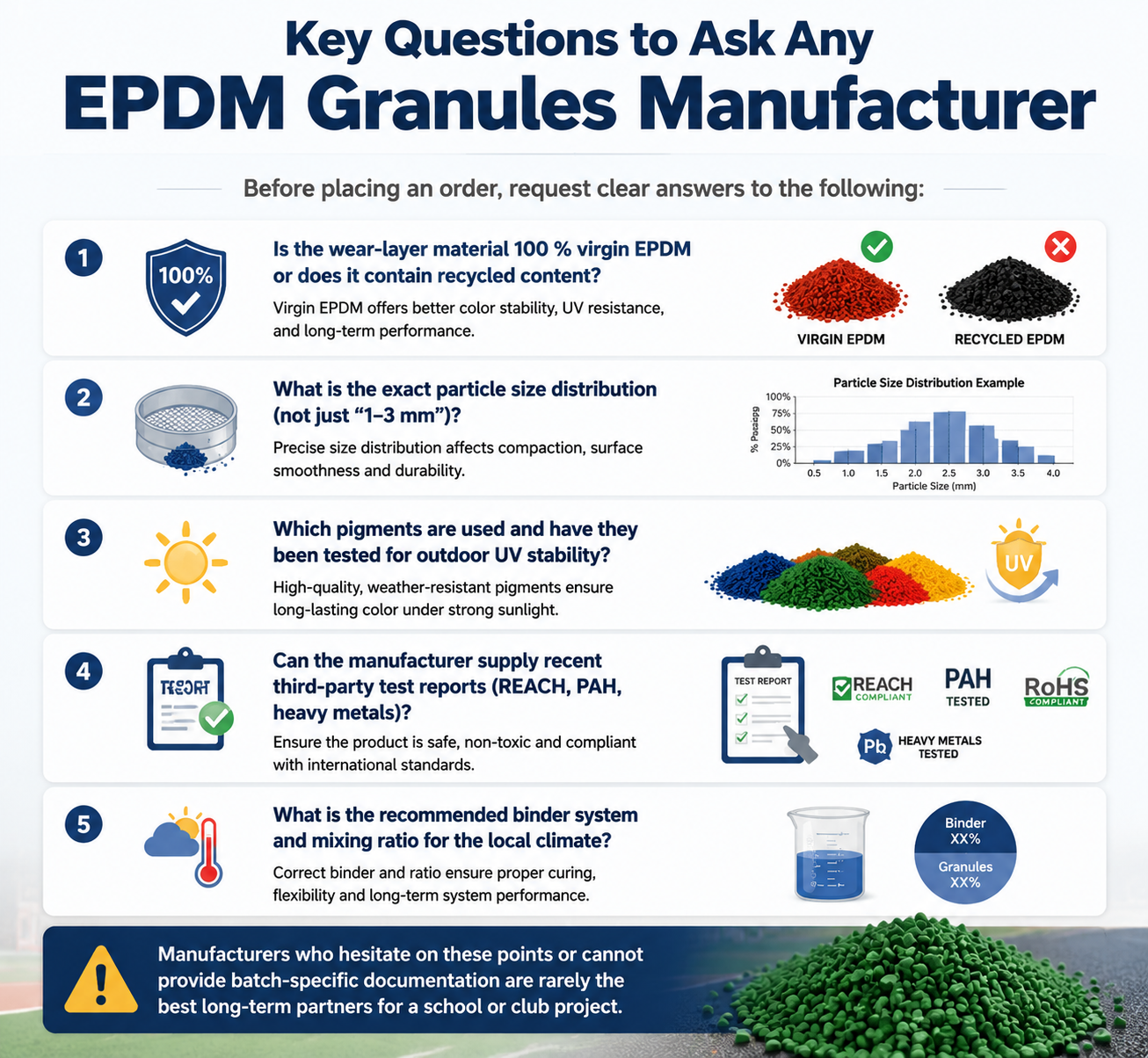
Key Questions to Ask Any EPDM Granules Manufacturer
Before placing an order, request clear answers to the following:
- Is the wear-layer material 100 % virgin EPDM or does it contain recycled content?
- What is the exact particle size distribution (not just “1–3 mm”)?
- Which pigments are used and have they been tested for outdoor UV stability?
- Can the manufacturer supply recent third-party test reports (REACH, PAH, heavy metals)?
- What is the recommended binder system and mixing ratio for the local climate?
Manufacturers who hesitate on these points or cannot provide batch-specific documentation are rarely the best long-term partners for a school or club project.
Recommended Technical Parameters for School & Club Tracks
For most educational and club facilities the following specification has proven reliable across different climates:
Optimal granule size for athletic wear layers
Standard wear-layer thickness
Realistic outdoor service life
- Polymer: 100 % virgin EPDM only in the top wear layer
- Colour system: UV-stable pigments, preferably dark red or terracotta for athletics
- Base preparation: Sound asphalt or concrete with proper falls and crack treatment
- Binder: Moisture-curing polyurethane designed for outdoor sports surfaces
- Documentation: Full CE, SGS, ISO 9001, REACH and PAH certificates from the manufacturer
Total Cost of Ownership vs Initial Quote
A 400-metre track consumes several tonnes of colored EPDM granules. When the material is purchased directly from a manufacturer rather than through multiple intermediaries, the price difference can be significant. More important, however, is the reduction in future costs:
- Fewer patch repairs and partial resurfacing
- Lower incidence of impact-related injuries
- Longer intervals between full system replacement
- Higher residual value if the facility is later upgraded
Facilities that calculated only the initial material price often discover within three years that the cheaper running track material has become the more expensive option.
Schools and clubs that specified virgin colored EPDM granules at the design stage rarely contact us about premature fading or granule loss. Those that chose the lowest quote and later switched almost always say the same thing: the extra cost of doing it properly the first time would have been lower than the cost of correcting it later.
Making the Right Decision
The quality of a running track is decided long before the first granule is spread. It is decided when the project team selects the running track material and the EPDM granules manufacturer behind it.
Virgin colored EPDM granules from a manufacturer that controls production and testing deliver measurable advantages in athlete comfort, colour retention and service life. These advantages are not theoretical — they appear in reduced maintenance budgets and fewer training interruptions.
If your facility is planning a new track or considering a surface upgrade, request samples and full technical data from manufacturers who specialise in athletic-grade material. Physical comparison remains the most reliable way to separate marketing claims from actual performance.
Technical specifications, current pricing and free sample packs are available at jflysports.com/contact-us
Request Free Colored EPDM Granules Samples
We produce 100 % virgin colored EPDM granules in standard athletic colours and multiple size ranges. Sample packs include technical data sheets and are shipped within five working days. No minimum order quantity for evaluation samples.