

Selecting the right EPDM granules at the procurement stage is the single most effective decision a facility manager can make to lock in long-term track performance. While maintenance and environmental factors matter, the polymer quality, pigment system, and particle characteristics chosen today determine whether a surface will still meet World Athletics force-reduction targets a decade from now.
Why Granule Specification Determines Track Lifespan
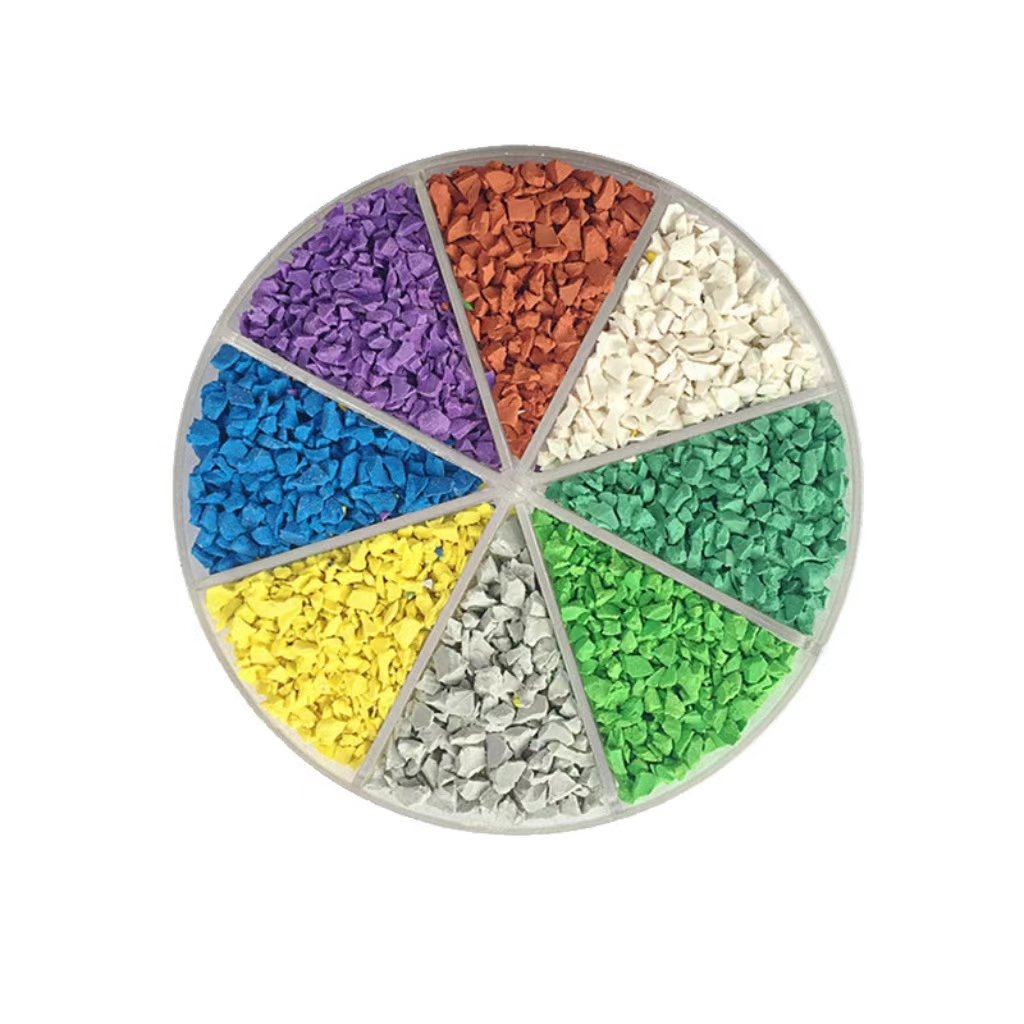
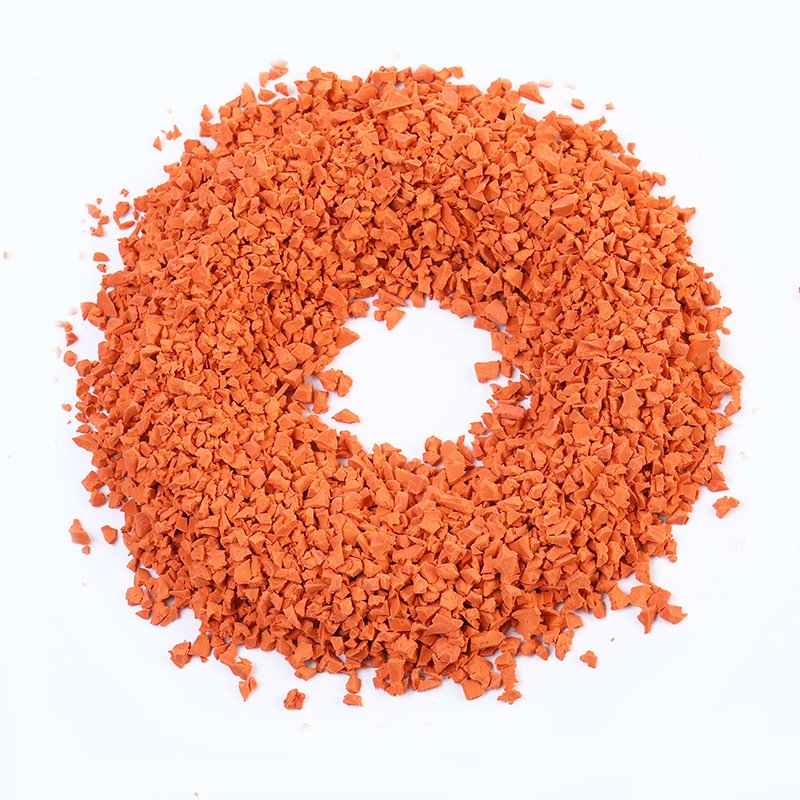
EPDM (ethylene propylene diene monomer) is valued for its inherent weather resistance, yet commercial granules vary dramatically in polymer content, cross-link density, and additive packages. Low-grade material may look identical on delivery but begins losing tensile strength and colour intensity within 18–24 months under outdoor exposure.
The three decisive material variables are polymer purity, UV-stable pigmentation, and particle-size distribution. Each interacts with the polyurethane binder and local climate to set the degradation clock.
Virgin vs Recycled EPDM: The Critical Distinction
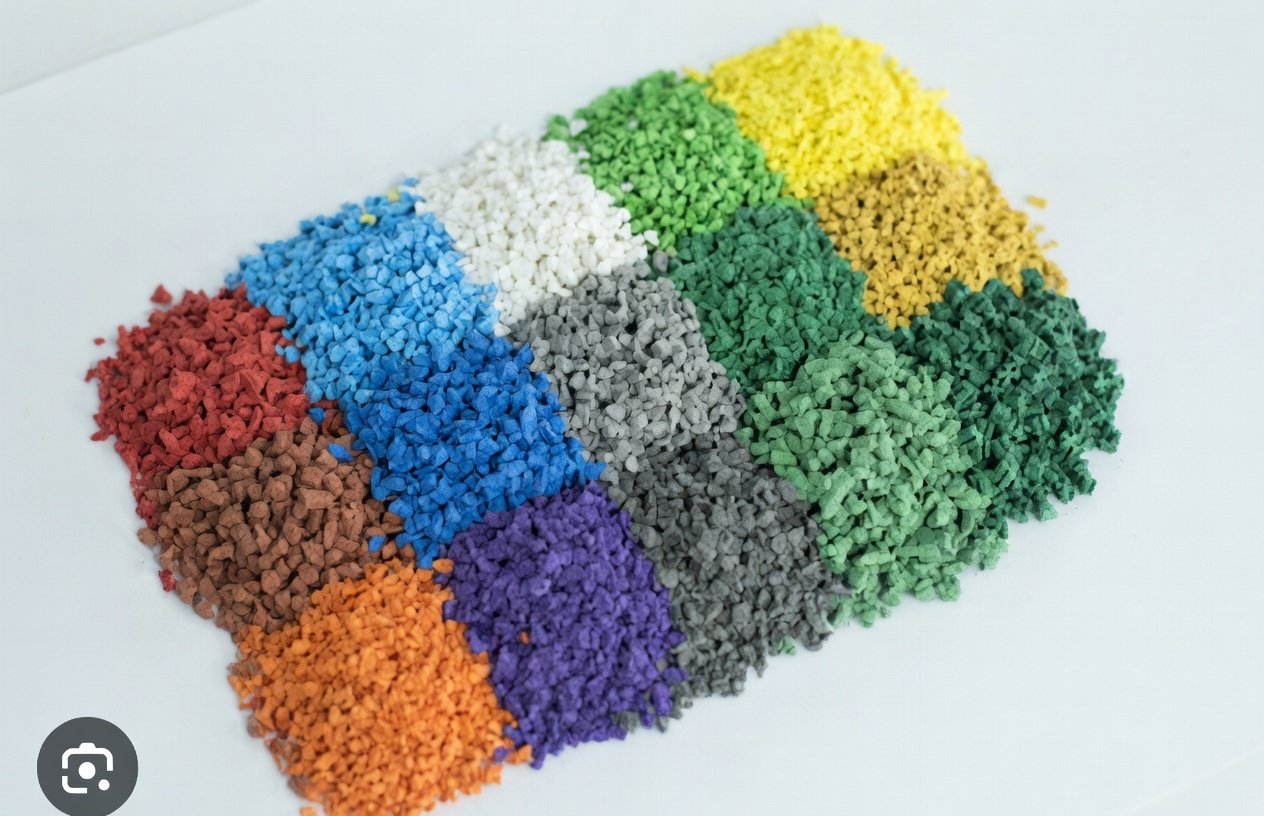
Virgin EPDM is polymerised from new monomers and compounded under controlled conditions. Recycled or blended granules often incorporate post-industrial scrap or tyre-derived rubber, introducing variable cross-link density, residual oils, and unknown fillers.
| Parameter | Virgin EPDM (≥20–25 % polymer) | Recycled / Blended Grade |
|---|---|---|
| UV & Ozone Resistance | Excellent; retains colour grade ≥4 after 2000 h QUV | Moderate to poor; rapid chalking and fading |
| Tensile Strength | ≥7 MPa typical | Often 3–5 MPa; declines faster |
| Elasticity Retention | High recovery after repeated loading | Hardens and cracks earlier |
| Batch Consistency | Tight particle-size and colour control | Higher fines content and colour variation |
| Typical Application | Wear layer of competition & school tracks | Base cushion layer only |
Key Specification Parameters Every Buyer Must Verify
1. Polymer Content & Cross-Link Density
Higher virgin EPDM content correlates directly with better long-term elasticity and resistance to ozone cracking. Request a material composition certificate or TGA (thermogravimetric analysis) report confirming EPDM is the sole polymer and content meets or exceeds 20 %.
2. Pigment System – Inorganic vs Organic
Inorganic pigments, particularly iron oxides, provide superior UV shielding. Organic pigments deliver brighter initial colour but fade rapidly. For high-UV regions, specify iron-oxide-based reds, greens, and browns and demand grey-scale colour-retention data (ISO 105-A02) after at least 1000–2000 hours of accelerated weathering.
3. Particle Size Distribution
For athletic tracks a 1–3 mm fraction delivers the required surface texture for spike engagement while maintaining consistent force reduction. Excess fines (<0.5 mm) increase binder demand and raise the risk of surface hardening; oversized particles create uneven wear paths.
4. Binder Compatibility & Ratio
Only aliphatic or MDI-based polyurethane binders should be used with coloured EPDM. Cheaper TDI systems can cause premature yellowing or delamination. A binder content of 18–20 % by weight balances elasticity with abrasion resistance; ratios below 15 % invite granule shedding, while ratios above 22 % produce a hard, less resilient surface.
Climate-Specific Material Recommendations
Material choice must be matched to local environmental stress.
- High-UV / Tropical zones: Virgin EPDM with iron-oxide pigments + additional UV absorbers; consider a sacrificial acrylic seal coat every 3–4 years.
- Freeze-thaw climates: Hydrolysis-resistant aliphatic binder and slightly higher binder ratio to resist water ingress and ice expansion.
- High-traffic training facilities: Tight particle-size control (1–2 mm dominant) and proven tensile strength ≥7 MPa to resist spike abrasion.
- Moderate temperate climates: Standard virgin EPDM (20–25 % polymer) with good colour-retention data is usually sufficient.
Procurement Checklist for Facility Managers
Before issuing a purchase order, confirm the following documentation:
- Certificate stating virgin EPDM content (minimum 20 %)
- Particle-size distribution curve (not merely a range)
- UV colour-retention data after ≥1000 h accelerated exposure
- Physical property sheet (tensile ≥7 MPa, elongation ≥300 %)
- PAH and heavy-metal compliance certificates
- Recommended binder type and mixing ratio for the specific climate
Material Intelligence Beats Reactive Maintenance
Degradation of EPDM athletic surfaces is inevitable, but its rate is largely predetermined by the quality of the granules specified at the outset. Virgin polymer content above 20 %, process-embedded inorganic pigments, controlled 1–3 mm particle size, and a correctly matched polyurethane binder system form the foundation of a track that retains both performance and appearance for a decade or more.
Facility managers who treat granule selection as a strategic decision rather than a commodity purchase consistently achieve lower total cost of ownership and fewer mid-life interventions. Request detailed technical data packages and independent test reports before any tender is awarded.
For detailed specifications, sample packs, or climate-specific recommendations, visit jflysports.com/contact-us.
Specify Quality from Day One
Our 100 % virgin coloured EPDM granules are engineered with UV-stable inorganic pigments, controlled particle-size distribution, and polymer content optimised for athletic-track durability. Request free samples and full technical data sheets today.