


A high-quality athletic track surface is a long-term investment that should perform reliably for 8–12 years. The quality of the wear layer is largely decided at the procurement stage. Asking the right questions before placing any order is the most effective way to avoid premature colour fading, granule loss, inconsistent shock absorption, and expensive early resurfacing.
Why These Questions Matter
Many athletic track projects underperform not because of poor installation, but because the wrong EPDM granules were specified or accepted. Some suppliers offer attractive prices by blending recycled content, using unstable organic pigments, or providing incomplete documentation. Once the granules are mixed and laid, correcting these issues becomes costly and disruptive.
The following ten questions should be put to every supplier in writing. Clear, specific answers separate reliable manufacturers from those who rely on vague marketing claims.
The 10 Must-Ask Questions
1. Is the wear-layer material 100% virgin EPDM, or does it contain any recycled content?
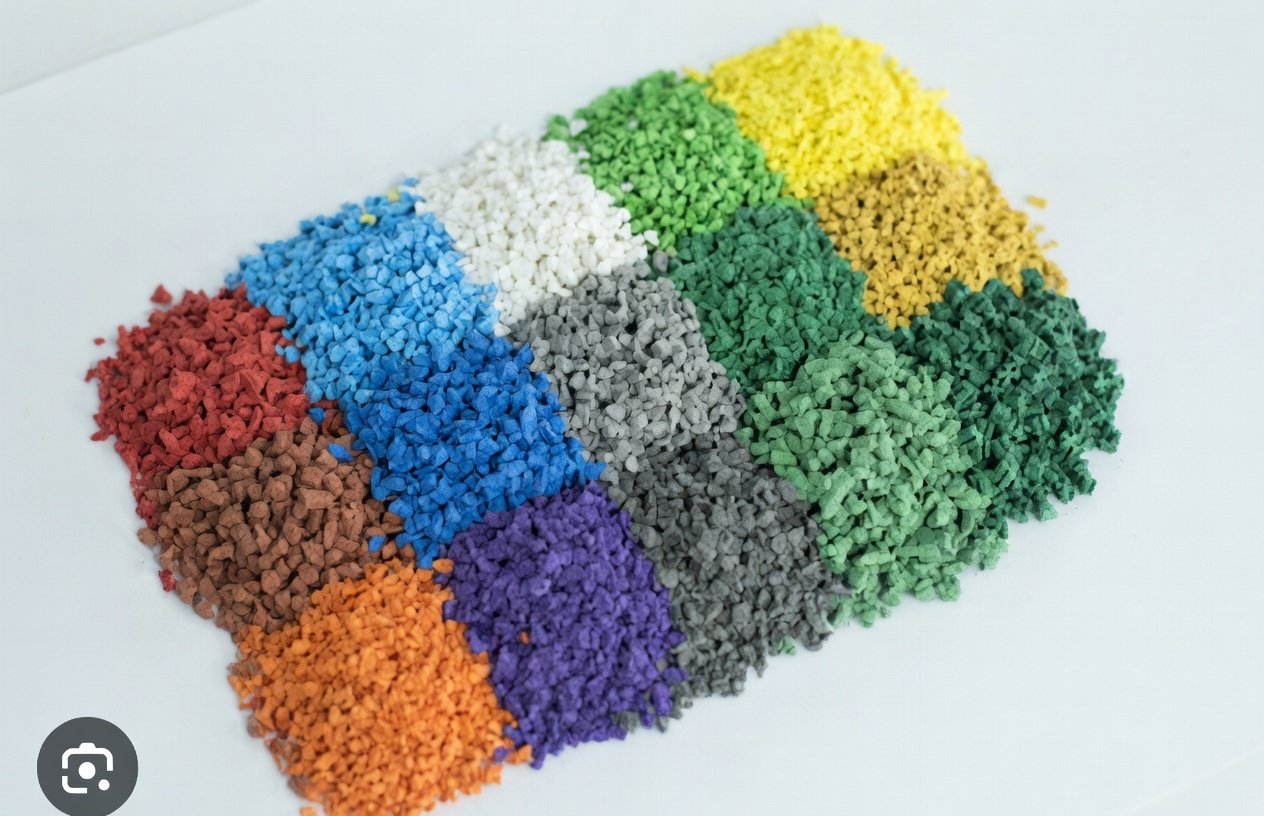
Require a written statement confirming that the top wear layer consists of 100% virgin coloured EPDM granules with no SBR, recycled rubber, or blended content. Many “coloured EPDM” quotations actually contain undeclared recycled material that looks acceptable on handover day but begins shedding granules and losing colour within one or two summers.
2. What is the exact particle size distribution (not just a vague “1–3 mm”)?
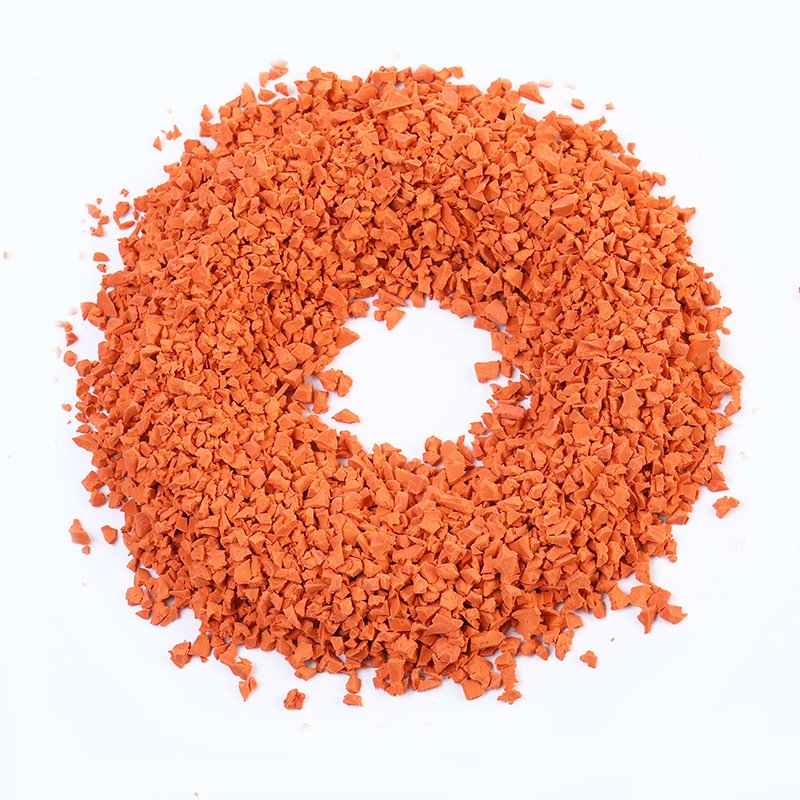
Ask for a particle size distribution report or sieve analysis for the actual material to be supplied. Ideal athletic wear-layer granules are tightly controlled within the 1–3 mm range. Excessively coarse or fine particles reduce consistency, increase shedding risk, and affect both appearance and shock absorption.
3. Which pigments are used, and have they been tested for outdoor UV stability?
Confirm that UV-stable inorganic pigments are used. Organic pigments are cheaper but typically bleach within 18–24 months under strong sunlight and repeated wet-dry cycles. Request any available accelerated weathering or outdoor exposure data.
4. Can you supply recent third-party test reports?
Request reports issued within the last 12 months for the actual production batches, covering at minimum:
- REACH compliance
- PAH (polycyclic aromatic hydrocarbons)
- Heavy metals
- Tensile strength and elongation
- UV ageing performance (if available)
Generic certificates several years old are of limited value.
5. What is the recommended binder system and mixing ratio for our local climate?
The supplier should specify the type of moisture-curing polyurethane binder, the exact granule-to-binder weight ratio, and any adjustments recommended for local temperature, humidity, and UV exposure. Vague replies such as “industry standard” without numbers indicate limited technical support.
6. What wear-layer thickness will be installed, and is it contractually guaranteed?
For most athletic tracks the standard wear-layer thickness is 13 mm. Confirm that this minimum thickness is written into the contract and that an inspection method (e.g., core sampling) is agreed for acceptance.
7. How do you guarantee batch-to-batch consistency of colour and physical properties?
Large projects often require multiple production batches. Ask about the manufacturer’s batch tracking system, colour-difference tolerances, and outgoing quality control procedures. Inconsistent hardness or shade across the same track is a common complaint with lower-grade materials.
8. Can you provide free evaluation samples together with technical data sheets?
Reputable manufacturers routinely supply sample packs at no cost for evaluation. Physical samples allow simple checks of particle shape, colour uniformity, and resistance to rubbing or powdering. Reluctance to send samples is a warning sign.
9. What is the warranty coverage, and does it include granule loss and colour fading?
Clarify the length of the warranty, whether premature shedding or significant colour loss is covered, and the response process if problems appear. Warranties that cover only workmanship while excluding material performance leave the buyer exposed.
10. Are you the manufacturer or a trading intermediary?
Direct manufacturers normally control compounding, pigment selection, testing, and batch consistency. Trading companies can be acceptable if they provide full manufacturer authorisation and original test reports, but responsibility for material quality must be clearly defined.
Procurement Checklist
Print this checklist and use it during supplier evaluations and tender scoring.
| # | Checkpoint | Status | Notes |
|---|---|---|---|
| 1 | Written confirmation of 100% virgin EPDM (no recycled content) | ||
| 2 | Exact particle size distribution data provided | ||
| 3 | UV-stable inorganic pigments confirmed + supporting data | ||
| 4 | Recent third-party reports (REACH, PAH, heavy metals, etc.) | ||
| 5 | Binder type, mixing ratio and climate adaptation specified | ||
| 6 | Wear-layer thickness ≥ 13 mm written into contract | ||
| 7 | Batch consistency control process explained | ||
| 8 | Free samples + technical data sheets available | ||
| 9 | Warranty clearly covers granule loss and colour fading | ||
| 10 | Manufacturer status or full original authorisation confirmed |
Recommended Minimum Technical Parameters
Optimal granule size for athletic wear layers
Standard wear-layer thickness
Realistic outdoor service life
- Polymer: 100% virgin EPDM only in the top wear layer
- Colour system: UV-stable inorganic pigments (preferably dark red or terracotta for athletics)
- Base preparation: Sound asphalt or concrete with proper falls and crack treatment
- Binder: Moisture-curing polyurethane designed for outdoor sports surfaces
- Documentation: Full CE, SGS, ISO 9001, REACH and PAH certificates from the manufacturer
Protect the Investment at the Procurement Stage
Once the track is installed, material defects become far more expensive to correct than asking the right questions beforehand. Projects that insist on clear written answers to these ten points consistently achieve longer service life, better colour retention, and fewer maintenance interruptions.
Specify 100% virgin coloured EPDM granules from a manufacturer that controls production and testing. Request samples and full technical data before final decisions are made. Physical comparison remains the most reliable way to separate marketing claims from actual performance.
Technical specifications, current pricing and free sample packs are available at jflysports.com/contact-us.
Request Free Coloured EPDM Granules Samples
We produce 100% virgin coloured EPDM granules in standard athletic colours and multiple size ranges. Sample packs include technical data sheets and are shipped within five working days. No minimum order quantity for evaluation samples.