

EPDM Granules for Rooftop & Urban Landscaping: Specifications and Design Guide
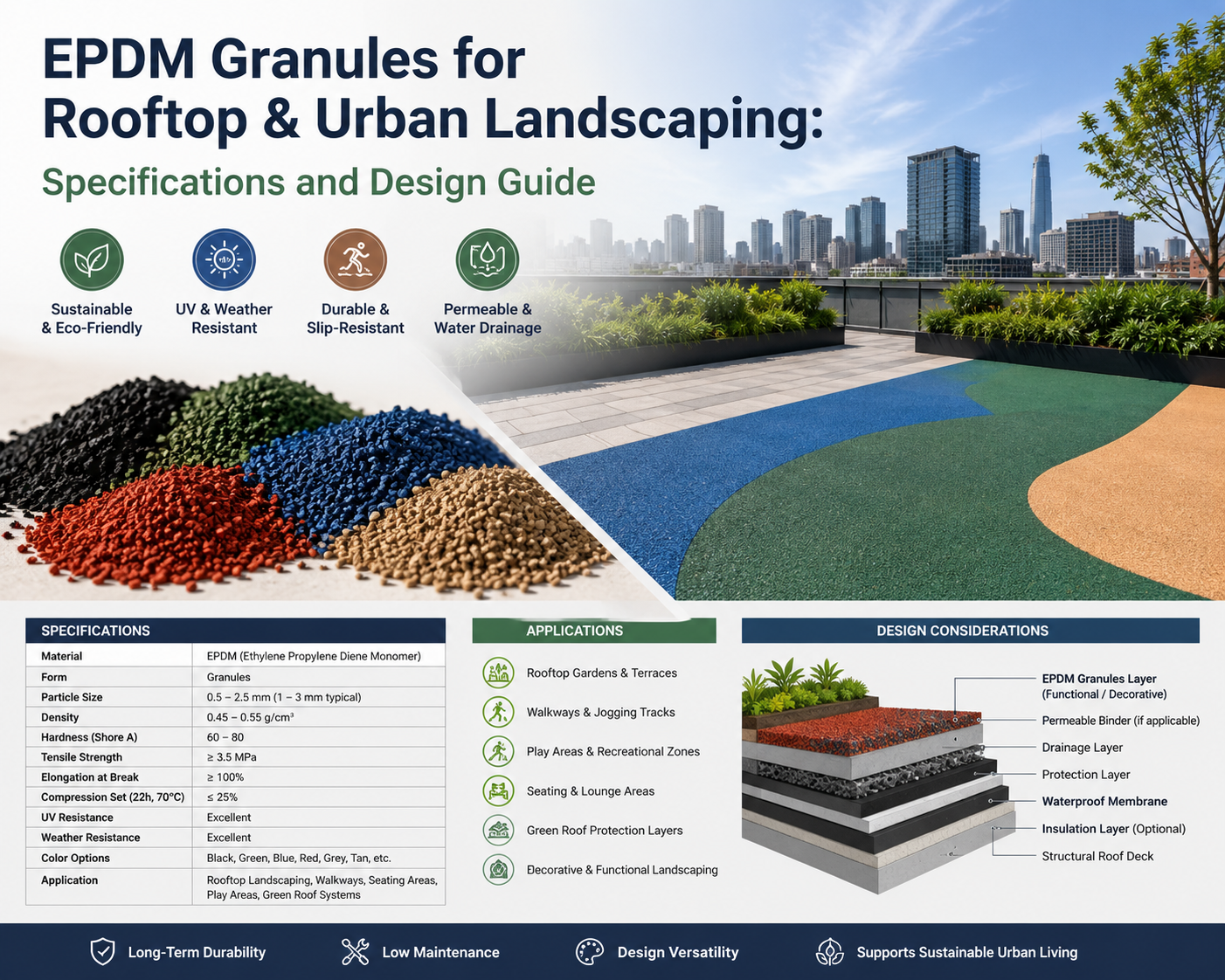
Rooftop terraces, urban plazas, garden pathways, and decorative ground cover represent one of the fastest-growing applications for EPDM granules. The combination of vibrant color, UV stability, drainage performance, and zero-maintenance appeal makes EPDM the premium choice for architects, landscape designers, and property developers who want lasting visual impact in high-visibility urban environments.
For rooftop terraces and urban landscaping, specify 1–3mm virgin EPDM granules in a bound wet-pour system at 10–15mm depth, or as loose decorative fill at 30–50mm depth for garden borders and ground cover. Rooftop applications require lightweight system design — total load including EPDM must be within the structural floor’s load capacity (typically 100–250 kg/m²). Earth tones and UV-stable colors are preferred for landscape integration.
For full EPDM granule specifications, pricing, and supplier selection guidance, see our EPDM Granules Complete Buyer’s Guide.
EPDM Landscaping Applications
Landscape and rooftop applications differ fundamentally from sports surfaces in one key respect: aesthetics are the primary driver. The surface must look exceptional on day one and maintain that appearance for years — which is precisely where virgin EPDM granules excel over alternative decorative aggregates like gravel, bark, or dyed stone.

Hotel rooftops, residential amenity decks, office terraces. Bound wet-pour system for walkable surface. Lightweight specification critical — structural load constraint is the key design variable.
1–3mm EPDM bound, 10–13mm
No SBR base — weight saving
Earth tones / architectural greys
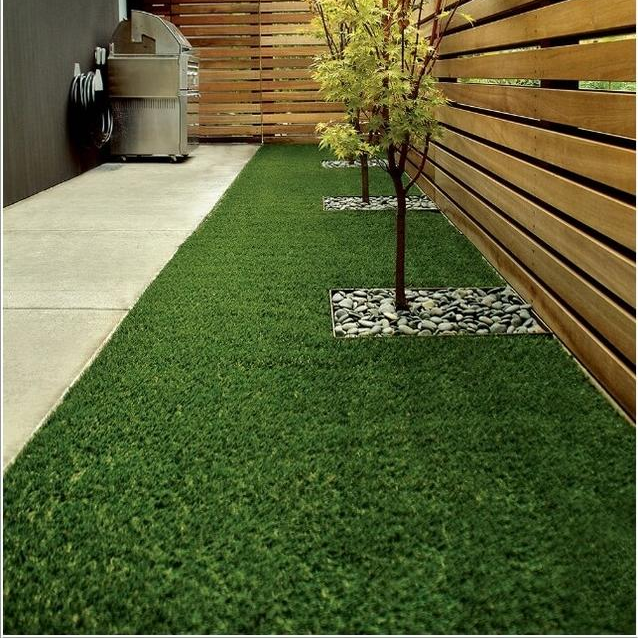
Residential and commercial garden paths. Loose fill or bound system. Replaces gravel or bark — no weeds, no displacement, vibrant color retention. Low maintenance appeal.
2–5mm loose fill, 40–50mm deep
Or 1–3mm bound, 10mm
Brown / green / terracotta
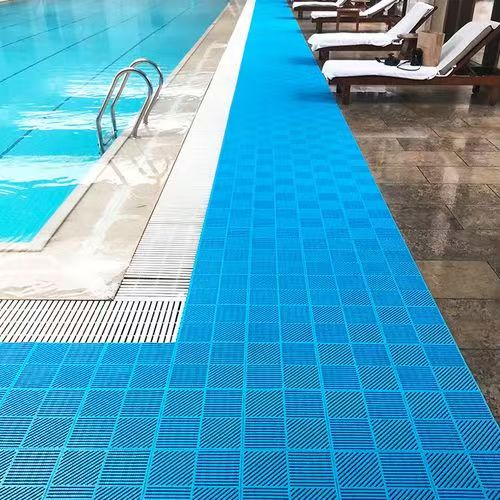
Non-slip when wet, cool underfoot relative to stone or composite decking, comfortable barefoot. EPDM’s thermal properties make it significantly more comfortable than dark natural stone in direct sun.
1–3mm bound, 10–13mm
Light / mid tones for heat
Black / dark (surface heat)
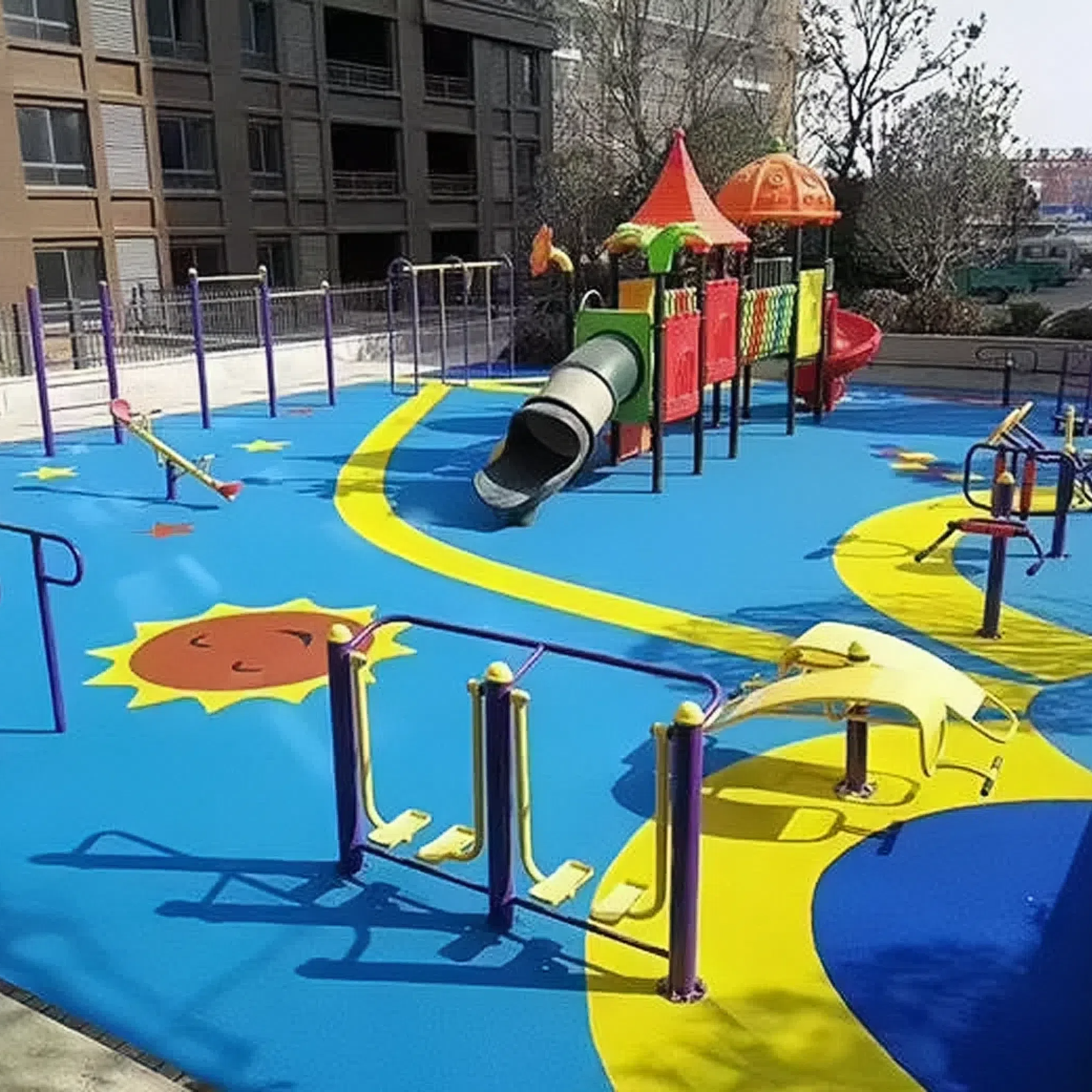
Commercial public spaces, shopping centre forecourts, transit areas. High foot traffic — bound system only. Color design can reinforce wayfinding, branding, or public art themes.
1–3mm bound, 13–15mm
UV-stable neutrals
Architectural color palette
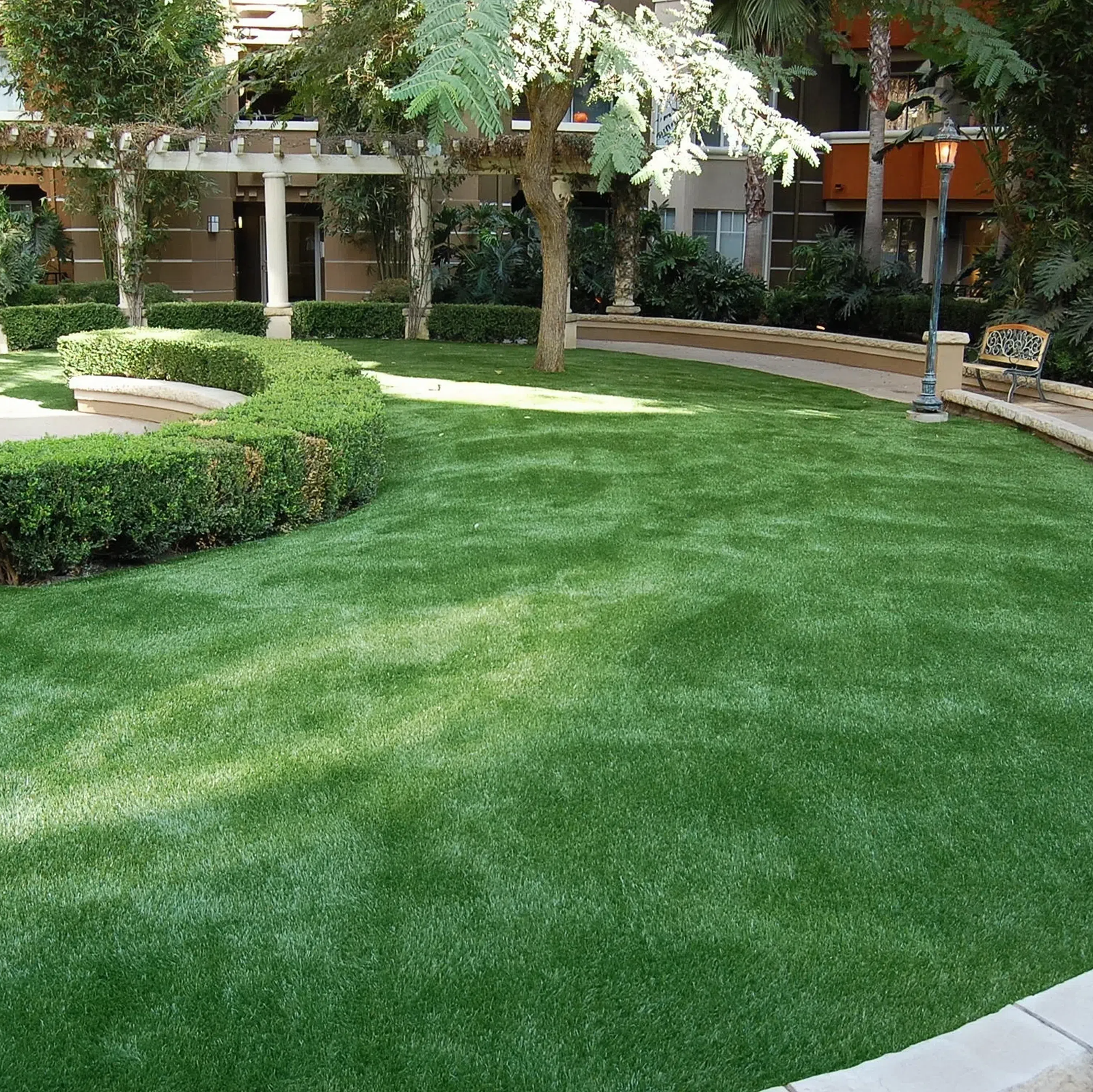
Loose EPDM fill around tree bases and in raised planters. Replaces bark mulch — no decomposition, no pests, vibrant year-round color. Allows water and air penetration to roots.
2–5mm loose fill, 50–75mm
Brown / green / black
No binder needed
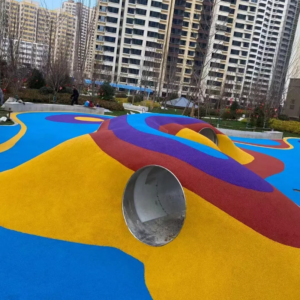
Decorative driveways and private courtyards. Bound system required for vehicle access. Unique alternative to resin-bound gravel — softer appearance, more color choice.
2–4mm bound, 13–15mm
High-grade binder for vehicle load
Terracotta / charcoal / grey
Rooftop Applications: Structural Load Considerations
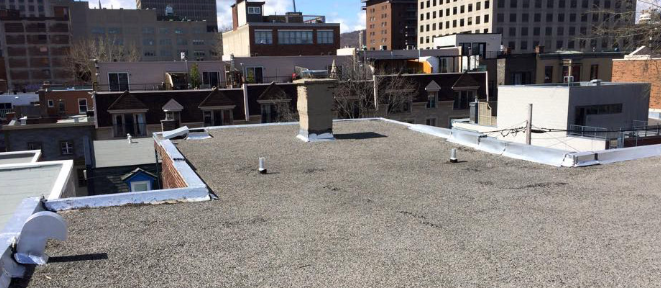
Rooftop terrace projects require careful weight calculation — the EPDM system must be within the structural floor slab’s live load capacity. This is the single most important technical constraint that differentiates rooftop landscaping from ground-level applications.
| System Type | Depth | Approx. Weight | Suitable For |
|---|---|---|---|
| EPDM wear layer only (no SBR base) | 10–13mm | ~8–12 kg/m² | Rooftop terraces, balconies, lightweight structures |
| EPDM + thin SBR base | 25–35mm total | ~20–30 kg/m² | Roof terraces with children’s play zones |
| Full playground system | 50–115mm total | ~50–120 kg/m² | Ground level only — too heavy for most rooftops |
| Loose fill (no binder) | 40–75mm | ~25–50 kg/m² | Planters, garden borders — check containment edge design |
Most commercial rooftop slabs are designed for 150–300 kg/m² live load. A 10–13mm EPDM bound system adds only 8–12 kg/m² — comfortably within this limit. However, if drainage layers, substrate boards, or additional landscaping elements are included in the rooftop build-up, the cumulative load must be calculated by a structural engineer before installation proceeds. Never assume load capacity — always verify from the structural drawings.
Color Selection for Landscaping & Rooftop Applications
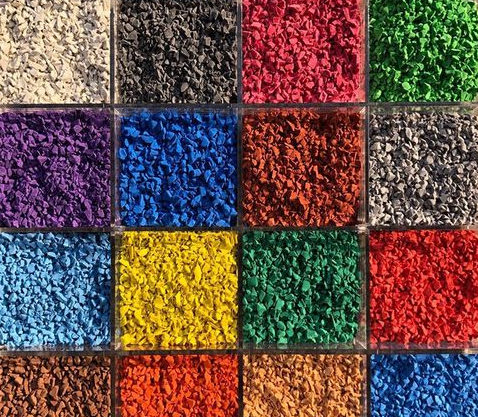
Landscaping color selection follows different logic from playgrounds and sports surfaces. The goal is integration with the surrounding environment and architectural palette, not vibrant contrast. Earth tones dominate, and UV stability is critical for high-exposure rooftop and open-air installations.
Loose Fill vs Bound System: Which Is Right for Your Project?
| Factor | Loose Fill | Bound Wet-Pour System |
|---|---|---|
| Installation | Simple — pour and rake | Professional installation required |
| Cost | Lower material cost, no binder | Higher — includes PU binder + skilled labor |
| Surface stability | Can shift / displace in high traffic | Fully bound — stable, no displacement |
| Drainage | Excellent — fully permeable | Good — porous bound surface |
| Weed suppression | Good with membrane underneath | Excellent — seamless barrier |
| Best use | Garden borders, tree surrounds, planters, decorative fill | Walkable paths, terraces, plazas, pool surrounds |
| Vehicle / heavy use | Not suitable | Suitable with correct binder ratio |
Frequently Asked Questions — Rooftop & Landscaping
Loose EPDM granules are denser than bark or lightweight aggregates and do not wash away in normal rainfall. However, on sloped surfaces or in high-velocity water flow conditions (e.g., directly below a downpipe), some movement is possible. Install edge restraints (aluminium or timber border edging) around loose fill areas to contain the granules, and avoid placing loose fill on slopes steeper than approximately 15° without edging. For sloped applications, a bound system is preferable.
Yes — loose EPDM fill is an effective alternative to bark mulch in planters and around shrubs and trees. It allows water and air penetration to root systems, suppresses weed growth, and maintains its color without the decomposition and pest issues associated with organic mulch. Use 2–5mm loose fill at 50–75mm depth. EPDM is chemically inert and will not leach substances harmful to plants — virgin EPDM with REACH certification is safe for use in planted areas.
Both EPDM wet-pour and resin-bound gravel are premium bound surfacing options, but they serve different aesthetic briefs. Resin-bound gravel uses natural stone aggregate and is popular for traditional, heritage, and formal garden settings. EPDM is chosen when vibrant or specific color is required, when a softer, more resilient surface is desired (playgrounds, poolsides), or when a uniform color palette needs to match an architectural scheme precisely. EPDM is also more comfortable underfoot than stone aggregate for barefoot areas.
Landscape EPDM granules are priced the same as sports surface granules — the material is identical, only the application differs. For standard earth tone colors (brown, green, terracotta) at 1,000–2,000 kg orders from Asian suppliers, expect $1.00–$1.50/kg FOB. Earth tones typically use iron oxide pigments which are cost-effective. Custom landscape colors (Pantone-matched to an architectural scheme) add $0.30–$0.60/kg. For a full pricing guide, see our EPDM granules cost guide.
Bound EPDM landscaping surfaces typically last 12–20 years in outdoor conditions — longer than sports surfaces because foot traffic is lighter and there is no spike or equipment impact. Loose fill EPDM in garden borders and planters effectively lasts indefinitely — the granules do not decompose or biodegrade. The only visible change over time is very gradual color fading in high-UV conditions, which can be refreshed by adding a new layer of fresh granules on top of the existing fill.
Yes — but with important precautions. The EPDM wet-pour system must be installed over a protection board or separation layer to prevent PU binder from bonding directly to the waterproofing membrane (which would make future waterproofing repairs very difficult). Confirm compatibility with your waterproofing system manufacturer before installation. Some membrane manufacturers void their warranty if surfacing is applied directly over the membrane without a protection layer. This is a critical detail that must be addressed in the project specification before installation proceeds.
Summary: EPDM for Rooftop & Landscaping Projects
We supply virgin EPDM granules in 50+ colors including full earth tone and architectural palette ranges. Loose fill and bound system specifications. Free physical color samples and competitive FOB pricing from 500kg.