

Not all EPDM granules look the same under a Riyadh sun, a Rotterdam drizzle, or a São Paulo afternoon storm. If you are a procurement manager, sports facility contractor, or distributor sourcing rubber surfacing materials at scale, this guide cuts through the noise and tells you exactly what separates a reliable EPDM granules supplier from one that will cost you a project.
What Are EPDM Granules?
EPDM stands for Ethylene Propylene Diene Monomer — a synthetic rubber compound engineered for outdoor permanence. In granule form, EPDM is vulcanized, ground to precise sizes, and pigmented throughout (not surface-coated), then mixed with polyurethane binders to create poured-in-place rubber surfaces.
Key facts buyers should know upfront:
- Thermal range: Stable from –40°C to +150°C, making it suitable from Scandinavian winters to Gulf summers
- Grain sizes available: 0.5–1.5 mm (athletic tracks), 1.0–3.5 mm (playgrounds & sports courts), 3.5–5 mm (base layer infill)
- Standard binder ratio: 22% PU binder for 10–15 mm depth applications
- Tensile strength: Averages 7.5 MPa in quality virgin-grade products
Why the Region Where You Install Changes Everything
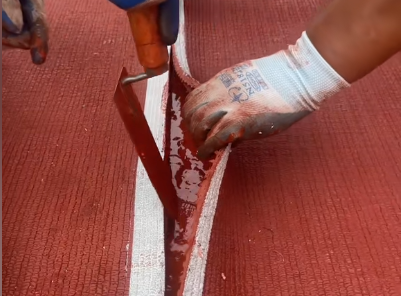
This is the part most generic articles skip — and the part that actually determines whether your project lasts 3 years or 10.
Europe (Germany, Netherlands, Poland, UK)
European buyers operate under some of the world’s strictest compliance frameworks. REACH Regulation (EC) No 1907/2006, Annex XVII entries 28 and 50, governs PAH (polycyclic aromatic hydrocarbon) content in rubber articles that come into skin contact. For playground applications specifically, EN 1177 impact attenuation testing is non-negotiable for public procurement tenders.
What this means for sourcing: Over 60% of European playgrounds already use EPDM surfacing, and the replacement cycle is creating a steady re-procurement market. Buyers here prioritize low-PAH certification, color consistency batch-to-batch, and documented chain of custody over price-per-ton. If your supplier cannot provide third-party lab reports for PAH content, you are not in the conversation.
Germany alone committed over 300 million square meters of urban landscape development involving EPDM surfaces, making it the continent’s largest single market for this material.
Middle East (Saudi Arabia, UAE, Qatar)
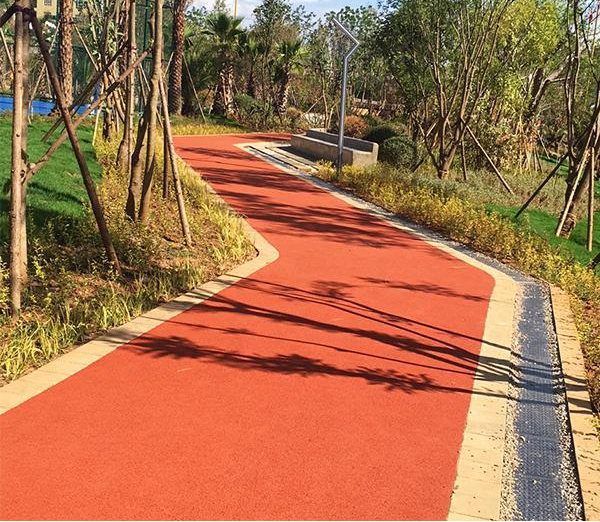
The Middle East is the most technically demanding environment on the planet for rubber surfaces. Sustained UV index above 10, ambient temperatures regularly exceeding 45°C, and sand abrasion combine to destroy substandard granules within 18 months.
Saudi Arabia — driven by Vision 2030 and preparations for the 2034 FIFA World Cup — is building sports infrastructure at a scale that requires over 200,000 tonnes of EPDM granules for new stadium and venue projects alone. The country now mandates QUV accelerated weathering tests that are measurably more stringent than EU standards.
Practical sourcing note: Government-funded projects in KSA increasingly require that 30% of construction materials be locally sourced or produced through joint ventures. International suppliers with regional warehousing partnerships in Jeddah or Dammam have a decisive logistics advantage.
North America (USA, Canada)
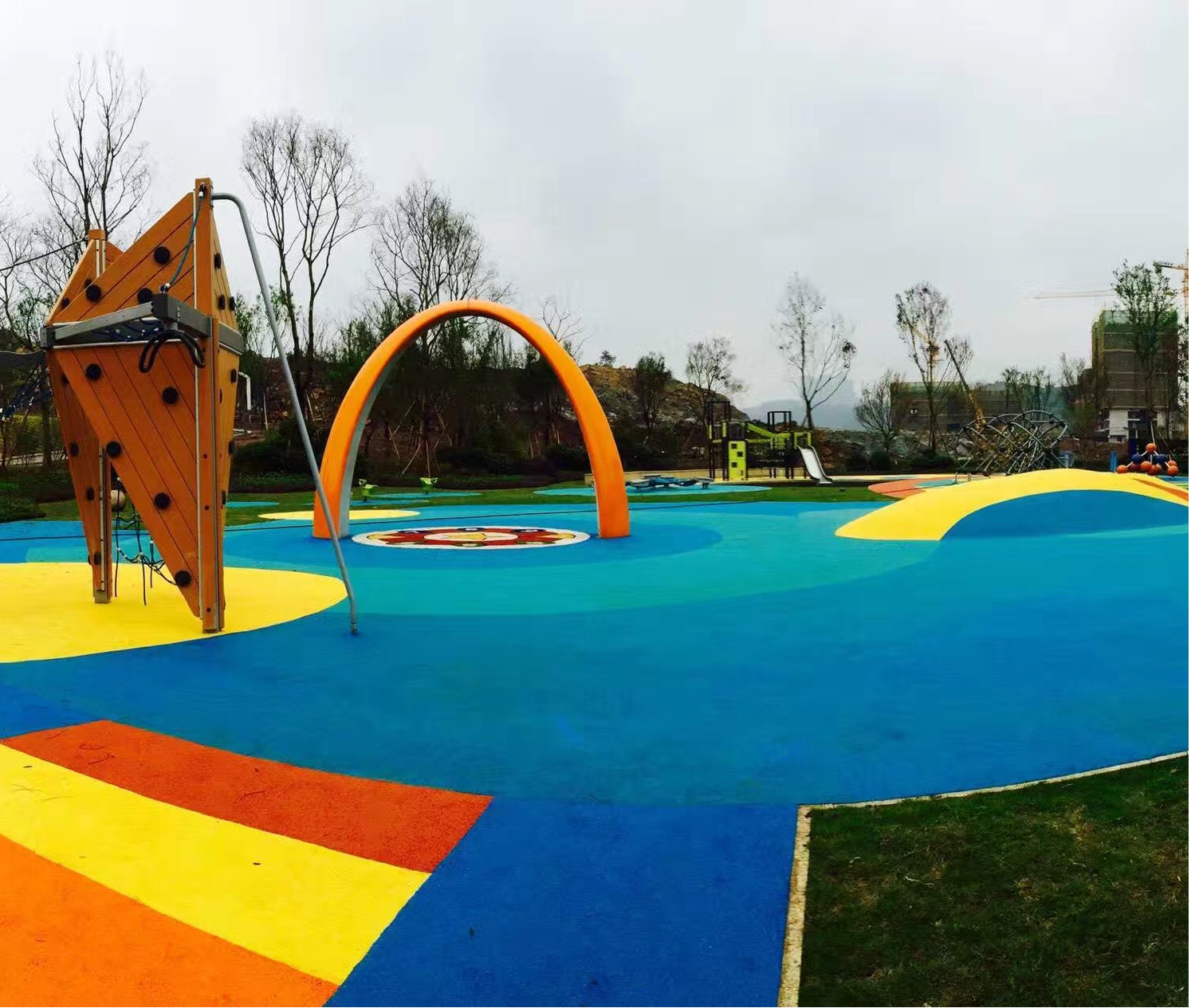
The U.S. market is mature but growing steadily — private equity investment in EPDM recycling infrastructure exceeded $500 million in 2023 alone, signaling long-term institutional confidence in the material. North American buyers tend to specify ASTM F1292 (impact attenuation) and ASTM F2075 (size specifications) and request Safety Data Sheets (SDS) and Technical Data Sheets (TDS) as standard pre-qualification documents.
The CAGR for U.S. EPDM granule consumption is projected at 4.37% through 2034, driven by municipal spending on public parks, school playgrounds, and ADA-compliant recreational surfaces.
Southeast Asia (Vietnam, Thailand, Indonesia, Philippines)
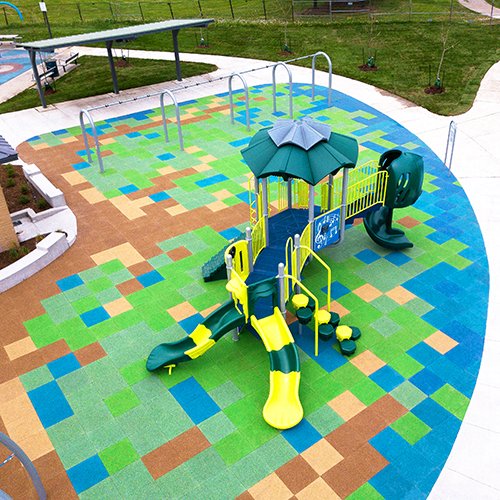
This is the fastest-moving frontier market for EPDM granules. Urbanization rates above 3% per year, government investment in school infrastructure, and a growing middle-class appetite for private sports clubs are creating demand that local supply chains cannot yet fully serve. International suppliers who can ship FOB from Chinese or Malaysian ports with lead times under 21 days hold strong competitive positions here.
Humidity resistance is the primary technical concern in this region — granules must perform in environments where relative humidity regularly exceeds 85% and standing water is a seasonal reality.
The 5 Specifications That Define Quality (Buyer’s Checklist)
When requesting quotes from EPDM granules manufacturers, evaluate suppliers on these five parameters — not price alone:
1. Rubber Content Percentage
Virgin EPDM granules should contain a minimum of 20% true EPDM polymer content by weight. Products blended with excessive calcium powder or recycled SBR rubber to reduce cost will show accelerated whitening and edge detachment within 2–3 seasons.
2. Color Depth
Professional-grade granules are pigmented throughout the matrix during vulcanization. Ask suppliers for a cross-section sample. If the interior is grey or black and only the outer layer holds color, the product will fade rapidly under UV exposure.
3. UV Resistance Rating (QUV Hours)
Minimum 500 QUV hours for general markets; 1,000+ QUV hours for Middle East and equatorial deployments. Request the actual lab report, not just a claim.
4. Size Consistency (Sieve Analysis)
A quality supplier should demonstrate that 90%+ of granules fall within the stated size range. Poor sieve consistency creates uneven binder absorption and a non-uniform finished surface.
5. REACH / RoHS Compliance Documentation
This is table-stakes for EU import and increasingly required by institutional buyers in the GCC. Any supplier unable to provide these documents within 48 hours of request is a procurement risk.
How to Read a Quote from an EPDM Granules Supplier
Sourcing errors often happen at the quoting stage because buyers compare incompatible specifications. When requesting a price:
- Specify color (Pantone or RAL reference if possible) + granule size + total tonnage
- Confirm whether you need virgin EPDM or whether recycled EPDM is acceptable (recycled is appropriate for base layers, not wear-course top layers)
- Clarify Incoterms — FOB, CIF, or DDP — and the destination port
- Ask for lead time from order confirmation to container loading, not just “production time”
Market Snapshot: Where the Industry Is Heading
The global EPDM granules market is valued at approximately USD 362 million in 2024 and projected to reach USD 570 million by 2033, at a CAGR of 5.19%. Green and multicolored granule variants are the fastest-growing color segments. The 1.0–3.0 mm size range dominates by volume due to its balance of cushioning and surface density.
Three trends are reshaping supplier selection globally:
Sustainability mandates: Recycled EPDM variants are gaining share in European base-layer specifications, with over 35% of newly installed playgrounds worldwide incorporating recycled content in 2023, up from 28% the previous year.
Smart surface integration: Pilot projects in South Korea and the Netherlands are embedding pressure sensors and RFID tracking within EPDM-based surfaces to monitor surface wear and foot traffic patterns in real time.
Regionalized supply chains: Post-2020 logistics disruption permanently changed buyer behavior. Distributors in every major market are now demanding regional warehousing commitments, not just factory capacity claims.
Frequently Asked Questions
How long do EPDM granules last?
High-quality virgin EPDM granule surfaces last 7–10 years with routine maintenance, including annual inspection, cleaning, and spot repair of binder separation at edges.
What is the difference between EPDM and SBR granules?
SBR (Styrene-Butadiene Rubber) is typically derived from recycled tires and used in base layers due to lower cost. EPDM is a virgin synthetic rubber used in the wear-course top layer for its UV stability, color retention, and skin-safe properties.
Can EPDM granules be used indoors?
Yes. EPDM is widely used in indoor gyms, fitness centers, and commercial spaces. Indoor applications benefit from the same shock absorption and anti-slip properties without requiring the same UV resistance ratings.
What grain size should I order for a running track?
Athletic tracks typically specify 0.5–1.5 mm granules for the top layer (EPDM) and 2.0–4.0 mm for the SBR base cushion layer.
Is EPDM environmentally safe for children’s playgrounds?
Compliant EPDM granules — those tested for PAH, heavy metals, and VOC content under EN 71-3 or equivalent standards — are internationally recognized as safe for playground applications. Always request the specific test certificates, not just a general compliance claim.
For bulk pricing inquiries, sample requests, or project-specific technical consultations, contact [+86 18998077389] at [info@jflysports.com] or WhatsApp [+86-18998077389]. Please include your destination country, required color and size specifications, and estimated annual volume.