

The complaint arrived on a Tuesday morning. A school district in Riyadh had commissioned a new playground surface — 1,200 square meters of colored EPDM, installed the previous spring. Fourteen months later, the surface was blistering at the seams, fading unevenly, and lifting at three corners. The contractor blamed the weather. The weather had nothing to do with it.
This scenario plays out more often than the industry likes to admit. EPDM granule surfaces have a deserved reputation for durability — but that reputation belongs to correctly specified, properly installed, supplier-verified projects. The gap between a 10-year surface and an 18-month liability claim is rarely visible at the quotation stage. This article shows you exactly where that gap hides.
The Problem Starts Before the First Bag Is Opened
Most EPDM surface failures are not installation failures. They are procurement failures that do not become visible until months after the contractor has been paid and left the site.
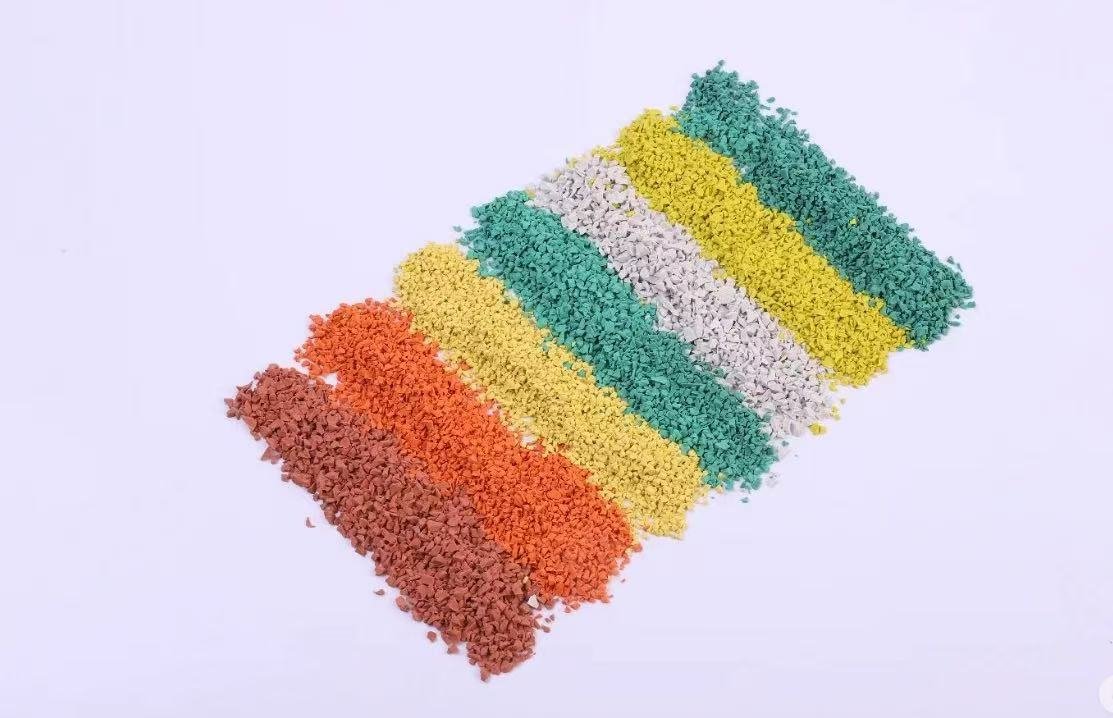
The root cause is almost always the same: a buying decision made on price-per-ton without a corresponding verification of what that price actually delivers. The term “EPDM granules” covers a product spectrum wider than most buyers realize:
- Tier 1 — Virgin EPDM, full-body pigmentation: Polymer content 20–28%, color pigmented throughout the granule matrix during vulcanization, UV-stable for 8–12 years in temperate climates
- Tier 2 — Blended EPDM: Virgin EPDM mixed with SBR or calcium carbonate filler to reduce cost; acceptable for base layers, problematic in wear-course applications
- Tier 3 — Surface-coated granules: Black or grey rubber base coated with pigment after production; color begins separating within 12–24 months under UV and foot traffic
All three can be quoted under the same product name. Only one of them belongs on a playground wear surface. The price difference between Tier 1 and Tier 3 is typically 15–25% per tonne — a fraction of the total project cost, and a fraction of the cost of ripping out and relaying a failed surface two years later.
Five Hidden Variables That Cause Projects to Fail
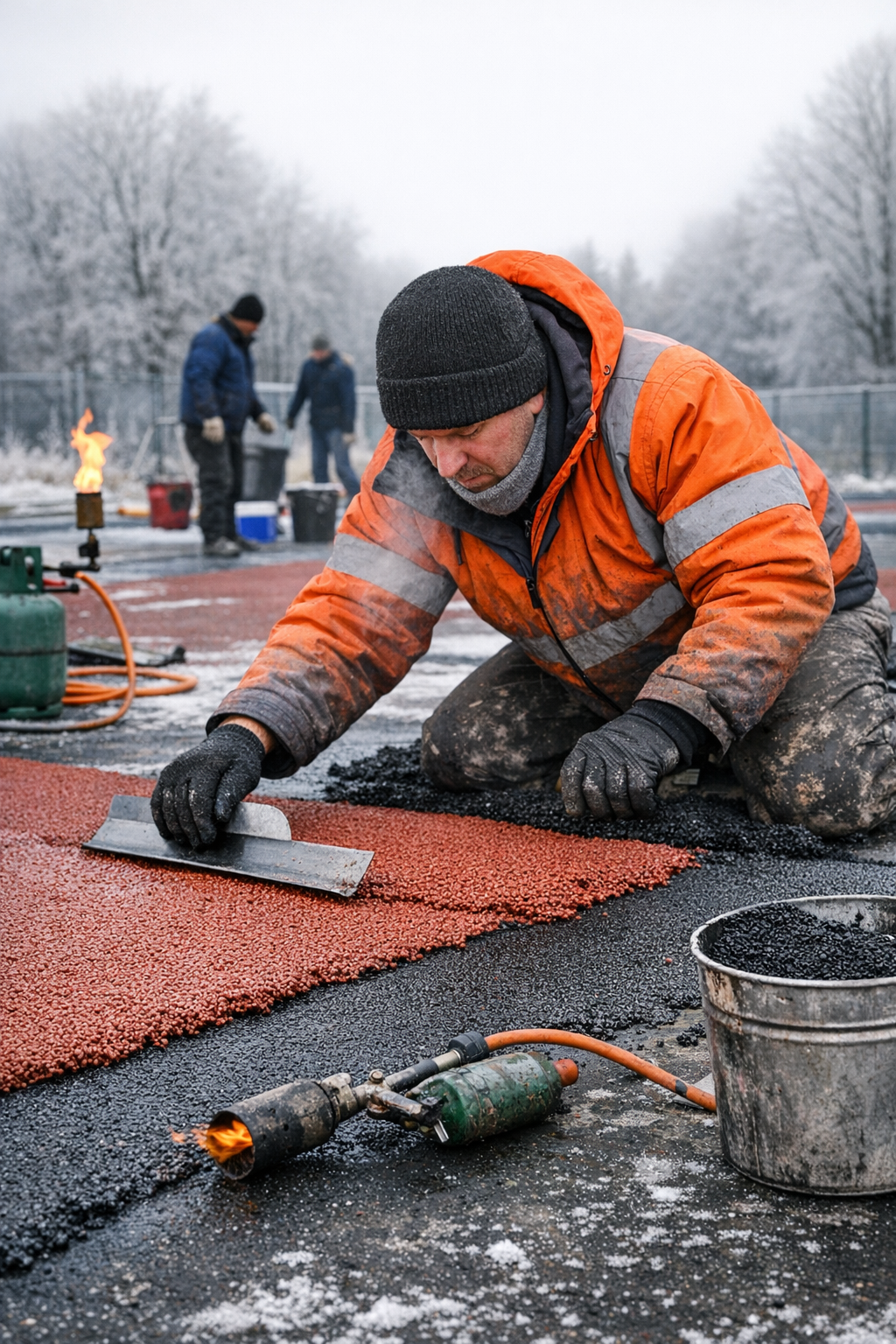
Beyond granule quality, experienced contractors and project managers have identified five variables that determine surface longevity — none of which appear on a standard product specification sheet.
1. Binder Ratio Miscalculation
Polyurethane binder is the adhesive matrix that holds EPDM granules together into a cohesive surface. The correct ratio is not universal — it varies based on granule size, surface application depth, ambient installation temperature, and whether the layer is a base or wear course.
A ratio that is too low produces a brittle, friable surface that cracks under impact within the first winter freeze-thaw cycle. A ratio that is too high produces a surface that remains tacky, attracts particulate contamination, and loses its anti-slip texture. The industry standard guidance of 16–22% binder by weight is a starting range, not a fixed prescription. Projects that skip a site-specific mix design trial are gambling with a significant capital investment.
2. Installation Temperature Windows Were Ignored
Polyurethane binders are moisture-curing systems. They require specific ambient temperature and humidity conditions to cure correctly. The acceptable window is typically 10°C to 35°C ambient air temperature, with relative humidity below 80%.
Projects installed in the Middle East during summer peak hours — when surface temperatures can exceed 65°C — experience accelerated and uneven curing that creates internal stress fractures invisible to the eye at handover. Projects installed in Northern Europe in late autumn, when temperatures drop below 10°C overnight, suffer incomplete curing that produces soft spots and delamination.
A surprising proportion of warranty disputes trace back to a two-week installation window that pushed past the safe temperature envelope — often because of project schedule pressure rather than any material deficiency.
3. Substrate Preparation Was Treated as an Afterthought
EPDM granule surfaces are only as stable as the substrate beneath them. Asphalt or concrete bases require minimum surface tensile strength, confirmed absence of surface laitance, and adequate drainage slope — typically 1–2% fall to prevent water pooling.
Substrate failures account for an estimated 30% of premature EPDM surface failures globally, according to installer industry surveys. The failure mode is predictable: water ingresses at a low point, freezes in cold climates or sits in hot climates, and creates hydraulic pressure that lifts the bonded surface from below. The EPDM granules themselves are undamaged. The interface between surface and substrate has failed entirely.
4. Color Batch Inconsistency Across Multiple Deliveries
Large projects — sports complexes, school campuses, municipal parks — are frequently supplied across two or three production batches separated by weeks or months. Color pigmentation in EPDM granules is a manufacturing variable. Batch-to-batch color tolerance, even from reputable suppliers, can produce visible variation when adjacent surface panels are installed from different production runs.
The solution is straightforward: lock a production batch number at order confirmation and require the supplier to hold inventory under that batch reference for the full project duration. Suppliers who cannot or will not accommodate this request are indicating limited production capacity or inventory management capability — both of which are legitimate procurement risk signals.
5. Drainage Design Was Never Part of the Conversation
Poured-in-place EPDM surfaces are semi-permeable at low installation depths (under 13mm) and essentially impermeable at standard playground depths (15–25mm). Projects that assume the surface material will handle drainage independently — without an engineered drainage layer or adequate substrate slope — will experience standing water, accelerated biological growth, and surface lifting within two to three rainy seasons.
This is a design oversight, not a material deficiency. But it becomes a material dispute when the surface visibly fails and the client is looking for someone to blame.
Failure Modes by Application Type
Different end uses create different failure patterns. Understanding which failure mode is most likely for your specific application changes what you should verify at the procurement stage.
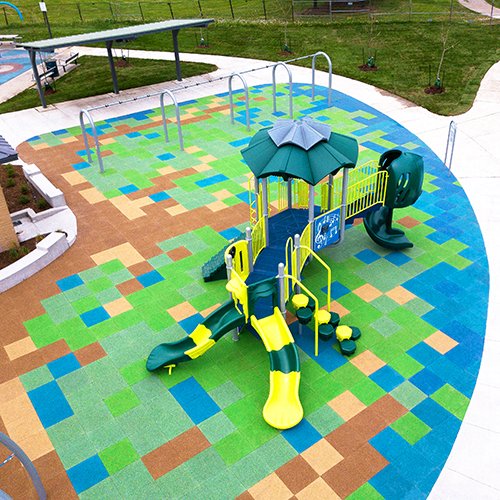
School and public playgrounds: The dominant failure mode is color fading and surface abrasion from high-frequency, concentrated foot traffic. Children’s play patterns create repetitive impact and drag stress on a small number of high-use zones — typically slide landings, swing fall zones, and climbing frame perimeters. These areas require higher-density granule specification and annual wear inspection.
Professional athletic tracks: The critical failure mode is delamination at lane line boundaries and starting block zones, where lateral shear forces concentrate. Track surfaces also experience significantly higher UV exposure per square meter than shaded playground surfaces. Projects in equatorial and Gulf climates that specify standard-grade EPDM for athletic track applications will see accelerated breakdown at the molecular level within three to four seasons.

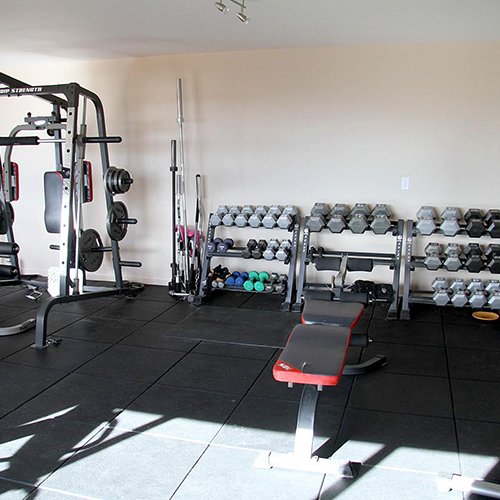
Commercial fitness and gym floors: The primary concern is compression set — the permanent deformation of the rubber matrix under sustained static load from equipment. EPDM granule surfaces specified for outdoor use are not always optimized for the concentrated point loads of weight training equipment. Indoor commercial installations require specific hardness and density specifications that differ from outdoor playground standards.
Five Supplier Red Flags to Spot Before You Sign
The following behaviors, observed during the pre-order process, are statistically associated with supply chain problems, quality inconsistencies, and post-installation disputes.
Red Flag 1 — They quote within hours without asking about the end use. A serious EPDM granules supplier needs to know the application, climate zone, installation depth, and expected foot traffic before quoting accurately. An instant quote without these questions means the supplier is quoting a generic product, not your project.
Red Flag 2 — They cannot produce a third-party lab report within 48 hours. PAH content, tensile strength, UV resistance, and particle size distribution should be documented by an independent laboratory, not self-certified. If these documents require more than two working days to produce, they may not exist in current form.
Red Flag 3 — They offer no physical sample before order. Color accuracy cannot be verified from a screen. Any supplier unwilling to send a physical sample for color and quality verification before a commercial order is transferred is creating conditions for a dispute at delivery.
Red Flag 4 — Lead time is quoted as “production time” only. The meaningful lead time is from order confirmation to container loading at the port of origin. Suppliers who quote production time without accounting for quality inspection, packaging, customs documentation, and port booking are setting up a delivery schedule that will miss your project timeline.
Red Flag 5 — There is no clarity on batch management. Ask directly: “Can you hold production under a single batch reference for my full order quantity?” A confident answer with a clear process is a positive signal. Hesitation, deflection, or an explanation of why this is not necessary should be taken seriously.
The Pre-Order Checklist That Protects Your Project

Before placing any EPDM granules order for a significant project, confirm the following from both sides of the transaction:
What you need to provide to your supplier:
- Installation country and city (climate zone determination)
- Application type (playground, track, gym, decorative landscape)
- Total surface area and installation depth
- Color specification (RAL or Pantone reference preferred)
- Required delivery date and port of destination
- Compliance requirements (REACH, EN 1177, ASTM, or local equivalent)
What your supplier must provide before order confirmation:
- Third-party lab report: PAH content, tensile strength, particle size analysis
- Physical color sample from current production stock
- REACH compliance certificate (for EU-destined shipments)
- Confirmed batch reference number and available inventory volume
- Container loading lead time from order confirmation (not “production time”)
- Reference project list with contact details in comparable climate zones
Frequently Asked Questions
Why is my EPDM rubber surface bubbling or lifting?
Surface bubbling is most commonly caused by one of three issues: water trapped between the EPDM layer and the substrate due to inadequate drainage slope; binder under-application that left sections of the granule matrix unbonded; or substrate movement from freeze-thaw cycling in cold climates. In all three cases, the EPDM granules themselves are rarely the primary cause.
Why is my rubber playground surface fading so quickly?
Rapid color fading almost always indicates surface-coated granules rather than full-body pigmented EPDM. Surface coatings begin separating from the base rubber within 12–24 months under UV exposure and abrasion. Full-body pigmented virgin EPDM granules retain color for 7–10 years under normal conditions. Request a cross-section of the granule from your supplier — the color should be consistent from the surface to the core.
Can EPDM surfaces be repaired without full replacement?
Yes, in most cases. Localized delamination, edge lifting, and isolated wear zones can be repaired by removing the affected area, re-preparing the substrate, and applying new granule and binder mix. The critical factor is matching the original granule color and size specification. This is significantly easier if the original batch reference was documented at the time of purchase.
How do I know if an EPDM granules supplier is reliable?
Request third-party test certificates, a physical sample, and a reference project list before placing an order. Ask specifically about batch management procedures for multi-delivery projects. Reliable suppliers answer these questions directly and quickly. Evasive or delayed responses to standard due diligence questions are a meaningful risk signal.
What causes EPDM surfaces to crack in cold climates?
Cracking in cold climates is typically caused by installation outside the safe temperature window for polyurethane binder curing, producing a surface with incomplete internal bonding. It can also result from a binder formulation not specified for freeze-thaw cycling. Confirm with your supplier that the binder system specified for your project is rated for the minimum winter temperatures at the installation site.
If you are evaluating suppliers for an upcoming EPDM granule project and want to verify specifications before committing, [JFLYSports Company] provides physical samples, third-party test documentation, and project-specific technical consultation as standard. Contact us at [info@jflysports.com] or WhatsApp [+86-86-18998077389] with your project location, application type, and timeline.