

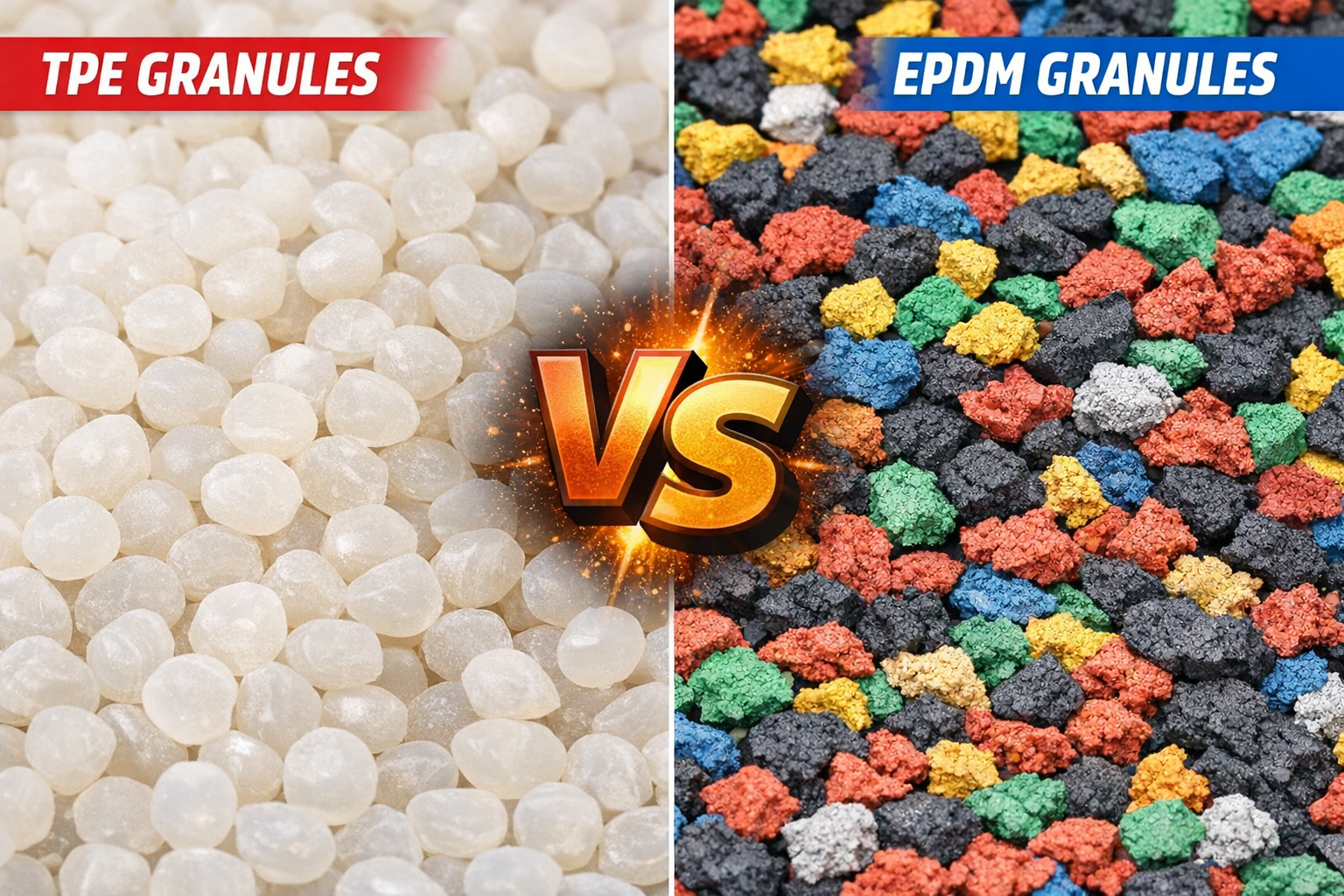
EPDM vs TPV Granules: Which Is Better in 2026?
TPV is generally better than EPDM in UV resistance, color retention, recyclability, and long-term maintenance, while EPDM remains superior for high shock absorption and athletic energy return. The right choice depends on your project type, climate, and budget. This 2026 EPDM vs TPV granules guide breaks down the real differences to help you decide.
Searching for **EPDM vs TPV granules**? You’re not alone. In 2026, procurement teams and specifiers frequently ask: Is TPV better than EPDM? What is the difference between TPV and EPDM? And which one offers better value — TPV vs EPDM price?
In the synthetic surfacing industry, there is no universal winner. EPDM (Ethylene Propylene Diene Monomer) has been the traditional choice for decades, but TPV (Thermoplastic Vulcanizates) is rapidly gaining market share due to superior weatherability and sustainability performance.
1. EPDM vs TPV Granules: Molecular & Performance Differences
TPV vs EPDM starts with their fundamental chemistry:
EPDM uses permanent chemical cross-linking through vulcanization. This gives it excellent compression set resistance and high resilience, making it ideal for athletic tracks where energy return matters most.
Best for Shock Absorption
TPV combines vulcanized EPDM particles in a polypropylene matrix with physical cross-linking. This structure allows reprocessing and recycling, delivering better UV stability and color consistency.
Best for Durability & Sustainability
2. Head-to-Head Technical Comparison (2026 Updated)
| Property | Premium EPDM | Premium TPV | Winner | Test Standard |
|---|---|---|---|---|
| Hardness (Shore A) | 65 ± 5 | 60–70 | TPV (more consistent) | ASTM D2240 |
| Tensile Strength | > 2.5 MPa | > 3.0–3.8 MPa | TPV | ASTM D412 |
| Elongation at Break | > 400% | > 500–650% | TPV | DIN 53504 |
| UV Resistance (2000h Xenon) | Good (4–5) | Excellent (5) | TPV | ISO 4892-2 |
| Abrasion Resistance | Good | Excellent | TPV | ASTM D5963 |
| Color Retention | Fair | Outstanding | TPV | Visual / Gray Scale |
| Recyclability | Limited | High | TPV | Circular Economy |
3. TPV vs EPDM Price: Cost Comparison 2026
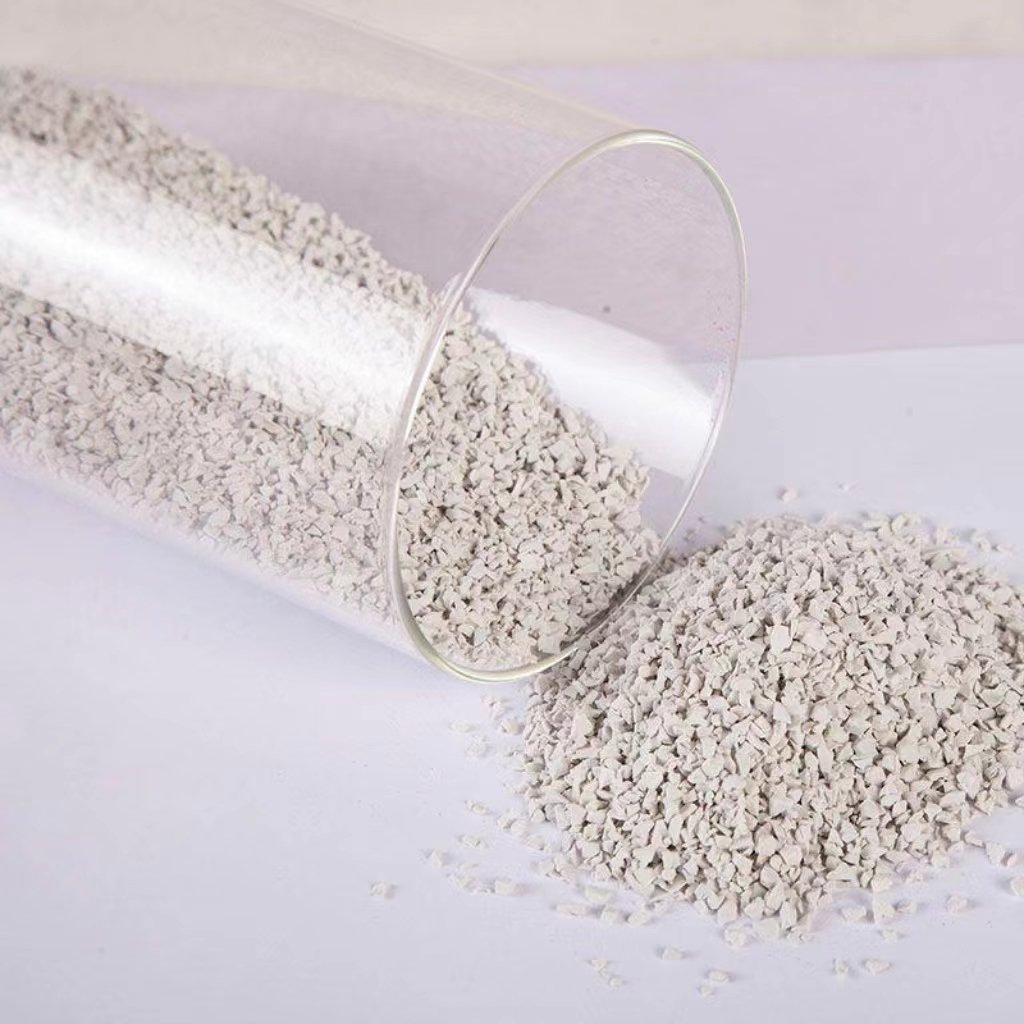
One of the most searched questions is **TPV vs EPDM price**. Here’s the reality:
- EPDM granules: Typically $1.65 – $2.40 per kg (depending on color and quality)
- TPV granules: Typically $2.10 – $3.10 per kg (15–30% higher than EPDM)
Although TPV has a higher initial cost, many projects see better **Total Cost of Ownership (TCO)** over 10 years due to reduced maintenance, longer lifespan, and fewer replacements in high-UV regions. For budget-sensitive athletic tracks, EPDM often wins on price. For premium playgrounds and architectural projects, TPV frequently delivers lower long-term cost.
4. Environmental Safety & Certifications
Both materials can be fully REACH and PAH-compliant when sourced correctly. TPV generally offers better toy-safety compliance (EN 71-3) and higher recyclability, making it increasingly preferred for school playgrounds and sustainable projects in 2026.
5. Expert Recommendation: Which Should You Choose?
Choose TPV if you prioritize long-term color vibrancy, UV resistance, low maintenance, and sustainability (architectural playgrounds, water parks, high-end commercial surfaces).
Expert Procurement Checklist
Frequently Asked Questions
Get expert advice and ASTM-certified samples for your specific climate and application.