

Artificial turf systems are widely used in football fields, school playgrounds, multi-purpose sports areas, and community facilities. In international trade, buyers are not simply sourcing artificial grass rolls—they are increasingly looking for complete turf systems, including infill materials that determine performance, safety, and long-term durability.
Among various infill options, EPDM granules, together with artificial sand and SBR rubber granules, are commonly used to build balanced artificial turf systems. For traders and distributors, understanding how these materials work together is essential for offering competitive, application-ready solutions.
This article focuses on the role of EPDM granules and artificial sand in artificial turf infill systems, with a practical perspective tailored for global trade and project supply.
Why Infill Materials Matter in Artificial Turf Systems
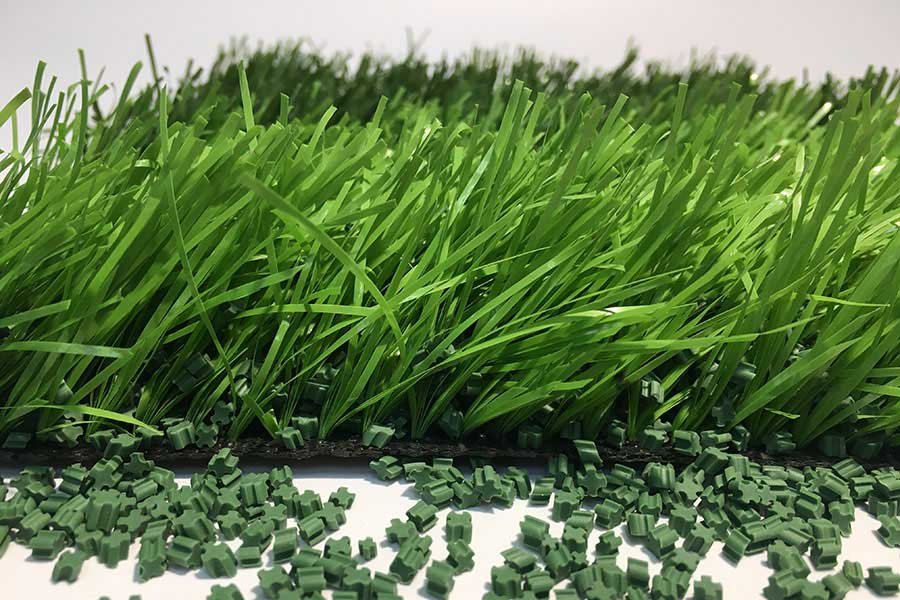
In artificial turf installations, the grass fibers alone do not define performance. The infill layer plays a critical role in:
-
Stabilizing grass fibers
-
Absorbing impact and reducing injury risk
-
Controlling surface friction and ball behavior
-
Supporting drainage and weather performance
Poor infill selection often leads to problems such as fiber collapse, uneven surfaces, excessive hardness, or accelerated wear. For this reason, most artificial turf systems adopt multi-material infill structures rather than relying on a single filler.
Common Artificial Turf Infill Structures Used in Trade
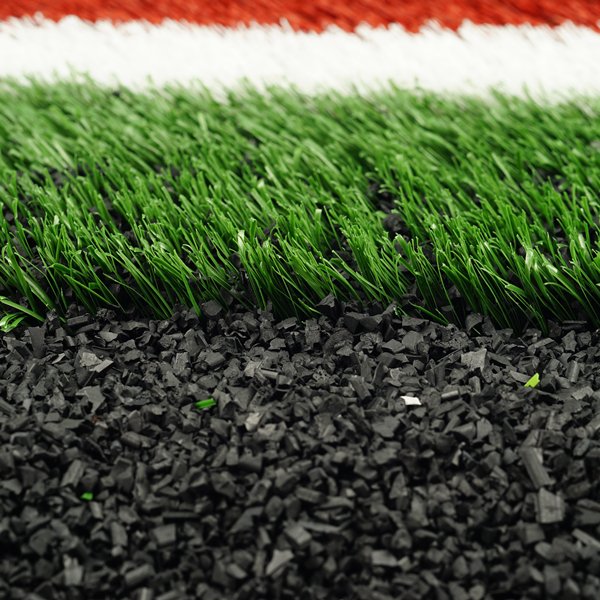
From a trade and supply perspective, artificial turf infill systems usually follow a layered approach, combining different materials for specific functions.
Artificial Sand as the Base Infill
Artificial sand (often silica-based or processed quartz sand) is typically applied as the first infill layer. Its main function is structural stability.
Key roles of artificial sand include:
-
Anchoring turf fibers upright
-
Improving surface flatness
-
Supporting drainage performance
Sand infill is cost-effective and widely accepted across global markets. However, sand alone provides limited cushioning, which is why it is usually combined with elastic materials.
Elastic Infill: EPDM and SBR Rubber Granules
To enhance comfort and safety, elastic rubber granules are applied above or mixed with sand infill. The most common options are EPDM granules and SBR rubber granules.
-
SBR granules offer economical shock absorption
-
EPDM granules provide UV resistance, color stability, and long-term elasticity
In many projects, EPDM granules are used as the upper elastic infill layer, while SBR or sand forms the lower structural layer. This combination allows suppliers to balance performance and cost according to project requirements.
Why EPDM Granules Are Used in Artificial Turf Infill
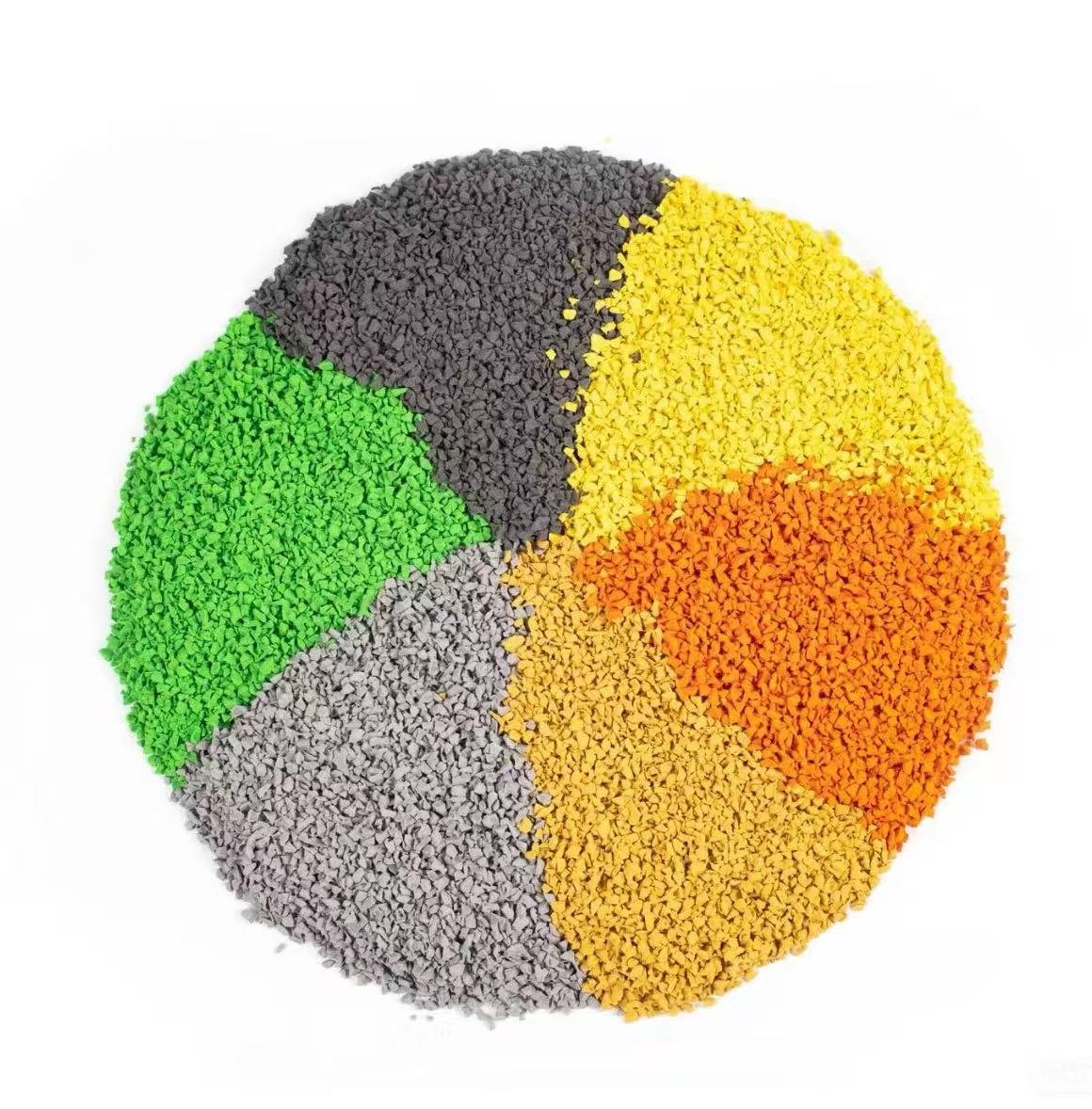
From a material trade perspective, EPDM granules are selected for artificial turf systems because they solve several long-term performance issues associated with recycled rubber or sand-only infill.
Weather and UV Resistance
Artificial turf fields are fully exposed to sunlight, rain, and temperature changes. EPDM granules maintain physical stability under UV exposure and do not become brittle or powdery over time, making them suitable for long-term outdoor use.
Stable Elasticity and Player Comfort
EPDM granules retain elastic recovery even after repeated compression. This helps artificial turf systems maintain consistent shock absorption, reducing fatigue and injury risk for players in high-frequency use environments such as schools and community fields.
Clean Appearance and Color Options
Unlike black recycled rubber, EPDM granules are available in multiple colors. This allows turf systems to maintain a cleaner visual appearance and supports customized field designs or zoning.
For trade buyers, these advantages translate into lower complaint rates and better project reputation.
Granule Size and Application in Turf Systems
Granule size affects both surface behavior and infill stability.
Common specifications include:
-
EPDM granules: 1–3 mm or 2–4 mm
-
SBR granules: typically 1–4 mm
-
Artificial sand: controlled particle size for drainage
Smaller EPDM granules provide smoother ball roll and even distribution, while slightly larger granules enhance resilience in high-impact zones such as goal areas.
Offering multiple size options allows traders to align products with local standards and buyer preferences.
Artificial Turf Systems for Different Applications
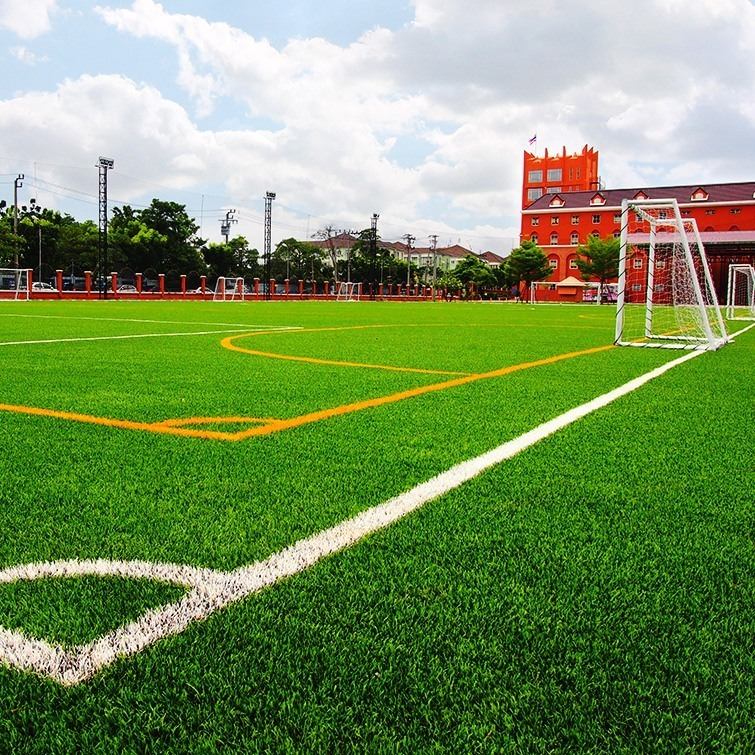
Football Fields and Sports Pitches
In football fields, infill systems must balance ball response, traction, and player safety. A common structure includes:
-
Sand infill for fiber stability
-
Elastic rubber infill (EPDM or EPDM + SBR) for shock absorption
EPDM granules are often selected for upper layers due to their durability and reduced heat buildup compared to dark rubber infills.
School and Kindergarten Play Areas
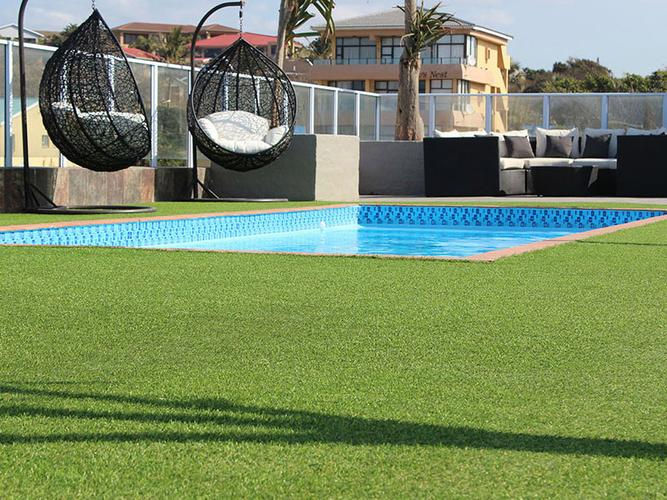
For schools, safety and maintenance are primary concerns. EPDM granules combined with sand infill provide:
-
Softer landing characteristics
-
Reduced abrasion risk
-
Stable performance across seasons
These systems are commonly specified for school playgrounds and multi-purpose turf areas supplied through international trade.
Community and Multi-Use Turf Fields
Community fields often serve mixed activities, from casual sports to public events. Adjustable EPDM-to-sand ratios allow suppliers to fine-tune surface hardness and durability while controlling material cost.
This flexibility is especially valuable for traders handling budget-sensitive public projects.
Trade Advantages of EPDM-Based Turf Infill Systems
For international traders and distributors, EPDM granules offer several commercial benefits when supplied as part of artificial turf systems:
-
Compatibility with multiple turf fiber types
-
Flexible mixing ratios for different price levels
-
Stable export quality across markets
-
Reduced long-term maintenance risk
Instead of selling infill materials separately, suppliers can package EPDM granules, artificial sand, and optional SBR granules as a complete turf infill solution, increasing order value and differentiation.
Typical Buyer Questions in Artificial Turf Projects
Trade buyers commonly ask about:
-
Recommended EPDM and sand ratios
-
Granule size and color availability
-
Climate suitability
-
Packaging and logistics
-
Compatibility with local turf systems
Being able to clearly explain infill structure and material roles helps build trust and speeds up purchasing decisions.
Supplying Artificial Turf Infill Solutions for Global Markets
As artificial turf continues to expand in sports and recreational applications, demand for reliable infill materials remains strong. EPDM granules, combined with artificial sand and SBR rubber, provide a proven solution that balances performance, durability, and cost control.
For traders, focusing on system-based supply rather than single materials is the key to long-term competitiveness in the artificial turf market.
