

When specifying rubber granules for sports surfaces, playground flooring, running tracks or artificial turf infill, buyers face a critical decision: EPDM, SBR or TPV? Each material has distinct properties, cost profiles and performance trade-offs that directly affect the lifespan, safety and appearance of the finished surface. This in-depth comparison breaks down the molecular science, real-world performance and total cost of ownership of each material — so specifiers, contractors and facility owners can make the right choice for their project, climate and budget.
Understanding the Three Main Rubber Granule Types
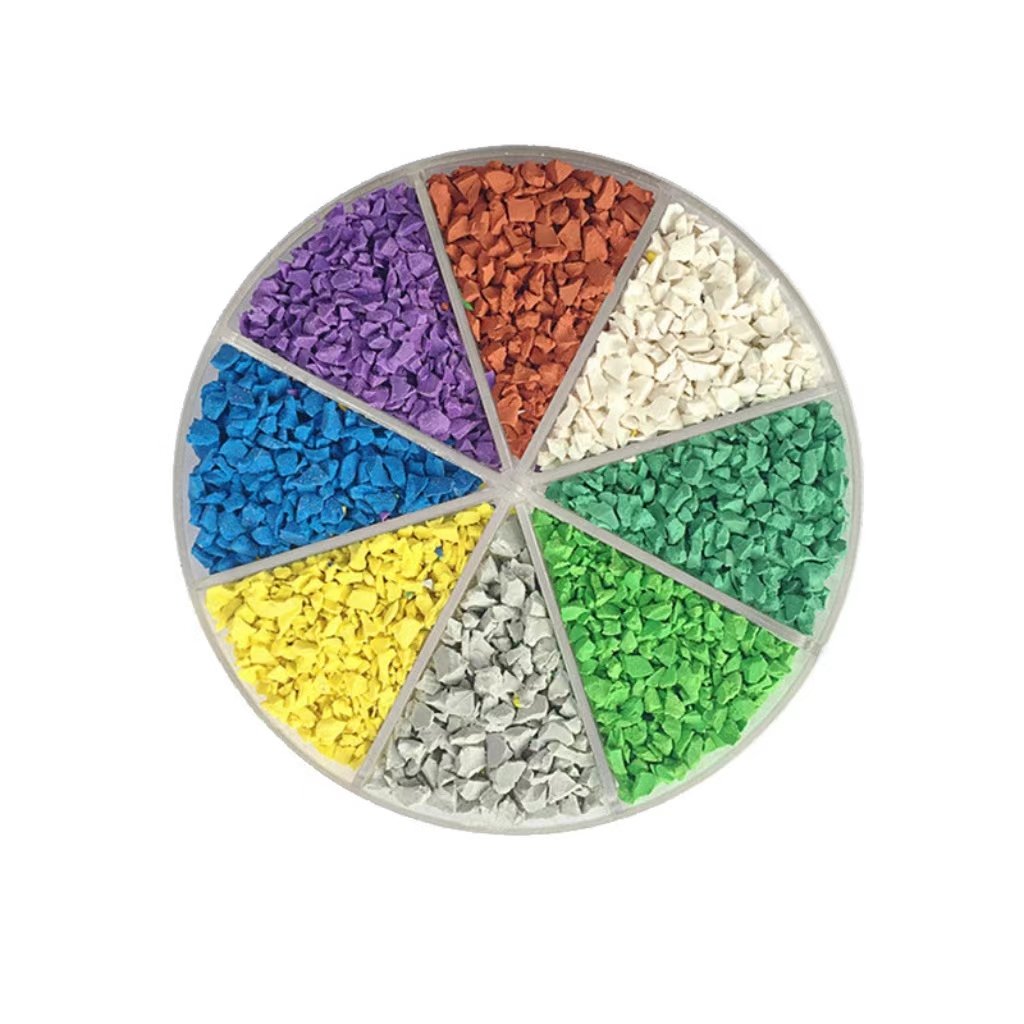

Before comparing performance, it is essential to understand what each material actually is — because the manufacturing origin explains nearly every behavioural difference.
EPDM (Ethylene Propylene Diene Monomer)
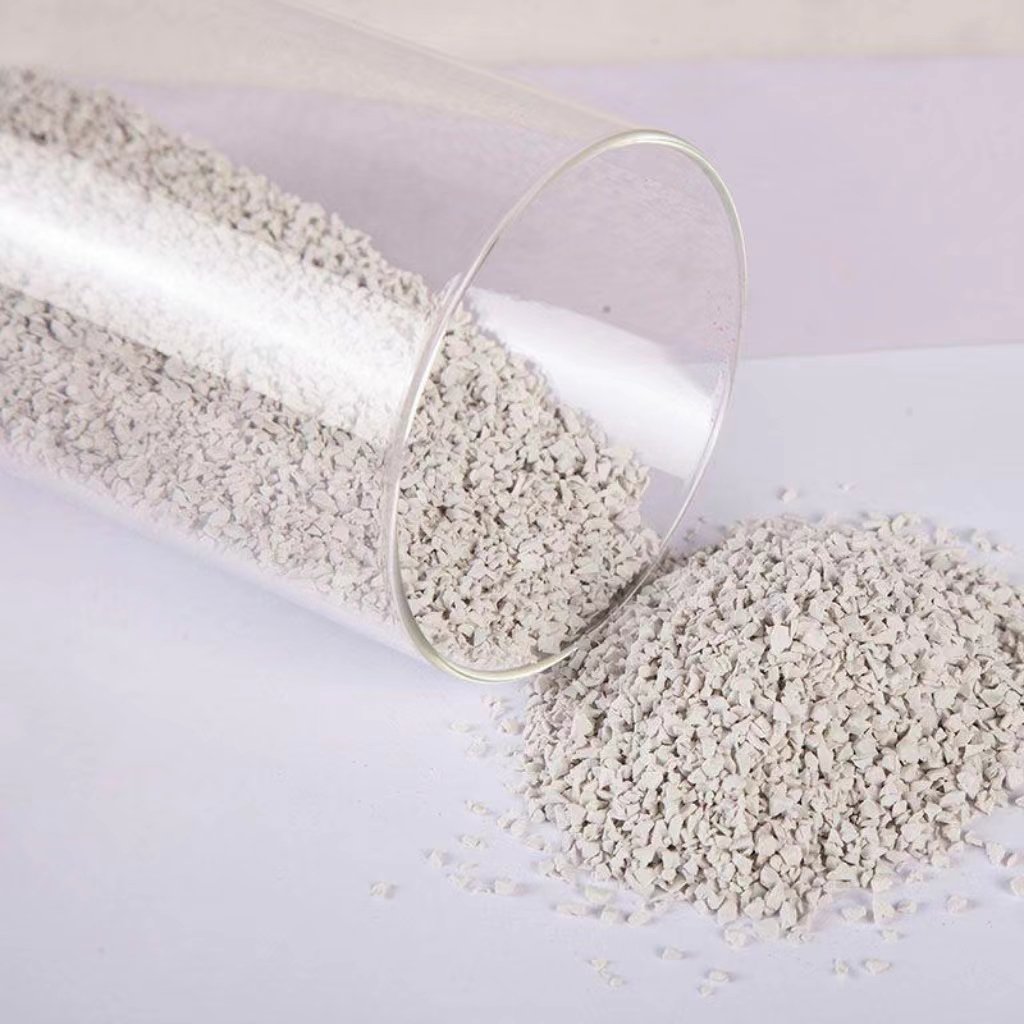
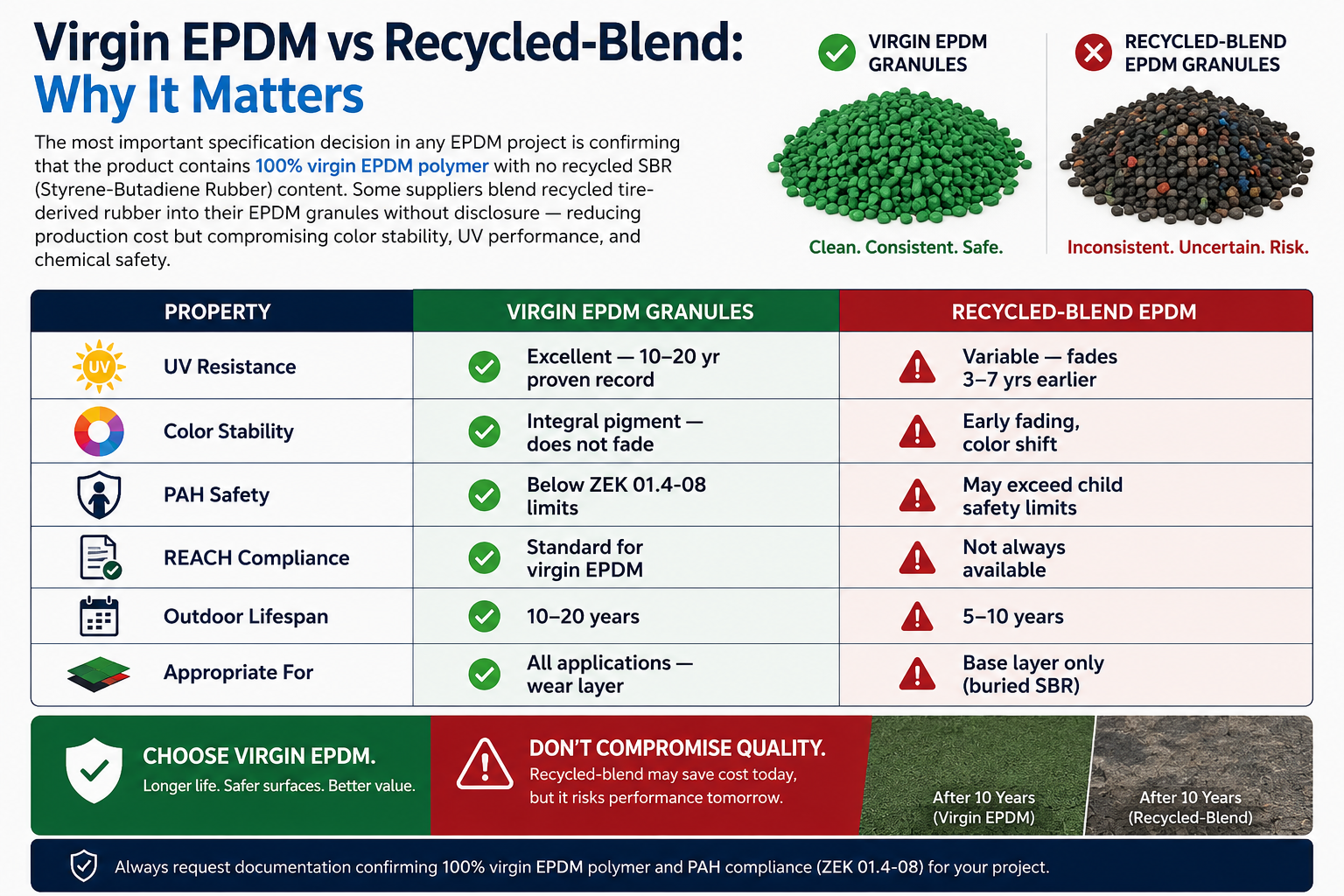
EPDM is a virgin synthetic rubber manufactured from petrochemical feedstocks through a controlled polymerisation process. The resulting polymer has a saturated main chain (no carbon-carbon double bonds in the backbone) with a small amount of diene providing cross-linking sites for vulcanisation. This molecular structure is the key to EPDM’s extraordinary resistance to UV radiation, ozone and oxidative degradation — the very forces that destroy most other rubbers outdoors.
EPDM granules are produced by compounding the raw rubber with fillers, plasticisers, pigments and curing agents, then vulcanising and granulating the cured sheet or block into particles of specified size. The entire process is controlled from raw material to finished granule, ensuring consistent quality and purity.
SBR (Styrene-Butadiene Rubber) — Recycled Tyre Crumb
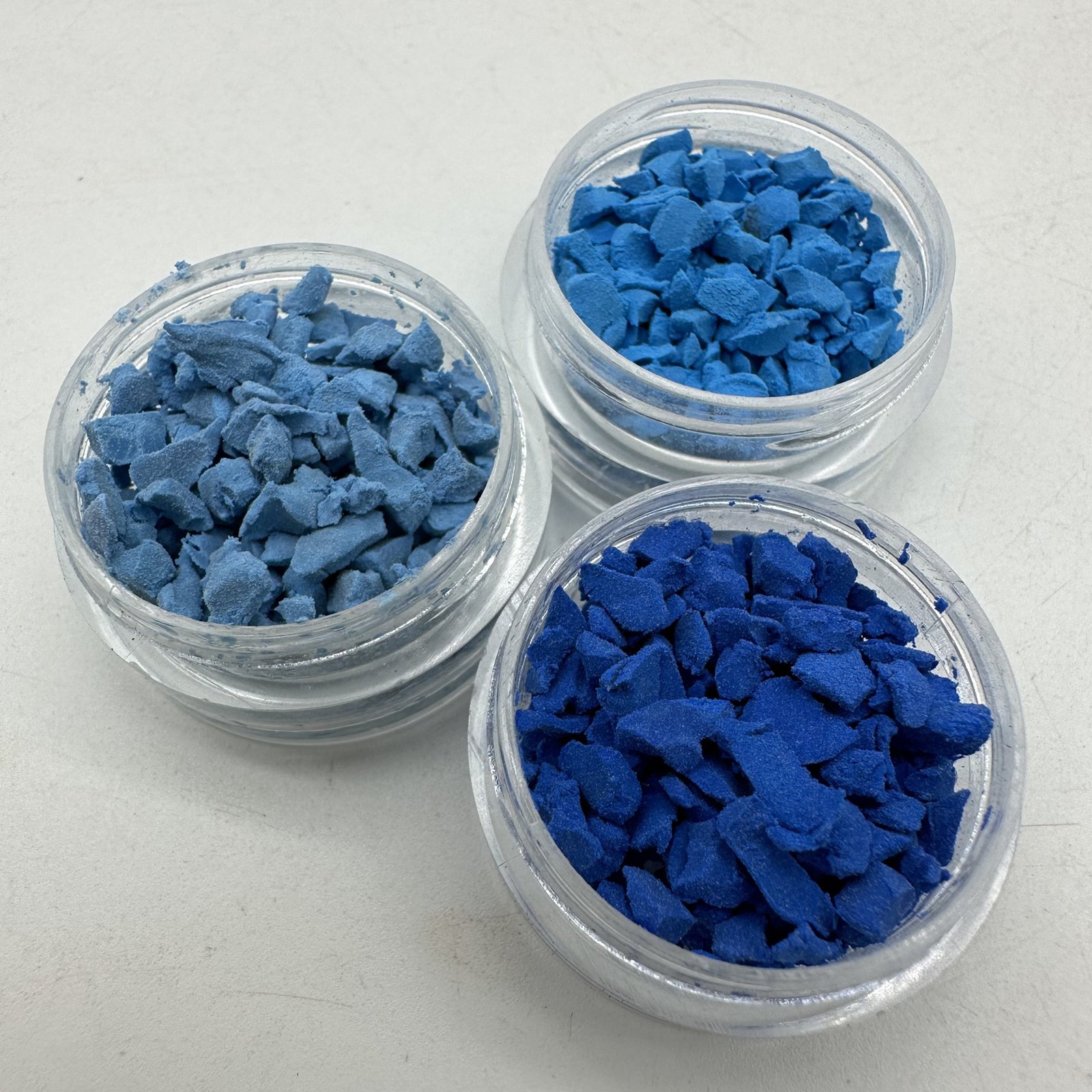
SBR crumb rubber is reclaimed from end-of-life vehicle tyres through shredding, cryogenic grinding or ambient mechanical grinding. Tyres are complex composite products containing natural rubber, SBR, carbon black, silica, processing oils, zinc oxide, sulphur and various accelerators. When ground into crumb, the result is a variable mixture whose composition depends entirely on the tyre feedstock — which changes with every batch.
SBR crumb is black, has a strong rubber odour, and contains residual oils, carbon black and potentially concerning substances including PAHs and heavy metals. Its advantages are low cost, good initial shock absorption and wide availability. Its disadvantages — poor UV resistance, rapid colour fading (it can only be black), hardening and cracking over time, and chemical variability — make it unsuitable as a visible top layer in premium outdoor surfaces.
TPV (Thermoplastic Vulcanisate)
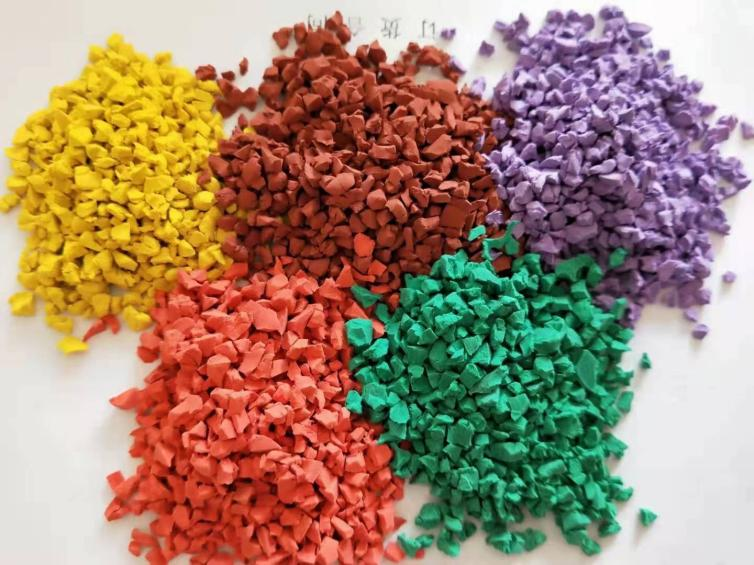
TPV is an engineered material consisting of a blend of EPDM rubber dispersed in a polypropylene (PP) matrix, dynamically vulcanised during extrusion. The result is a material that combines some of the rubber-like elasticity of EPDM with the processability of a thermoplastic. TPV granules are manufactured in defined colours and offer better UV stability and colour retention than SBR, but at a cost position between SBR and EPDM.
TPV’s main limitation compared to EPDM is that the polypropylene matrix makes the granules slightly harder and less elastic. In sports surface applications, this translates to a firmer feel and marginally lower force reduction values. However, TPV is fully recyclable (it can be re-melted and re-extruded), which gives it an environmental advantage over both EPDM and SBR in sustainability-focused projects.
Material Composition and Molecular Structure: Why Origin Determines Performance
The performance differences between EPDM, SBR and TPV are not accidental — they are rooted in the molecular structure and chemical composition of each material.
| Property | EPDM | SBR (Recycled) | TPV |
|---|---|---|---|
| Polymer Backbone | Saturated (no C=C in main chain) — inherently UV/ozone stable | Unsaturated (C=C bonds present) — vulnerable to UV degradation | EPDM phase in PP matrix — good stability, limited by PP phase |
| Source | Virgin, purpose-manufactured | Reclaimed from waste tyres — variable composition | Engineered blend — controlled but thermoplastic |
| Cross-Link Type | Covalent (thermoset) — irreversible, dimensionally stable | Covalent (thermoset) from original tyre cure — but compound is variable | Dynamic vulcanisate — rubber phase cross-linked, PP phase thermoplastic |
| Carbon Black | None (unless specified for black grades) — allows full colour palette | Inherent from tyre composition — material is permanently black | None — allows colour, but slightly less vibrant than EPDM |
| Residual Oils & Additives | Minimal — controlled formulation | Significant — processing oils, accelerators, zinc, silica from tyre source | Minimal — controlled formulation |
| Recyclability | Limited — thermoset rubber cannot be re-melted; can be reground for lower-grade use | Limited — already reclaimed; further recycling degrades properties | Good — thermoplastic component allows reprocessing |
Comprehensive Performance Comparison

Typical outdoor service life of SBR before visible degradation begins
Expected outdoor colour and performance retention of quality EPDM
Expected outdoor performance window for TPV granules
The following comparison covers the performance parameters that matter most to specifiers and end users:
| Performance Parameter | EPDM | SBR (Recycled) | TPV |
|---|---|---|---|
| UV Resistance | Excellent — 8–15+ years outdoors | Poor — 3–5 years before hardening/cracking | Good — 5–10 years |
| Colour Stability | Excellent — full palette, pigment throughout granule | None — permanently black; coatings fade quickly | Good — full palette, slightly less vibrant |
| Initial Elasticity | Excellent | Good | Good, but firmer than EPDM |
| Elasticity Retention Over Time | Excellent — stable over service life | Poor — hardens and loses resilience with UV exposure | Good — moderate degradation |
| Force Reduction (Shock Absorption) | High — depends on layer thickness and binder | High initially, degrades over time | Medium — firmer feel, lower cushioning |
| Chemical Purity | High — virgin, REACH-compliant | Variable — may contain PAHs, heavy metals, residual oils | High — controlled formulation |
| Odour | Very low | Strong tyre/rubber smell, intensifies in heat | Very low |
| Abrasion Resistance | Excellent | Good initially, degrades | Good |
| Temperature Stability | −40°C to +125°C | Good initially, narrows with degradation | −30°C to +100°C (limited by PP phase) |
| Moisture Resistance | Excellent — low water absorption | Good, but residual oils can leach | Excellent |
| Sustainability | Moderate — virgin material, not easily recyclable | Good — utilises waste tyres (circular economy) | Good — thermoplastic, can be reprocessed |
Application-Specific Recommendations
Different applications prioritise different performance attributes. Here is how the three materials align with common end uses:
1. Running Tracks and Athletics Surfaces
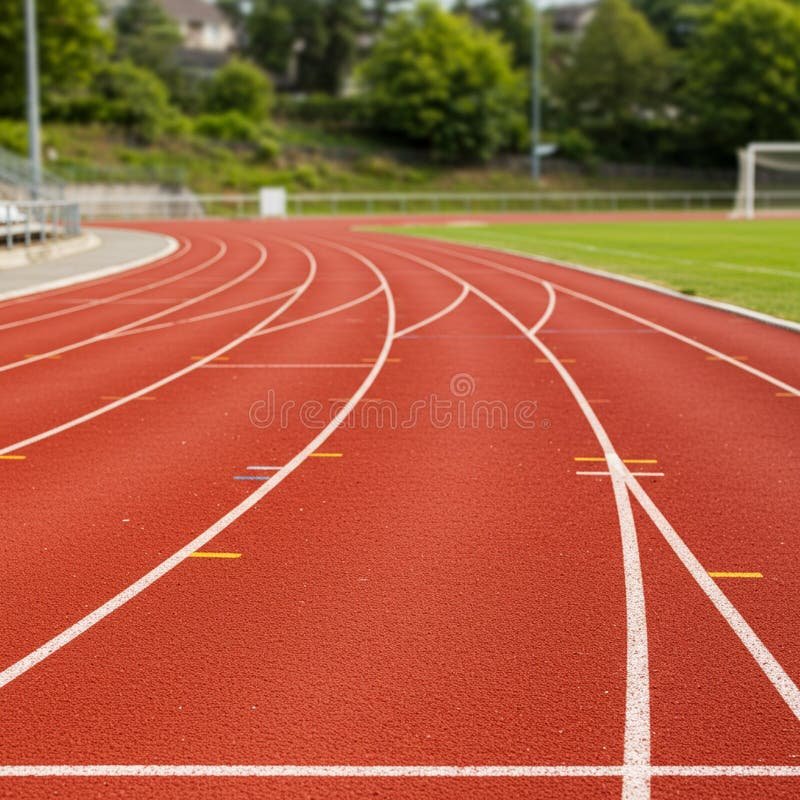
- Recommended: EPDM wear layer over SBR base — The most cost-optimised approach. SBR provides economical bulk shock absorption in the base layer; EPDM provides UV-stable colour and durable wear resistance in the visible top layer.
- Premium alternative: Full-depth EPDM — Maximum durability and consistency, ideal for World Athletics certified competition tracks where uniformity and longevity are paramount.
- Avoid: SBR-only surfaces — Will fade, harden and crack prematurely, requiring resurfacing within 5–7 years vs 10–15 for EPDM systems.
2. Playground Safety Surfaces
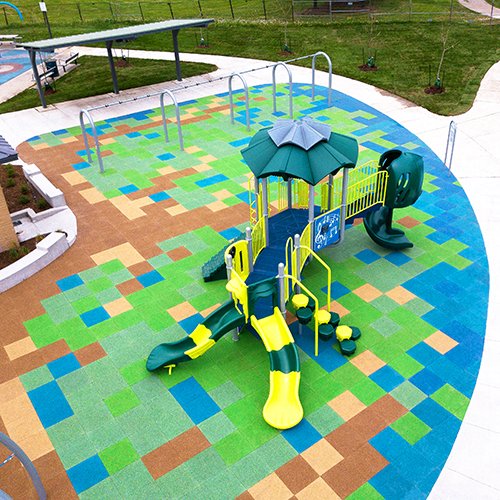
- Recommended: EPDM top layer — Bright colours that engage children, verified non-toxic composition, EN 1177 / ASTM F1292 compliance, and long-term UV stability for outdoor play areas.
- Acceptable: EPDM over SBR base — Hybrid construction for deeper impact layers, with EPDM ensuring the visible and contact surface remains safe and colourful.
- Avoid: SBR-only surfaces for playgrounds — Potential chemical exposure concerns, no colour options, and rapid outdoor degradation in high-use areas.
3. Artificial Turf Infill
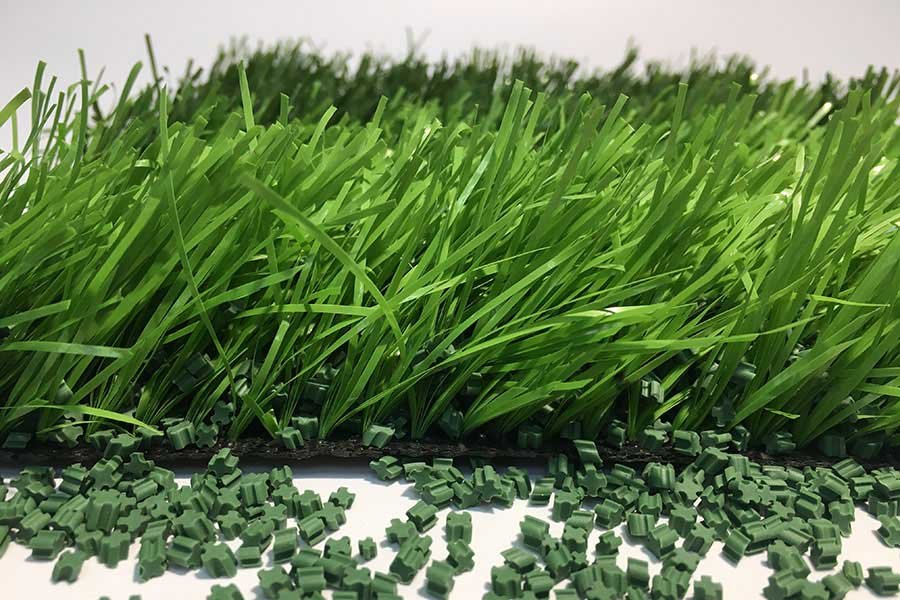
- Recommended: EPDM infill for premium installations — No rubber odour, lower surface temperature, no leaching of oils, and longer service life. Ideal for schools, residential installations and professional training facilities.
- Budget alternative: SBR infill — Widely used in cost-sensitive projects, but strong odour, higher surface temperatures and potential chemical concerns have led some jurisdictions to restrict or ban SBR infill.
- Emerging alternative: TPV infill — Offers good UV stability and colour options at a mid-range price point, with the environmental advantage of recyclability.
4. Multi-Sport Courts (Tennis, Basketball, Pickleball)

- Recommended: EPDM cushion layers under acrylic system — The cushion layer is encapsulated by acrylic top coats, so UV exposure is indirect. EPDM provides the best long-term elasticity and dimensional stability under the acrylic surface.
- Not recommended: TPV for cushion layers — TPV’s firmer feel and lower elasticity make it less effective for the shock-absorbing role.
Total Cost of Ownership Analysis
While SBR has the lowest initial material cost, the total cost of ownership over a 10–15 year period tells a very different story.
| Cost Factor | EPDM | SBR | TPV |
|---|---|---|---|
| Material Cost (per kg) | Highest | Lowest | Medium |
| Installation Complexity | Standard — same wet-pour process | Standard | Standard — may need temperature-controlled binder |
| Expected Surface Life (Outdoor) | 10–15 years | 5–7 years | 7–10 years |
| Resurfacing Frequency | Every 8–12 years | Every 4–6 years | Every 6–8 years |
| Colour Refresh Required | Rarely — colour is integral and UV-stable | Frequently — surface coatings fade and wear | Occasionally |
| Replacement Risk (Premature Failure) | Low — when properly specified and installed | Higher — UV degradation, cracking, chemical leaching | Low–medium |
| 10-Year Lifecycle Cost | Best value — fewer interventions, longer service life | Often higher than EPDM due to resurfacing and replacement | Good value — balanced performance and cost |
Environmental and Sustainability Considerations
Sustainability is an increasingly important factor in material selection, and each rubber granule type offers a different environmental profile:
EPDM: Manufactured from virgin petrochemical feedstocks, EPDM has a higher embodied energy than recycled alternatives. However, its long service life (10–15 years) means fewer replacements, less waste and lower lifetime material consumption. EPDM is not easily recyclable at end of life (it is a thermoset), but can be reground for use as filler in lower-grade applications. For projects pursuing environmental certifications, virgin EPDM’s chemical purity (no PAHs, no heavy metals, REACH-compliant) is a significant advantage.
SBR (Recycled Tyre): SBR represents the circular economy at its most direct — converting waste tyres into useful surfacing material. This diverts millions of tonnes of tyres from landfill or incineration annually. However, the variable chemical composition (including potentially concerning substances) and short outdoor service life raise questions about whether the environmental benefit is truly realised when surfaces need replacement every 5–7 years. Several European countries have introduced restrictions or testing requirements for PAH content in recycled rubber used in sports surfaces.
TPV: TPV offers the best recyclability of the three — its thermoplastic component allows it to be re-melted and re-extruded into new granules, supporting a genuine closed-loop system. However, the polypropylene content makes it a less “natural rubber” product, and its performance is somewhat below EPDM for premium sports applications. TPV is an excellent choice for environmentally focused projects that still need colour and reasonable outdoor durability.
Match the Material to the Mission
There is no single “best” rubber granule — there is only the best material for a specific application, climate, budget and expected service life.
For outdoor surfaces where colour, UV stability and longevity are priorities — running tracks, playgrounds, multi-sport courts, premium turf infill — EPDM is the clear choice, ideally as a 100% virgin wear layer or an EPDM-over-SBR hybrid system. The higher upfront cost is recovered through longer service life, fewer resurfacing cycles and sustained visual appeal.
For indoor or encapsulated base layers where colour and UV exposure are not concerns, SBR remains a cost-effective shock absorption material, provided that chemical compliance is verified.
For projects that balance cost, colour and sustainability, TPV offers a credible middle ground, particularly where recyclability is a project requirement.
The most successful sports and safety surface projects are those where the material specification is matched to the application, documented in the purchase order, and verified through independent testing. Avoid generic specifications, demand material declarations, and choose a supplier who can provide the data to back every claim.
For technical data sheets, material comparison reports or project-specific recommendations, contact our team today.
Need Help Choosing the Right Rubber Granule for Your Project?
Our technical team can help you evaluate EPDM, SBR and TPV options against your specific application, climate and budget — with full test data, colour samples and system recommendations.
Request Material Comparison & Samples
View Full Product Range →