

On school courtyards and playgrounds, the single most important safety decision is made long before the first child runs onto the surface. The quality, thickness and particle characteristics of the EPDM granules determine how effectively the system absorbs impact energy and protects against head and limb injuries for years to come.
Why Impact Attenuation Is the Core of Playground Safety
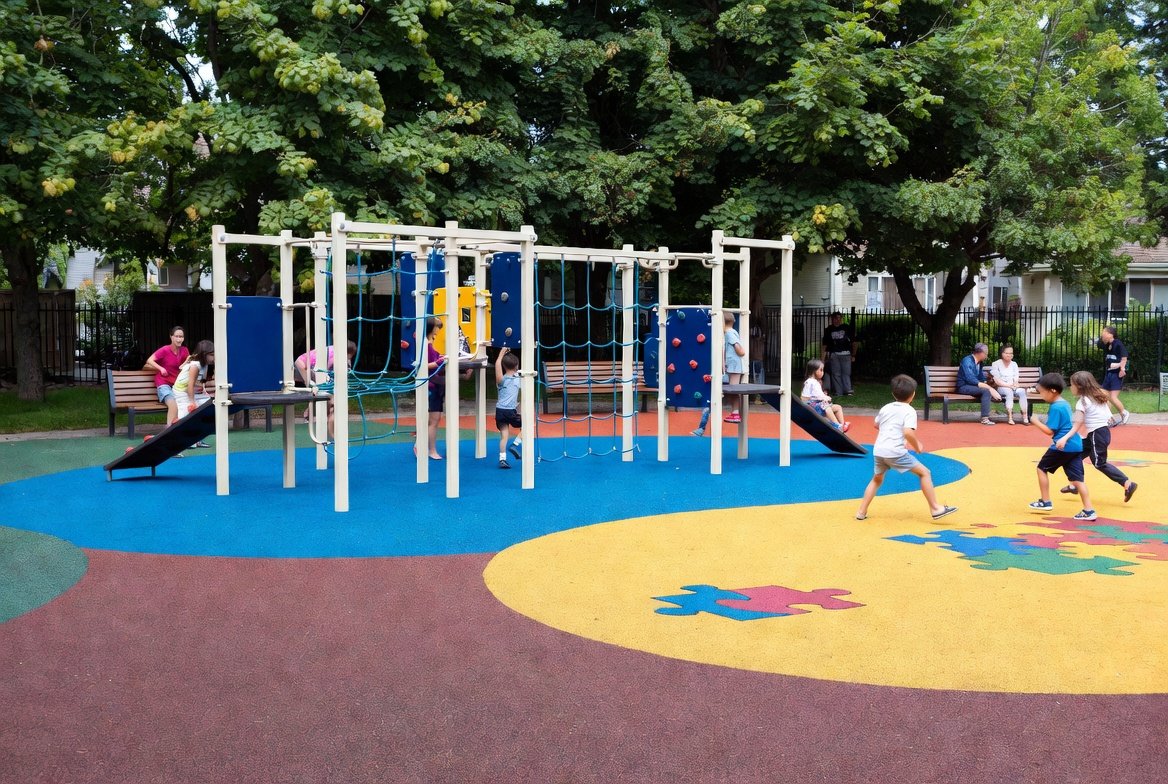
Every fall from play equipment generates a sudden force. Properly engineered EPDM rubber surfaces convert that kinetic energy into controlled deformation, reducing the peak acceleration transferred to a child’s body. When the surface loses elasticity or hardens over time, the critical fall height rating drops and the risk of serious injury rises.
Shock absorption performance is not permanent. UV degradation, binder breakdown and progressive granule loss all reduce the system’s ability to attenuate impact. Choosing the right EPDM from the start is the most reliable way to keep protection levels stable throughout the surface’s service life.
Understanding Critical Fall Height
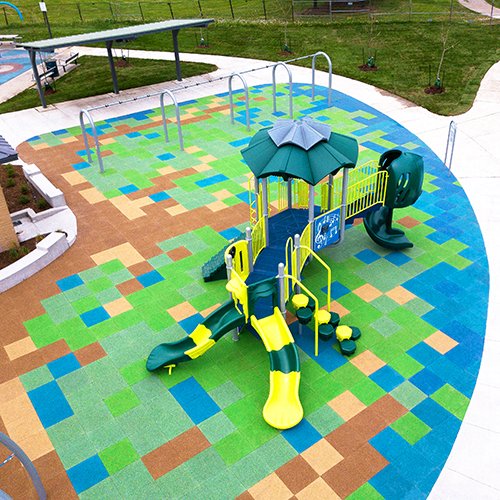
Critical Fall Height (CFH) is the maximum height from which a head-first fall onto the surface is unlikely to cause a life-threatening head injury. It is measured according to EN 1177 or ASTM F1292 using instrumented headform tests that record Head Injury Criterion (HIC) and g-max values.
| Fall Height Zone | Typical Equipment | Recommended System Thickness | Key Performance Target |
|---|---|---|---|
| 0.6 – 1.0 m | Low platforms, spring riders | 40–50 mm | HIC < 1000, g-max < 200 |
| 1.0 – 1.5 m | Slides, climbing frames | 60–80 mm | Consistent attenuation after ageing |
| 1.5 – 2.5 m | Multi-play towers, high climbers | 90–120 mm+ | Maintained CFH after UV & wear exposure |
How EPDM Properties Directly Affect Shock Absorption
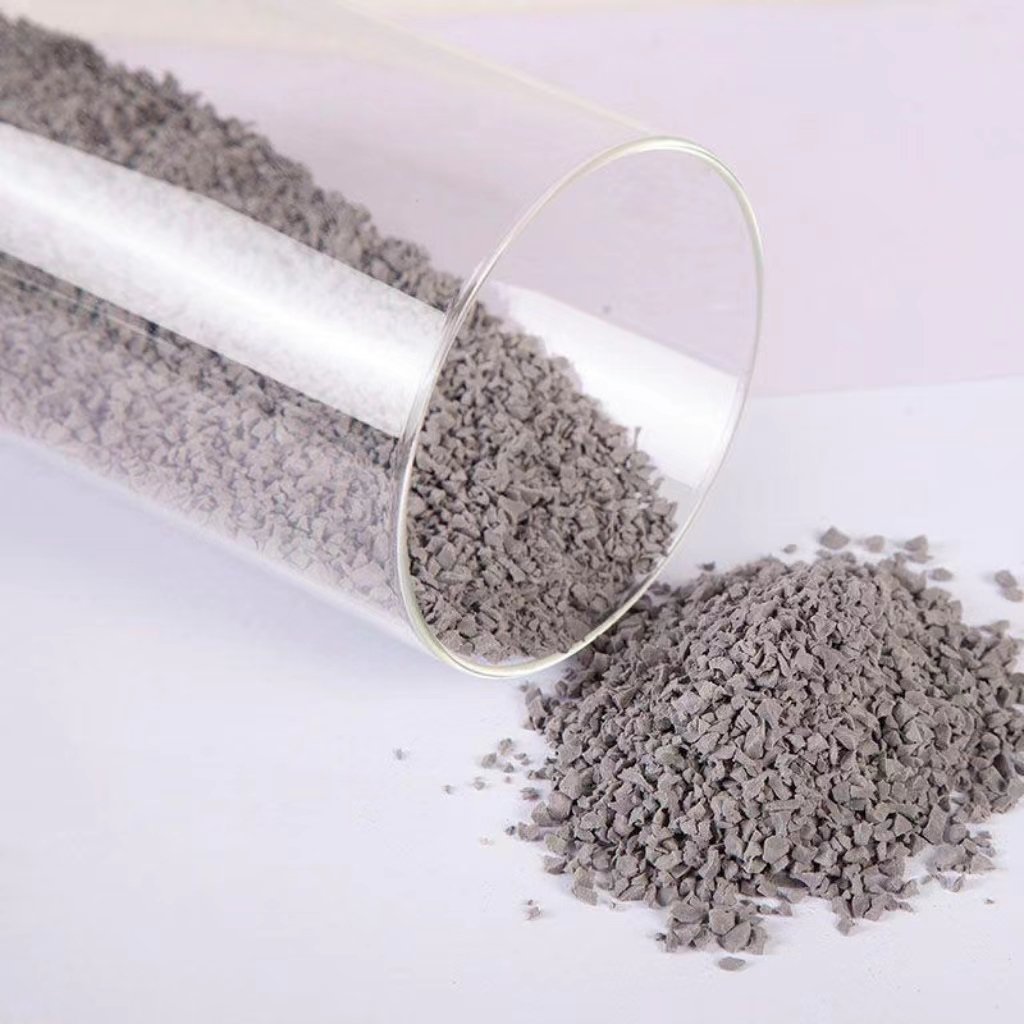
1. Polymer Quality and Elastic Recovery
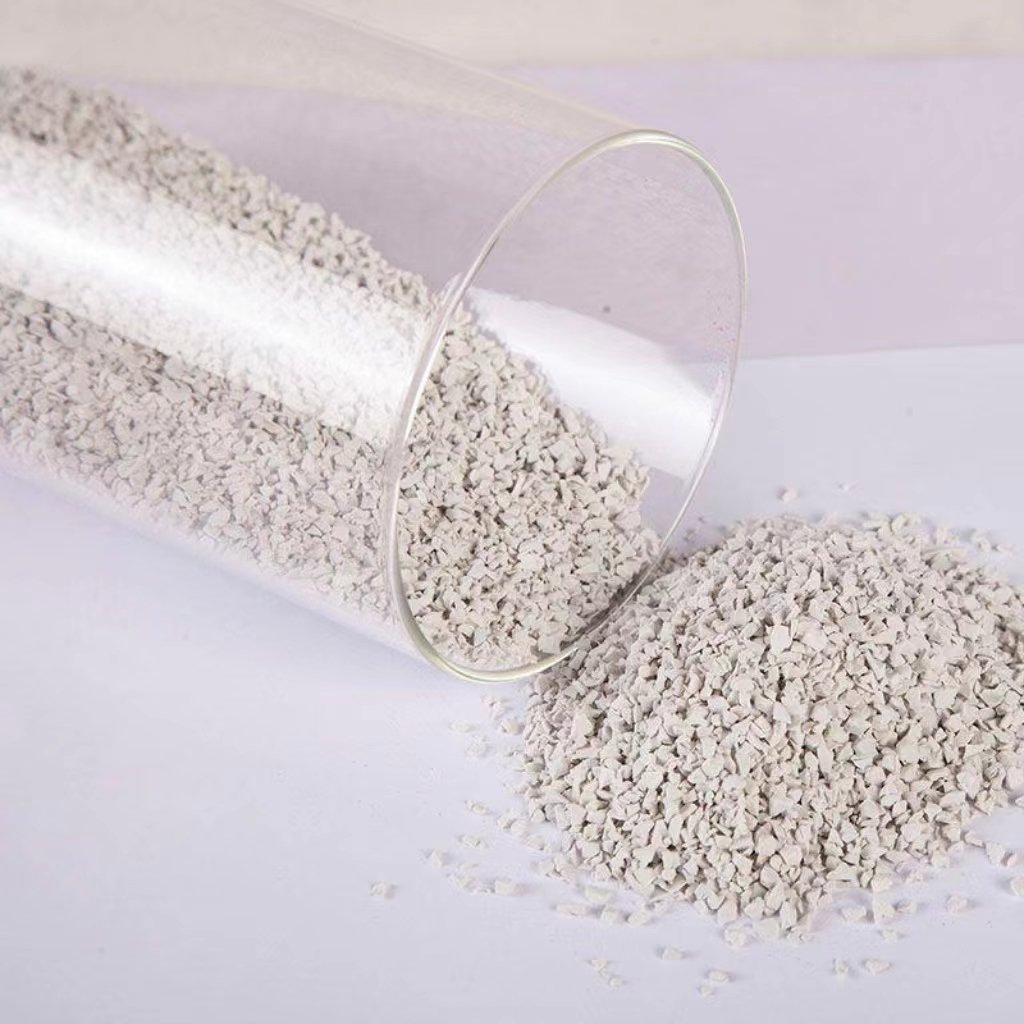
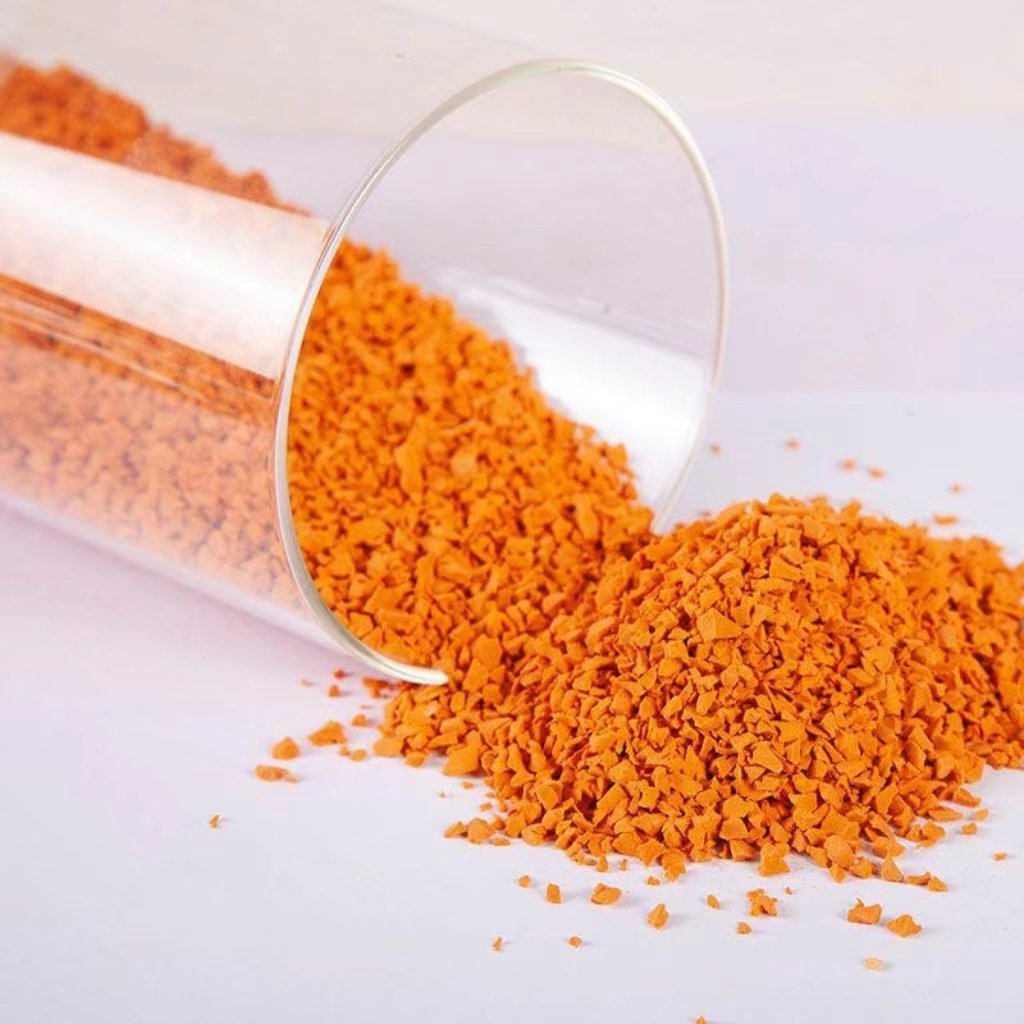
Virgin EPDM with higher polymer content retains its ability to compress and rebound after thousands of impact cycles. Lower-grade or heavily filled materials harden faster, raising peak deceleration values and reducing the effective Critical Fall Height over time.
2. Particle Size Distribution
A controlled 1–4 mm fraction creates an open yet stable structure that dissipates energy efficiently. Excess fines increase density and can make the surface too firm; oversized particles create uneven compression zones and premature wear paths under high-traffic play areas.
3. Binder System and Thickness
Aliphatic or MDI-based polyurethane binders maintain flexibility and UV resistance. The total system thickness must be matched to the highest fall height present on the equipment. Under-thickness is one of the most common reasons playground surfaces fail safety audits within a few years.
Inclusive Design and School Courtyard Applications
Modern school courtyards serve multiple functions: active play, quiet seating, inclusive equipment for children with different mobility needs, and informal sports. A single high-quality EPDM system can support all these uses when correctly specified.
- Accessible routes: Firm yet resilient surfaces that allow wheelchair and walker movement without excessive rolling resistance.
- Colour zoning: High-contrast colour combinations improve wayfinding and visual interest while maintaining consistent impact performance across zones.
- Multi-age areas: Different thickness zones can be installed under high and low equipment without changing the overall visual language.
- Low-maintenance edges: Proper containment and drainage details prevent water ponding and edge degradation that compromise safety.
Specification Checklist for Safe Playground Surfaces
Before approving any playground or school courtyard project, confirm the following:
- Declared Critical Fall Height matching or exceeding the highest equipment fall height
- Virgin EPDM polymer content ≥ 20 % with supporting composition data
- Particle size distribution curve (not just a nominal range)
- Third-party impact attenuation test reports (new and preferably aged samples)
- PAH, heavy-metal and EN 71-3 toy safety compliance certificates
- Recommended system thickness and binder ratio for the specific climate
- Colour retention data under accelerated UV exposure
Safety Performance Is Designed In, Not Added Later
Impact attenuation on playgrounds and school courtyards is determined primarily by the quality of the EPDM granules, the accuracy of the installed thickness, and the long-term stability of the binder system. Choosing high-polymer virgin EPDM with controlled particle size and UV-stable pigments gives the surface the best chance of maintaining its Critical Fall Height rating throughout its intended service life.
Facility managers and school administrators who treat safety surfacing as a performance specification rather than a commodity purchase consistently achieve better protection outcomes and lower lifecycle costs.
For technical data sheets, Critical Fall Height test reports or project-specific recommendations, visit jflysports.com/contact-us.
Protect Every Fall from Day One
Our virgin coloured EPDM granules are engineered for consistent shock absorption, long-term elasticity and excellent colour retention — ideal for school courtyards, inclusive playgrounds and multi-use outdoor learning spaces.