

Playground Surfacing Guide · Updated 2025
Best EPDM Granules for Playground Surfacing
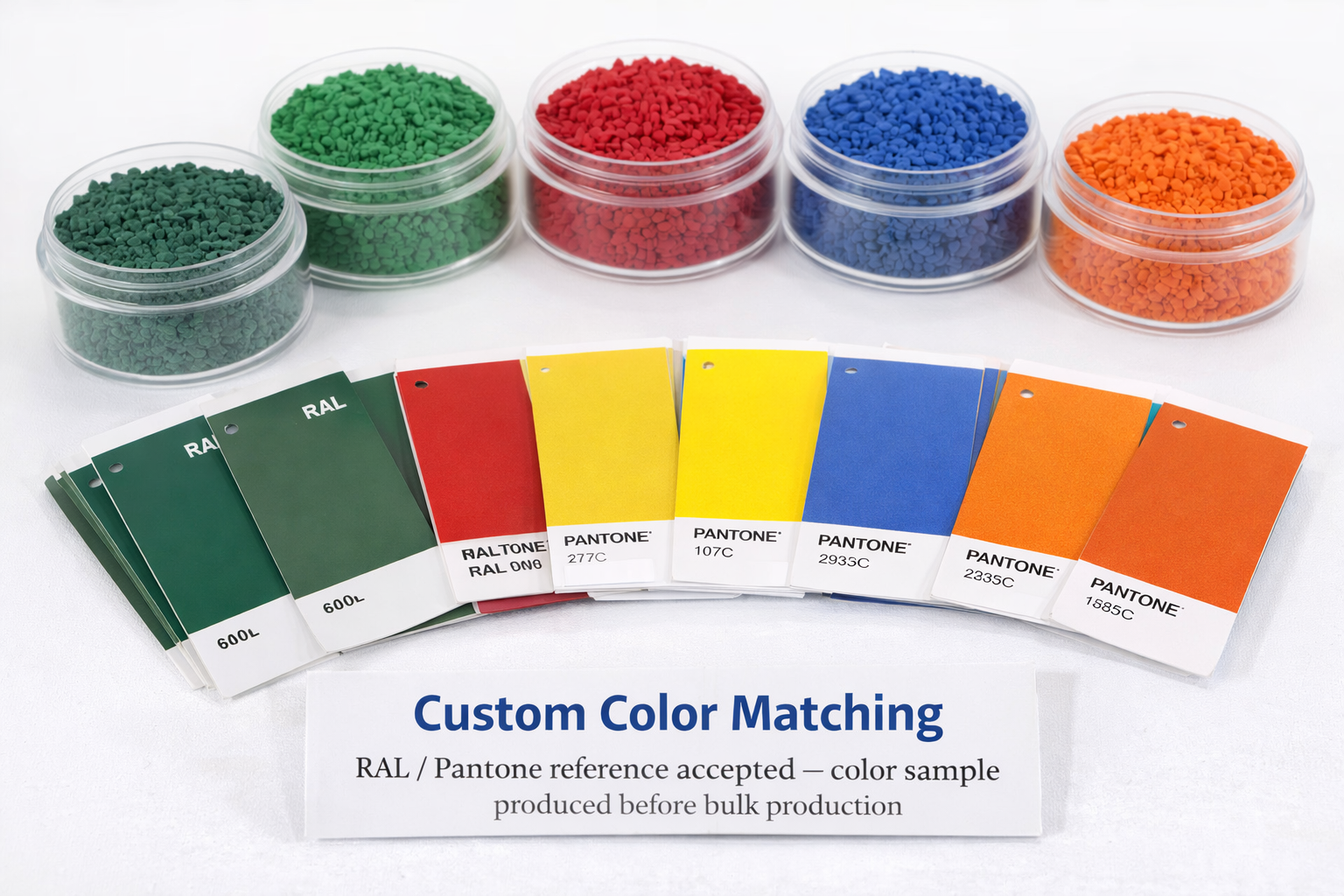
For playground surfacing, EPDM (Ethylene Propylene Diene Monomer) rubber granules are the top-recommended material by safety engineers worldwide. They combine EN 1177-certified impact absorption, UV-stable color, and a non-toxic composition — making them the preferred choice for schools, kindergartens, and public parks.
Quick Answer: Which EPDM Granules Are Best for Playgrounds?
The best EPDM granules for playground surfacing are 1–3 mm virgin EPDM granules installed at 10–15 mm thickness with a 22% PU binder ratio. This specification delivers EN 1177 impact absorption compliance, reliable grip, and color stability for 8–12 years of outdoor use. For high-fall-risk zones (below climbing frames or slides), increase thickness to 40–50 mm using an SBR cushion base layer topped with a 13 mm EPDM wear layer.
Why EPDM Granules Are the Best Material for Playground Surfacing
EPDM rubber granules outperform alternatives like SBR, pea gravel, and engineered wood fiber across every key safety and durability metric. Here is a side-by-side comparison across the most important criteria:
| Criteria | EPDM Granules | SBR Granules | Rubber Tiles | Pea Gravel |
|---|---|---|---|---|
| Impact Absorption (EN 1177) | ✦ Pass | Pass (base only) | Pass | Fail |
| UV / Color Stability | ✦ Excellent | Fades quickly | Good | N/A |
| Non-toxic / REACH Compliant | ✦ Yes | Varies | Yes | Yes |
| Custom Colors & Patterns | ✦ 20+ colors | Black only | Limited | N/A |
| Slip Resistance (Wet) | ✦ Excellent | Good | Good | Poor |
| Lifespan (Outdoor) | ✦ 8–12 years | 5–8 years | 7–10 years | 1–2 years |
| Poured-in-place Seamless | ✦ Yes | Yes | No (joints) | N/A |
| Typical Cost (USD/m²) | $18–$35 | ✦ $8–$15 | $20–$40 | ✦ $5–$10 |
Best EPDM Granule Applications by Playground Type
Different playground environments require different EPDM specifications. Below are the recommended configurations for the most common scenarios.
High foot traffic, safety-first, vibrant color stimulation for children aged 2–12.
✦ 1–3 mm EPDM
13 mm thick
EN 1177
SBR top layer
Multi-age use, weather resistance priority, decorative design capability.
✦ 2–4 mm EPDM
10–13 mm thick
Multi-color design
Below climbing frames, slides & monkey bars. Critical fall height compliance required.
✦ SBR base 35 mm
EPDM top 13 mm
Total 48 mm
Daycare centers, soft play zones, indoor gym circuits for children.
✦ 1–3 mm EPDM
10 mm thick
Low-VOC binder
UV exposure maximized, drainage critical, lightweight system preferred.
✦ 1–3 mm EPDM
Open-drain formula
Aliphatic PU binder
Constant water exposure, anti-slip priority, easy-clean surface essential.
✦ 2–4 mm EPDM
Open-pore texture
Closed-cell mix
EPDM Granule Specifications: What the Numbers Mean
When sourcing EPDM granules for a playground project, these are the five technical specifications that determine real-world performance. Each value below represents the industry-standard benchmark for certified playground surfacing.
Use 1–3 mm for fine decorative surfaces and kindergartens where barefoot contact is likely. Choose 2–4 mm for high-traffic outdoor areas, athletic zones, or wherever anti-slip texture is a priority. Avoid granules below 0.5 mm — they compact over time and reduce drainage.
EN 1177 requires a minimum critical fall height (CFH) match. A 40 mm total depth (SBR base + EPDM top) covers equipment up to 1.5 m fall height. For equipment above 2.0 m, a 50 mm layered system is recommended. Always confirm CFH with the equipment manufacturer.
A 22% polyurethane (PU) binder ratio is the industry standard for playground EPDM wet-pour. Too little binder causes surface crumbling within 2–3 years. Too much binder creates a hard, brittle surface that loses shock absorption. Always use binder compatible with EPDM — not SBR-grade binders.
Virgin EPDM polymer granules (100% EPDM content) deliver the best UV resistance and color stability. Granules with ≥20% EPDM content plus calcium filler are acceptable for budget projects. Avoid suppliers who cannot confirm EPDM content — low-rubber-content granules fade and harden within 3–5 years.
For any school or public playground, require EN 1177 (impact attenuation), REACH compliance (no harmful chemicals), and CE marking. SGS or TÜV third-party test reports should be provided by the supplier. In North America, look for ASTM F1292 and IPEMA certification as additional benchmarks.
Frequently Asked Questions About Playground EPDM Granules
What is the best EPDM granule size for playground surfacing?
The best size is 1–3 mm for most playgrounds. This produces a smooth, fine-textured surface suitable for barefoot contact, colorful designs, and school safety zones. For outdoor parks or higher-traffic areas, 2–4 mm granules provide better grip and durability. Avoid anything coarser than 4 mm for playground applications, as larger granules reduce surface comfort and binder coverage.
How thick should EPDM playground surfacing be?
Standard playground zones require 10–15 mm of EPDM. High-fall zones under climbing equipment should use a two-layer system: 35 mm SBR cushion base plus 13 mm EPDM top layer (total ~48 mm). The exact thickness depends on the critical fall height (CFH) of the play equipment, as specified in EN 1177.
Is EPDM safer than SBR for children’s playgrounds?
Yes. EPDM is the safer choice for children. SBR (recycled rubber) granules may contain PAH (polycyclic aromatic hydrocarbons) from tire-derived rubber, which some health agencies have flagged as a concern for areas where children play directly on the surface. EPDM is a synthetic virgin rubber that is non-toxic, REACH compliant, and free from those compounds. For the top wear layer on a children’s playground, always specify virgin EPDM — SBR is acceptable only for the sub-base cushion layer beneath.
How long do EPDM granules last on a playground?
A properly installed EPDM playground surface lasts 8–12 years with minimal maintenance. Lifespan depends on UV exposure, foot traffic, and installation quality. Surfaces in tropical climates with intense sun may show color fading after 6–8 years but retain structural integrity. Annual inspections and minor repair patching can extend service life to 15+ years.
Can EPDM granules be used indoors?
Yes. EPDM granules work well for indoor soft-play areas, daycare centers, and indoor gym circuits. For indoor use, specify a low-VOC aliphatic PU binder to minimize off-gassing in enclosed spaces. The standard 1–3 mm granule size applies indoors, typically at 10 mm thickness on a concrete or sports flooring base.
What certifications should I require from an EPDM granule supplier?
For playground applications, require: EN 1177 impact attenuation test report, REACH compliance declaration, CE marking, and SGS or TÜV third-party lab certificates. For North American projects, add ASTM F1292 and IPEMA certification. Always ask for batch-specific test reports — not general brochure claims.
We supply EN 1177-certified EPDM granules in 20+ colors, with SGS and REACH documentation. Available for international orders with MOQ from 500 kg.
✓ CertifiedAll granules supplied with EN 1177, REACH, CE, and SGS third-party test documentation. Export to 40+ countries. Response within 24 hours.