

How to Source EPDM Granules from China: A Practical Import Guide for Distributors
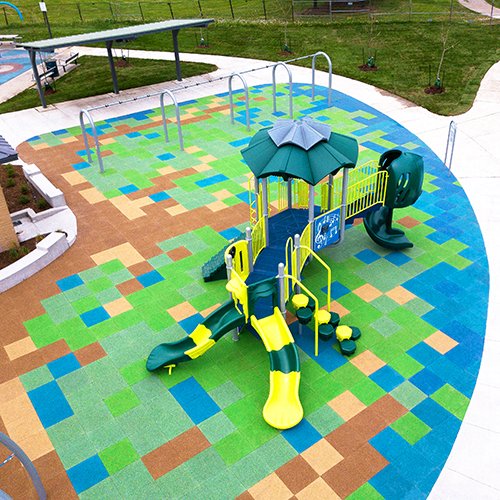
TL;DR — Sourcing Checklist at a Glance
- China supplies over 60% of the global EPDM granule market, with major production hubs in Shandong, Guangdong, and Jiangsu.
- Current FOB price range (2025): USD 900–1,600/ton for virgin EPDM colored granules; USD 350–600/ton for recycled-rubber grades.
- Minimum order quantities typically start at 1 ton for stock colors, 3–5 tons for custom colors.
- Always request an SGS or Intertek test report covering REACH SVHC, PAH content, and Shore A hardness before placing a bulk order.
- Standard sea freight lead time from China: 22–35 days to Europe or the US depending on port of origin.
Sourcing EPDM granules from China offers significant cost advantages — often 30–50% below equivalent European production costs — but the process involves more moving parts than a standard commodity purchase. This guide walks you through every stage, from identifying the right supplier type to resolving post-shipment quality disputes.
China’s EPDM Granule Market: Key Production Hubs
China’s rubber granule industry is concentrated in three provinces, each with a distinct production profile:
| Province | Specialty | Typical Output | Best For |
|---|---|---|---|
| Shandong | Virgin EPDM colored granules | High volume, export-focused | Playground surfaces, sports tracks |
| Guangdong | Custom colors & mixed grades | Mid-volume, flexible MOQ | Distributors needing variety |
| Jiangsu | Recycled rubber & SBR/EPDM blends | Very high volume, low cost | Budget-grade infill, base layers |
Factory-Direct vs. Trading Company: Which Is Right for You?
Most overseas buyers encounter two supplier types on platforms like Alibaba or Made-in-China: factories (manufacturers) and trading companies. Each has genuine advantages depending on your order profile.
| Criteria | Factory-Direct | Trading Company |
|---|---|---|
| Unit price | Lower by 8–15% | Slightly higher (margin added) |
| MOQ flexibility | Usually fixed (5+ tons) | Often lower (1–2 tons) |
| Product range | Own SKUs only | Multi-factory, broader range |
| Custom specs | Fully controllable | Depends on partner factory |
| Communication | Can be slower (less English) | Typically fluent, responsive |
| Audit feasibility | Direct factory visit possible | May not disclose factory location |
| Best for | Regular large-volume buyers | First-time importers, small batches |
For your first order, a reputable trading company often reduces risk — they handle QC coordination and have experience with your target market’s documentation requirements. Once volume grows, transition to factory-direct.
How to Verify Supplier Credentials
Price alone should never drive supplier selection. A supplier quoting 20% below market average is usually cutting corners on raw material quality, pigment stability, or testing. Use the following verification steps before committing any deposit.
Step 1 — Business & Export License Check
- Request the supplier’s Business License (营业执照) and verify the registered company name matches all contract and invoice documents.
- Confirm they hold a valid Export License (对外贸易经营者备案登记表) — required for any company legally exporting goods from China.
- Cross-check the company registration number on China’s National Enterprise Credit Information Publicity System (gsxt.samr.gov.cn). Free and accessible via translation tools.
Step 2 — Product Test Reports
A credible supplier will provide test reports from internationally recognised third-party laboratories. Be specific about what you need:
- REACH SVHC screening — mandatory for EU market entry.
- PAH (Polycyclic Aromatic Hydrocarbons) content — critical for playground and children’s applications; limit: <1 mg/kg per EN 71-3.
- Heavy metals panel (Lead, Cadmium, Chromium VI) — required for toy safety and CPSC compliance in the US.
- Shore A hardness (ASTM D2240) — confirms material meets specification; typically 40–65 Shore A for EPDM granule applications.
- Particle size distribution (sieve analysis) — verifies granule sizing matches the stated specification (e.g., 1–4 mm, 2–6 mm).
Some suppliers provide expired test reports (>12 months old) or reports from unknown domestic labs. Always request reports issued within the past 6 months from SGS, Intertek, Bureau Veritas, or TÜV. Reject any report where the tested product description does not exactly match your target SKU.
Step 3 — Factory Audit Options
- On-site visit: Most effective, but only practical for large orders (20+ tons) or ongoing partnerships. Budget 2–3 days in China including factory time.
- Third-party audit: Commission SGS, Bureau Veritas, or QIMA to conduct a factory assessment. Cost: USD 350–600 per audit day. Results in 3–5 business days. Strongly recommended for first-time suppliers.
- Video audit: Many factories now offer live-stream factory walkthroughs via WeChat or Zoom. Not a substitute for on-site inspection, but useful for initial screening.
Product Specification Negotiation Guide
Vague purchase orders lead to quality disputes. The more precisely you specify your requirements upfront, the fewer surprises at delivery. Use the table below as a starting framework for your product specification sheet.
| Parameter | Standard Spec | Premium Spec | Your Target |
|---|---|---|---|
| Particle size | 1–4 mm (±0.3 mm) | 1–4 mm (±0.2 mm) |
Sample Request Protocol
Never skip the sample stage, regardless of how convincing a supplier’s catalog looks. Follow this sequence:
- Request a free sample (50–100g) of your target color and particle size. Most suppliers provide this at no cost; you pay freight only.
- Evaluate the sample visually: color uniformity, surface texture, absence of agglomerates or dust.
- Send the sample to a local accredited lab for independent testing — especially PAH and Shore A hardness. Budget USD 150–400 for a basic panel.
- If the sample passes, request a pre-production sample (1–2 kg) from the actual batch material before full production begins.
- Define acceptable deviation thresholds in writing before approving production. Example: “Shore A 55 ±3; color: RAL 3020 ±1 Delta E.”
Pricing, Payment Terms & Incoterms
2025 Price Reference Guide
| Product Type | FOB Price Range (USD/ton) | Notes |
|---|---|---|
| Virgin EPDM — standard colors (black, grey, red, green, blue) | $900 – $1,200 | Most common; stable supply |
| Virgin EPDM — custom / RAL-matched colors | $1,100 – $1,600 | Add 10–20% for small batches |
| Recycled EPDM granules (mixed colors) | $350 – $550 | Variable quality; test each batch |
| Recycled EPDM — sorted black | $300 – $450 | Consistent; common for base layers |
| EPDM/SBR blend granules | $420 – $680 | Budget infill option |
Prices are FOB (Free on Board) Chinese port. Add USD 80–150/ton for CIF to European ports; USD 120–180/ton for CIF to US East Coast.
Price Break Points
- 1–4 tons: Spot rate, no volume discount.
- 5–9 tons: Typically 3–5% discount; may qualify for a dedicated production run.
- 10–19 tons: 5–8% discount; usually fills a 20-foot container (FCL).
- 20+ tons (40ft FCL): 8–15% discount; negotiate directly with factory owner.
Recommended Payment Terms
| Stage | Typical Term | Buyer Risk Level |
|---|---|---|
| Deposit on order confirmation | T/T 30% in advance | Medium — mitigate with Trade Assurance |
| Balance before shipment | T/T 70% against copy B/L | Low — goods confirmed loaded |
| Alternative (established suppliers) | L/C 30 days at sight | Very low — bank-backed |
| First-time supplier (small order) | Alibaba Trade Assurance 100% | Very low — platform-protected |
For most importers in Europe and North America, FOB Chinese port is the recommended Incoterm. It gives you control over freight and insurance selection, often saving 8–12% vs. supplier-arranged CIF. Use CIF only if you lack a reliable freight forwarder relationship.
Shipping, Customs & Compliance
HS Codes for EPDM Granules
Using the correct HS (Harmonized System) code is critical for accurate duty calculation and smooth customs clearance:
- 4002.70 — EPDM rubber in primary forms (virgin granules). Most common classification for virgin EPDM granules.
- 4004.00 — Waste, parings and scrap of rubber; powders and granules obtained therefrom. Applies to recycled rubber granules derived from tire shredding.
- Classification can vary by country — always confirm with your customs broker before the first shipment.
Import Duties by Key Market (2025)
| Market | HS 4002.70 Duty | HS 4004.00 Duty | Key Compliance Requirement |
|---|---|---|---|
| European Union | 2.7% | 0% | REACH SVHC declaration; CBAM (carbon) from 2026 |
| United Kingdom | 2.7% | 0% | UK REACH; CE marking not required for raw material |
| United States | 3.7% | 0% | CPSC compliance if end-use is children’s products |
| Australia | 0% | 0% | NICNAS / AICIS chemical notification may apply |
| Middle East (GCC) | 5% | 5% | SASO or GSO certificate of conformity (product-dependent) |
| Canada | 0% | 0% | CEPA compliance; SDS required at border |
Documentation Checklist for Customs Clearance
- Commercial Invoice — must state HS code, unit price, total value, Incoterm, and country of origin.
- Packing List — itemised by carton/bag count, net weight, gross weight.
- Bill of Lading (B/L) — original required for payment release under T/T terms.
- Certificate of Origin (CO) — Form A (GSP) or standard CO; reduces duty in many markets.
- MSDS / SDS — required at most ports of entry for rubber compounds.
- Third-party test report — increasingly required by EU and US customs for rubber granules entering children’s product supply chains.
Since 2023, EU customs has increased scrutiny of REACH compliance documentation for rubber granules entering the playground and sports surfacing supply chain. Ensure your REACH SVHC screening report is product-specific (not a generic company certificate) and dated within 12 months of shipment.
After-Sales & Quality Dispute Resolution
Even with rigorous pre-shipment checks, quality issues occasionally arise. Having a clear dispute protocol before you place the order is far more effective than improvising after the goods arrive.
Filing a Quality Claim: Step-by-Step
- Document within 48 hours of container opening. Photograph all affected bags/pallets, showing lot numbers, visible defects, and packaging condition.
- Conduct independent testing. Send samples from the affected batch to a local accredited lab — use the same test panel as your pre-shipment specification.
- Send a formal written claim to the supplier within 7 days of delivery, including photographic evidence, lab test results, affected quantity, and your claimed compensation.
- Reference your contract. Ensure your Proforma Invoice includes a clause specifying acceptable tolerance ranges and the claim filing window — standard is 30 days from B/L date.
- Escalate if unresolved. For Alibaba Trade Assurance orders, open a dispute through the platform within the coverage window. For direct T/T transactions, engage a trade dispute mediator.
Pre-Shipment Inspection: When Is It Worth It?
A pre-shipment inspection (PSI) by a third-party inspector costs USD 200–350 and typically takes half a day at the factory. It is strongly recommended when:
- Order value exceeds USD 5,000.
- A custom color has been ordered for the first time.
- The supplier is new and has not been factory-audited.
- Your end customer requires compliance certification with the delivery.
Building a Long-Term Supplier Relationship
Reliable long-term suppliers are among the most valuable assets in a distribution business. Once you have verified a supplier through 2–3 successful shipments, consider:
- Annual performance reviews: document on-time delivery rate, rejection rate, and responsiveness.
- Volume commitments: offer a quarterly or annual volume forecast in exchange for priority production slots and locked pricing.
- Visiting the factory in person once a year — it reinforces the relationship and gives you early visibility into production capacity changes.