


Buying EPDM granules in bulk is a high-stakes decision. A 20-ton order that fails to meet specifications doesn’t just waste capital—it risks the structural integrity of the entire sports surface, leading to delamination, premature hardening, and potential legal liability. This technical guide provides a professional framework for verifying granule quality through lab data, factory audits, and on-site testing before you sign the final Proforma Invoice.
Optimal EPDM
Polymer Content
Industry Standard
Hardness Range
Max Allowable
Dust/Fine Content
In the global supply chain, EPDM (Ethylene Propylene Diene Monomer) granules are often treated as a commodity, but their performance is dictated by complex chemistry. When a supplier offers a price significantly below the market average, they aren’t “more efficient”—they are likely altering the chemical formulation. To ensure you receive what you pay for, you must look beyond the color and evaluate the molecular and physical properties of the batch.
1. The Chemistry of Quality: Polymer vs. Filler
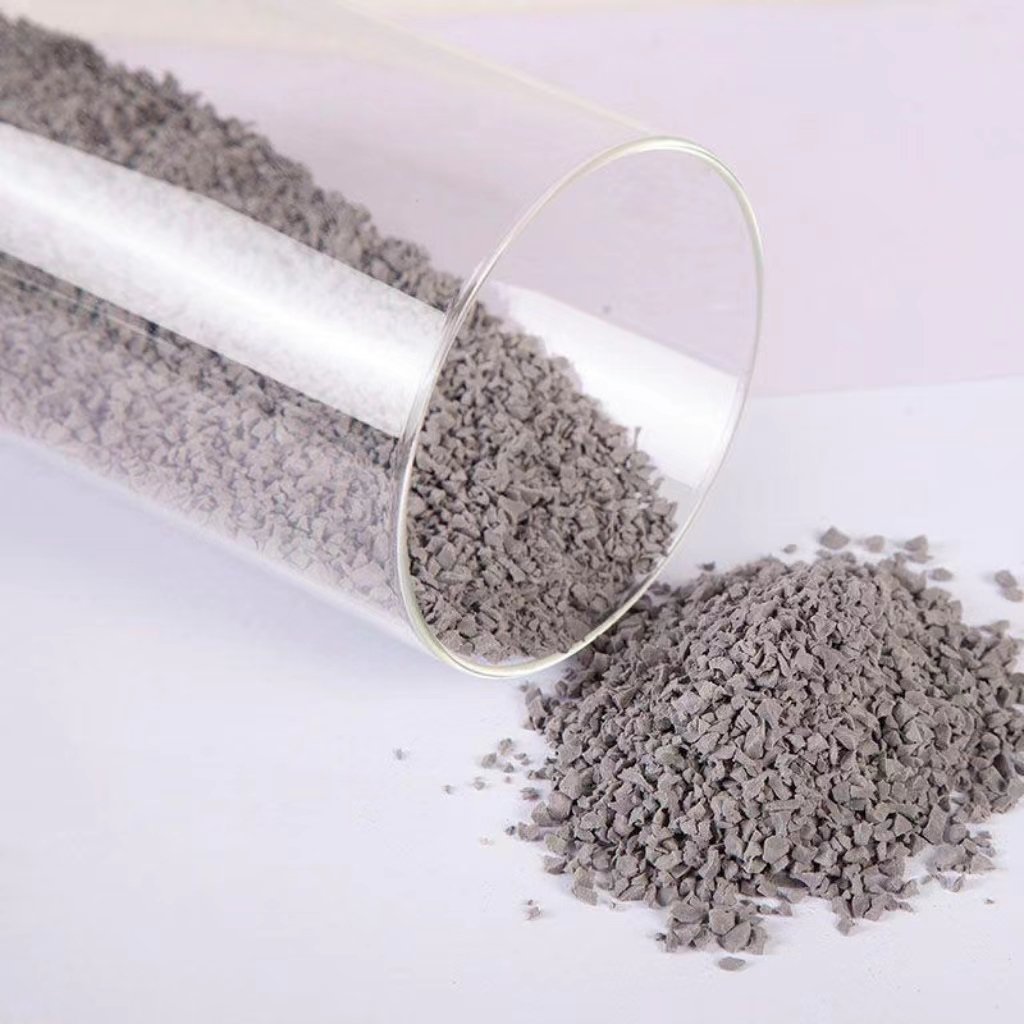
The most common way manufacturers reduce costs is by lowering the EPDM polymer content and increasing the ratio of calcium carbonate (filler) and paraffin oil. While the granules look identical to the naked eye, the long-term consequences are severe.
For high-traffic areas like athletic tracks and professional playgrounds, a polymer content of 22% to 25% is the “Sweet Spot.” This ensures the granules remain flexible for 8-10 years. “Economy” grades often drop to 15-18%, which leads to the surface becoming brittle and “chalky” within 24 months of UV exposure.
Critical Benchmark
Bright colors like Orange, Yellow, and Teal are notorious for fading. High-quality granules use inorganic pigments (e.g., Iron Oxide) which are chemically stable. Avoid suppliers using lead-based pigments or cheap organic dyes that “bleed” when they come into contact with PU binder during installation.
UV Stability Risk
2. Physical Sieve Analysis: Why Size Distribution Matters
Granule size consistency is not just about aesthetics; it directly impacts your **PU Binder consumption**. If a batch of 1-4mm granules contains 10% “fines” (dust and particles under 0.5mm), those fines will soak up an extra 15-20% of your expensive binder without adding any volume to the surface depth.
| Sieve Size | Standard Requirement | Impact if Failed |
|---|---|---|
| > 4.0mm | Max 5% | Rough surface, trip hazards |
| 1.0mm – 4.0mm | Min 90% | Optimal compaction and drainage |
| < 0.5mm (Dust) | Max 0.5% | High binder consumption, delamination risk |
3. Three “In-Field” Tests You Can Do Without a Lab
While third-party lab reports (SGS/Labosport) are essential, you can perform these immediate checks when you receive a pre-shipment sample:
Place a handful of granules in a glass jar with 50ml of pure acetone. Shake for 2 minutes. If the liquid turns deeply colored, the pigment is not properly bound or the supplier is using cheap oils that will leach out over time.
Squeeze a single granule between your thumb and forefinger as hard as possible. A high-quality granule should bounce back to its original shape instantly. If it stays flattened or cracks, the filler-to-polymer ratio is too high.
EPDM should have a mild, rubbery smell. A strong, pungent chemical or “burnt plastic” odor usually indicates the use of low-grade reclaimed oils or recycled scrap material that has not been properly neutralized.
4. Regulatory Compliance and Global Certifications
In 2025-2026, compliance is no longer optional. Exporting to the EU, North America, or the Middle East requires rigorous documentation. Ensure your supplier can provide:
- REACH (EU): Limits on 200+ hazardous substances.
- EN 71-3: Safety of toys (crucial for playgrounds).
- PAHs Test: Ensuring low Polycyclic Aromatic Hydrocarbons.
- Labosport/Smitheers: Industry-specific sports testing.
- FIFA/World Athletics: Required for certified tracks.
- ISO 9001: Verifies the factory’s quality management.
5. The Factory Audit: Beyond the Sample
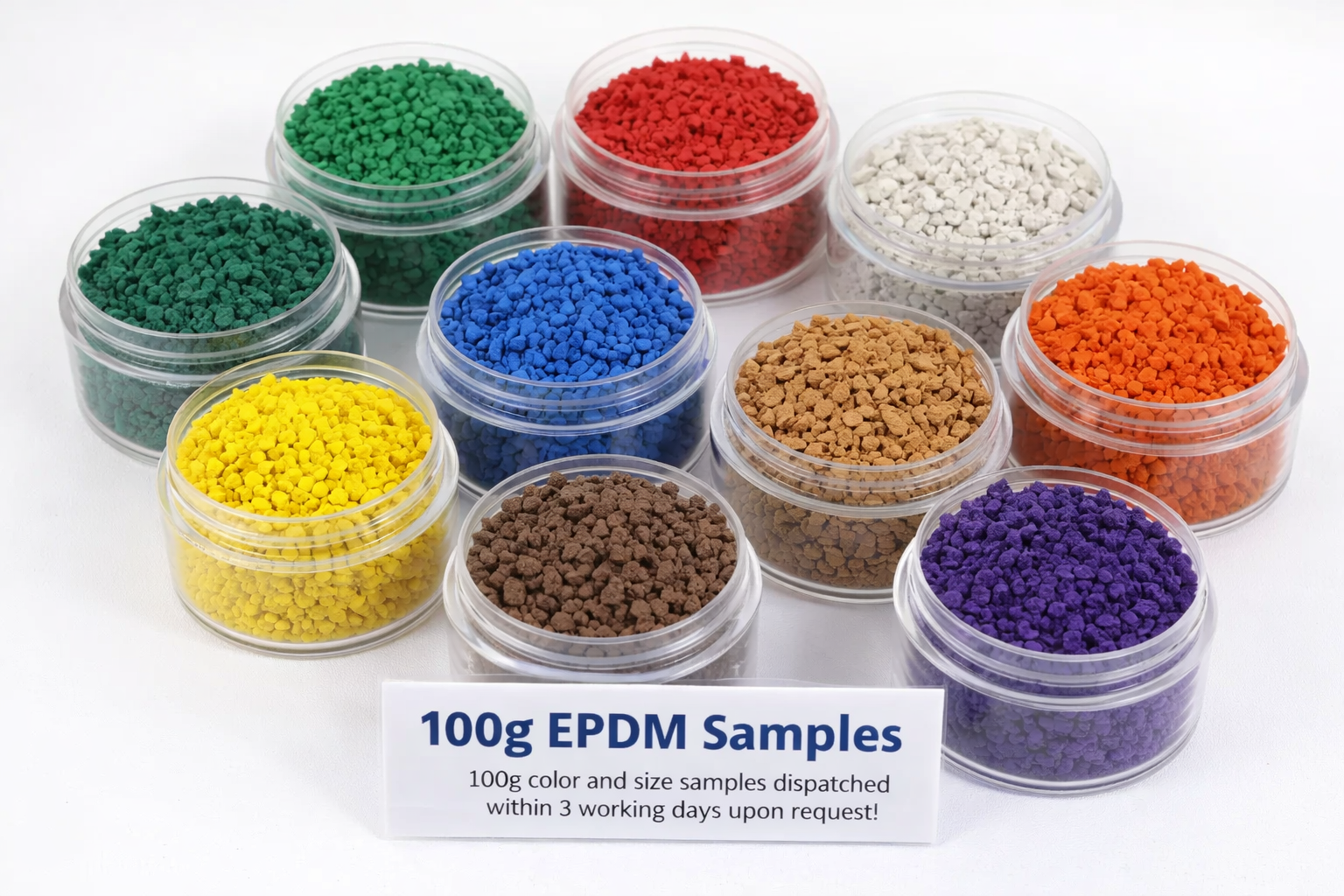
The “Golden Sample” phenomenon is real. A factory may send you a high-quality sample but ship an inferior bulk batch. To prevent this, your procurement process should include a video audit or a third-party inspection (like QIMA) focusing on:
- Raw Material Storage: Are the polymer bales stored indoors away from moisture?
- Mixing Precision: Does the factory use automated weighing systems or manual scooping? Consistency starts at the scale.
- Batch Coding: Each bag should have a batch number that links back to a specific production date and QC report.
Always request a Retained Sample from the actual bulk shipment (Lot Sample). This should be kept in your office for at least 12 months. If the installed surface fails, this sample is your primary evidence for a warranty claim against the manufacturer.
Frequently Asked Questions
Don’t leave your quality to chance. JFLYSPORTS provides full technical dossiers, SGS-verified samples, and transparent factory access for bulk buyers worldwide.