

School playgrounds and sports grounds place higher demands on surface materials than many commercial facilities. A running track or outdoor sports ground must balance safety, durability, weather resistance, and cost control, especially for projects supplied through international trade.
For this reason, EPDM granules have become a preferred surface material in modern school running tracks and playground sports systems. When combined with SBR rubber granules and polyurethane binders, EPDM-based systems allow suppliers and traders to offer flexible, layered solutions suitable for different budgets, climates, and usage intensities.
This article focuses on how EPDM granules are used in school playgrounds, athletics tracks, and multi-purpose sports grounds, and why they are widely adopted in export-oriented sports surface projects.
Why School Sports Grounds Require Layered Rubber Systems
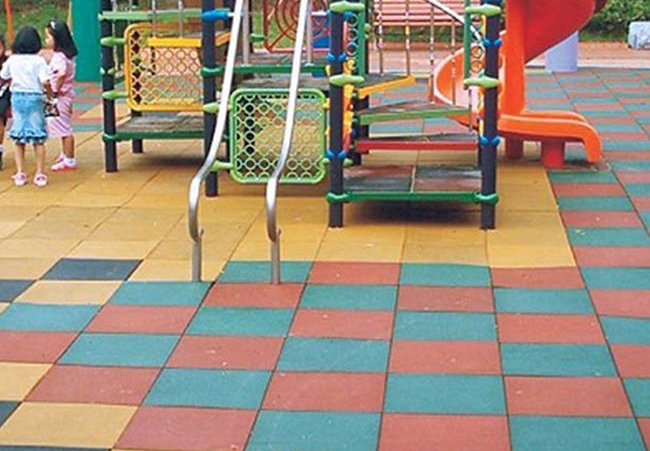
Unlike professional stadiums, school sports grounds must serve multiple age groups and activities. Running, jumping, ball games, and daily student traffic all place stress on the surface. As a result, single-material flooring systems often struggle to meet both safety and durability requirements.
Layered rubber systems solve this problem by assigning different functions to each layer:
-
Base layer: Shock absorption and structural support
-
Surface layer: Wear resistance, slip control, and weather protection
In most systems, SBR rubber granules are used in the base layer to provide cost-effective cushioning, while EPDM granules are applied to the top layer to ensure long-term outdoor performance. This structure has become standard in school playgrounds and athletics tracks supplied through global trade channels.
Structure of EPDM-Based Running Track Systems
SBR Base Layer for Impact Absorption
The bottom layer of a school running track or sports ground is typically formed using recycled SBR rubber granules mixed with polyurethane binder. This layer absorbs impact energy, reducing stress on joints and lowering injury risk for students.
From a trade perspective, SBR granules offer:
-
Stable supply availability
-
Competitive pricing
-
Reliable cushioning performance
Thickness is adjusted according to project requirements, usually ranging from 20 mm to over 100 mm for school sports grounds.
EPDM Surface Layer for Durability and Weather Resistance
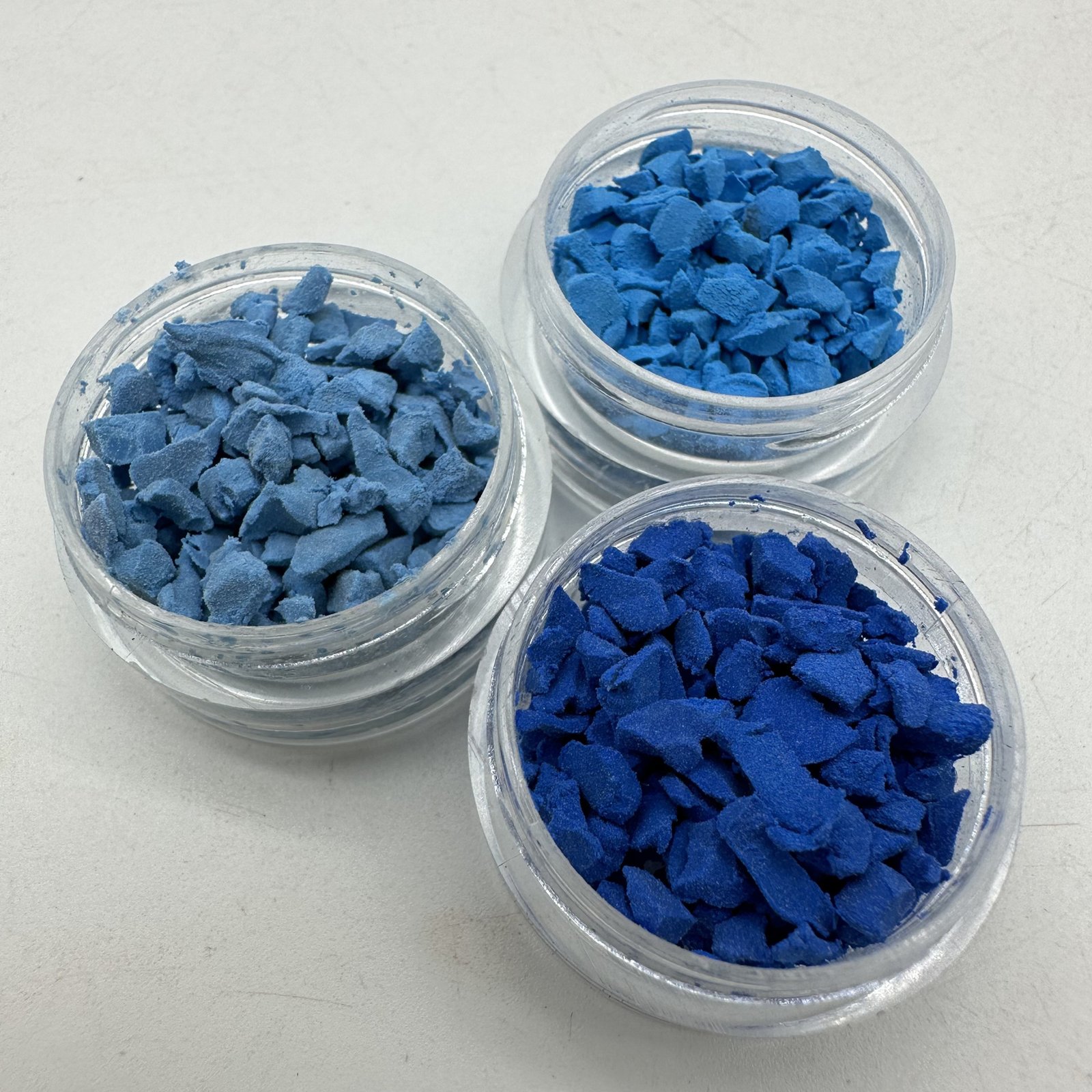
The top layer is where EPDM granules play a critical role. This surface layer is responsible for daily wear, foot traffic, UV exposure, and contact with water or dust.
EPDM granules are selected for this layer because they:
-
Maintain color stability under strong sunlight
-
Resist cracking and hardening in cold weather
-
Provide consistent slip resistance
-
Bond reliably with polyurethane binders
For school environments, this means the surface remains safe, visually clean, and functional across multiple seasons, reducing maintenance and replacement frequency.
Poured-in-Place (PIP) Systems for School Tracks and Grounds

One of the most common installation methods for EPDM running tracks is the Poured-in-Place (PIP) system. Although installed on-site, the material supply follows a modular logic that suits international trade well.
How PIP Systems Work
-
SBR granules and binder form the elastic base layer
-
EPDM granules are mixed with binder and applied as the surface layer
-
Thickness and color zones are customized per project
For traders, PIP systems are typically supplied as material packages, including:
-
EPDM granules (specified color and size)
-
SBR rubber granules
-
Polyurethane binder
This packaging model allows suppliers to support overseas projects without being involved in on-site construction.
EPDM Granule Size and Surface Performance
Granule size plays an important role in the surface texture and durability of school sports grounds.
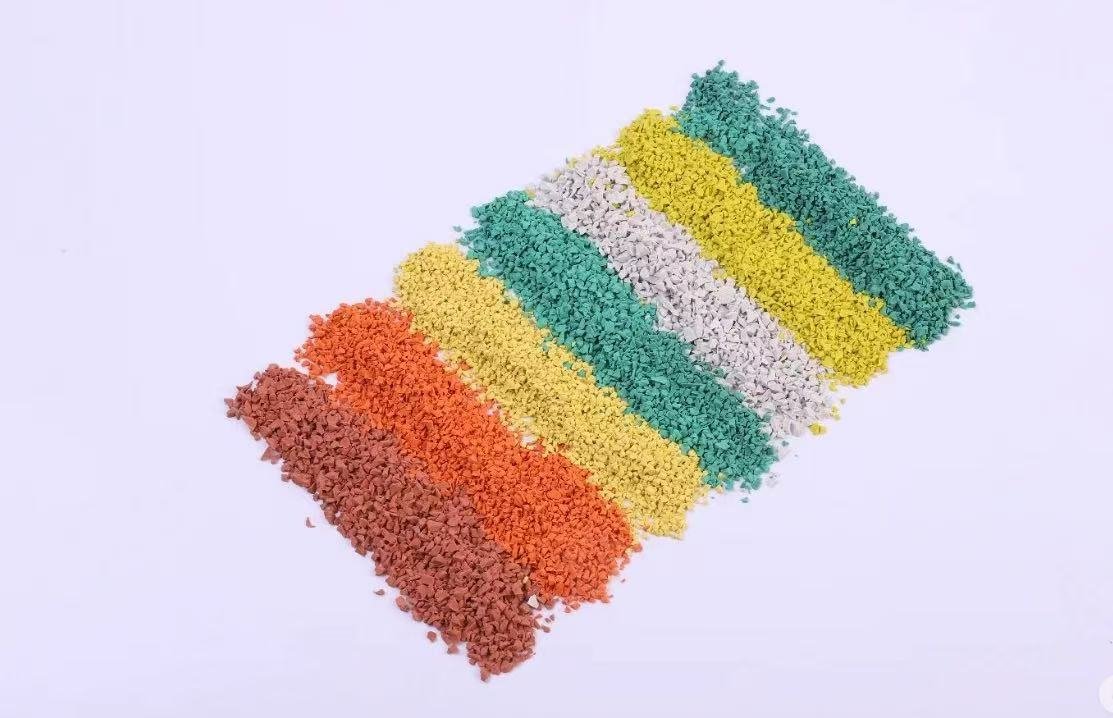
Common EPDM granule sizes include:
-
1–3 mm: Smoother surface, commonly used for running lanes
-
2–4 mm: Slightly textured surface, suitable for multi-purpose areas
Smaller granules provide a more uniform appearance and controlled friction, while larger granules enhance slip resistance and wear performance in high-traffic zones.
For traders, offering multiple granule size options allows better alignment with local standards and buyer preferences.
Climate Performance for Outdoor School Grounds
School playgrounds and tracks are exposed to changing weather throughout the year. EPDM granules are widely chosen because they perform reliably in both hot and cold climates.
High-Temperature Performance
In regions with strong sunlight, such as the Middle East or Southeast Asia, EPDM granules resist UV degradation and color fading, helping school tracks maintain a clean appearance over time.
Cold and Winter Conditions
In colder regions, EPDM surfaces retain elasticity at low temperatures, reducing surface cracking and maintaining slip resistance. This is especially important for schools where outdoor activities continue during cooler seasons.
From an export standpoint, this climate adaptability reduces the risk of material complaints and after-sales issues.
Design Flexibility for School Playgrounds
School sports grounds often combine running lanes, activity zones, and open play areas. EPDM granules support color zoning and pattern customization, making it easier to organize spaces visually.
Typical design requests include:
-
Standard running track lane colors
-
Contrasting safety zones
-
School branding or logo integration
Because EPDM granules are available in a wide range of colors, traders can support customized designs without changing the core material system.
Trade Advantages of Supplying EPDM Track Materials
For international traders and distributors, EPDM-based running track systems offer several commercial benefits:
-
Flexible material combinations for different budgets
-
Scalable supply from small school projects to large campuses
-
Compatibility with multiple installation methods
-
Strong demand across emerging and developed markets
Instead of selling isolated materials, suppliers can offer complete EPDM + SBR material solutions, increasing order value and improving buyer retention.
Typical Buyer Requirements for School Track Projects
Buyers sourcing EPDM granules for school sports grounds usually focus on:
-
Granule size and color options
-
EPDM-to-SBR ratio
-
Binder compatibility
-
Packaging and shipping format
-
Compliance with local safety standards
Being able to clearly communicate these parameters is essential for successful trade cooperation and repeat orders.
Supplying Reliable School Sports Ground Materials with EPDM Granules
As schools continue to upgrade outdoor facilities, demand for durable and safe sports surfaces remains strong. EPDM granules, combined with SBR rubber and polyurethane binders, provide a proven solution that balances performance, customization, and cost control.
For traders and material suppliers, EPDM-based running track systems represent an opportunity to move beyond commodity rubber products and deliver application-ready solutions tailored to school playgrounds and sports grounds worldwide.