

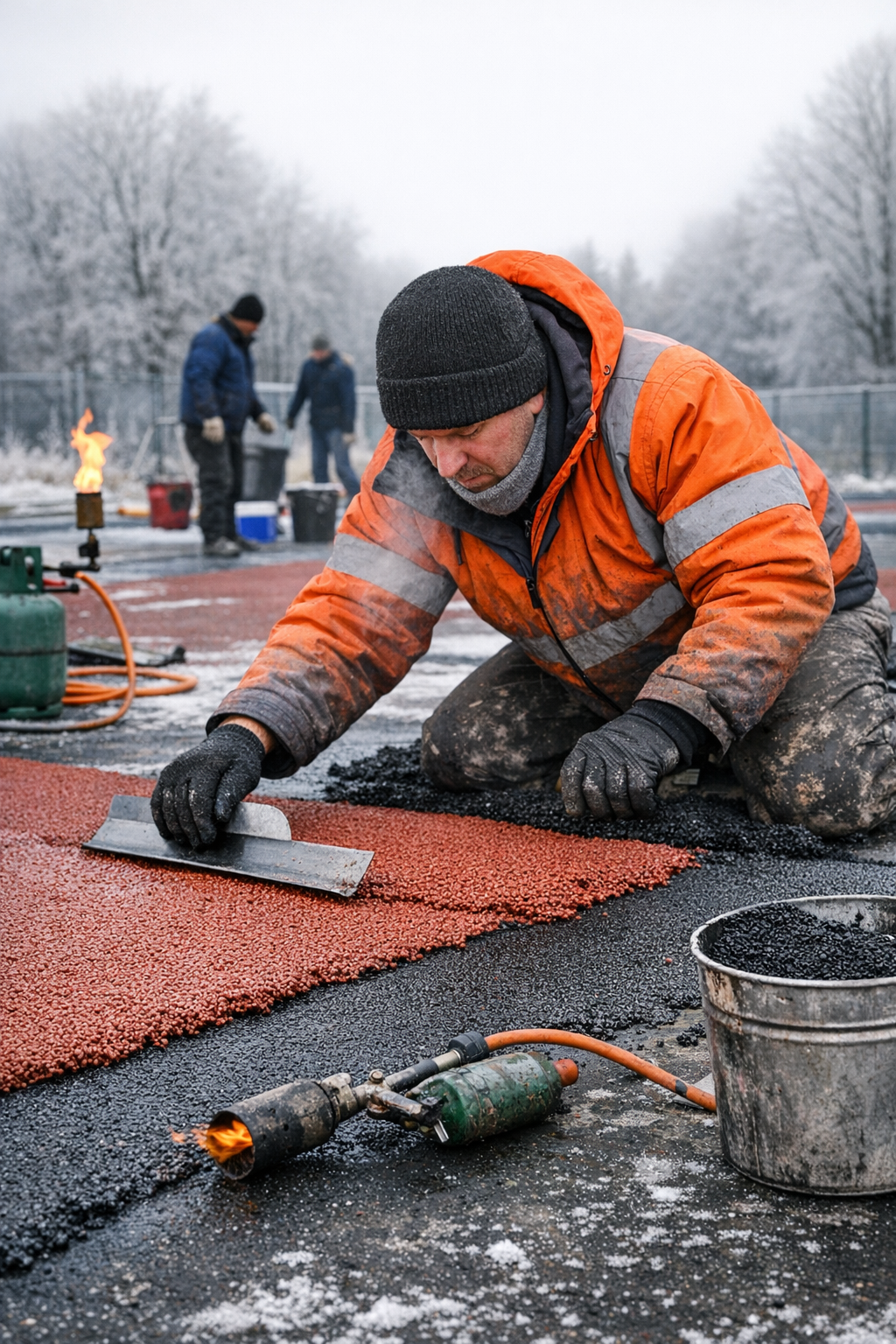
EPDM granules have become one of the most reliable rubber materials for outdoor flooring systems, especially in regions with cold winters and large temperature fluctuations. Thanks to their excellent low-temperature flexibility, durability, and environmental safety, EPDM granules are widely used in running tracks, playgrounds, school sports courts, rooftops, balconies, and poolside areas.
However, winter construction and application of EPDM granules present unique challenges. Adhesives behave differently at low temperatures, moisture control becomes critical, and improper techniques can easily affect surface flatness and bonding strength. This article provides a complete winter EPDM granules construction guide, real-world application cases, and practical purchasing advice, helping contractors, project owners, and distributors achieve stable performance and long-term value.
Why EPDM Granules Perform Better in Winter
Unlike conventional rubber materials that become brittle or crack in cold environments, EPDM granules maintain elasticity even at extremely low temperatures. High-quality EPDM rubber typically has a glass transition temperature (Tg) around -55°C, allowing it to stay flexible well below normal winter conditions.
Key winter performance advantages of EPDM granules include:
-
Maintained elasticity at -20°C to -40°C
-
Stable friction coefficient (≥0.6) even under light snow or frost
-
Excellent resistance to UV aging and oxidation
-
Strong bonding with polyurethane binders when correctly applied
-
Non-toxic, environmentally friendly, and compliant with new national safety standards
These properties make EPDM granules especially suitable for winter EPDM flooring construction and long-term outdoor use in cold climates.
Winter EPDM Granules Flooring Construction Guide
Common Challenges in Cold-Weather Construction
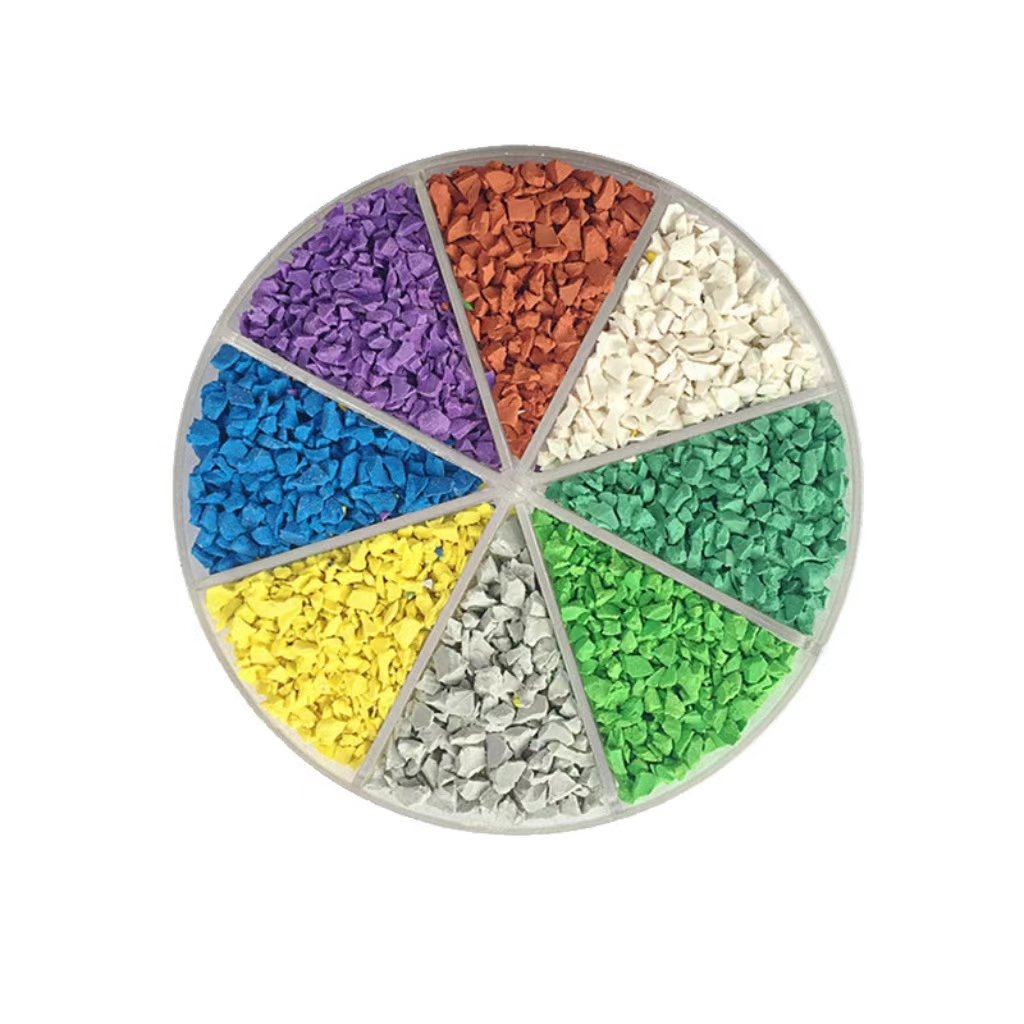
During winter, lower ambient temperatures significantly affect construction materials. Polyurethane adhesives may become thicker, mixing becomes harder, and moisture evaporation slows down. Without proper handling, issues such as uneven surfaces, weak adhesion, or early cracking may occur.
Best Practices for Winter EPDM Granules Installation
1. Choose the Right Construction Time
When temperatures are low, it is strongly recommended to carry out construction around midday, when sunlight naturally warms the surface. North-facing sites should be scheduled for the afternoon to avoid morning condensation.
2. Preheat and Adjust Adhesives
In cold conditions, binders tend to thicken. Slightly heating the adhesive or placing it under sunlight before mixing helps restore proper viscosity. Controlled dilution may be applied if recommended by the manufacturer.
3. Ensure a Completely Dry Substrate
Before applying EPDM granules, the base surface must be fully dried. Any trapped moisture can seriously affect bonding strength. Winter construction requires extra attention to humidity control.
4. Proper Mixing and Troweling Techniques
Low temperatures can cause the mixture to feel stiff. During application, use a trowel to pull and press the material repeatedly, ensuring even distribution and avoiding surface height differences.
5. Sample Testing Before Full Installation
Always conduct a small-area test under actual site conditions. This helps verify adhesive ratio, curing time, and surface finish before proceeding with full-scale construction.
Quality Control: A Common Industry Pain Point
Winter project quality control is one of the most discussed topics in EPDM flooring blogs and contractor forums. Following standardized winter construction procedures significantly reduces rework, complaints, and long-term maintenance costs.
Solving Common Problems When Laying EPDM Running Tracks in Winter
When installing EPDM running tracks during winter, contractors often face material stiffness and leveling difficulties. Practical solutions include:
-
Extending troweling time to achieve a smooth, even surface
-
Avoiding early morning installation on shaded sites
-
Using a clear construction timeline and tool checklist
-
Allowing sufficient curing time before opening the surface for use
A well-organized workflow improves efficiency and ensures consistent results, even under challenging weather conditions.
Application Case Studies of EPDM Granules in Winter
Case 1: EPDM Sports Field Maintenance in Northern Winters
In northern regions, EPDM granules sports surfaces are valued for their durability and ease of maintenance. High-quality EPDM systems show less than 10% color difference after five years of use, even with long-term exposure to snow, ice, and UV radiation.
After snowfall, surfaces can be quickly cleared and returned to service without damage. One school playground renovation project demonstrated a dramatic before-and-after improvement, with enhanced safety, slip resistance, and visual appeal.
Most importantly, the EPDM granules used were environmentally safe, odorless, and compliant with the latest national standards, making them suitable for educational and public facilities.
Case 2: EPDM Insulation Granules for Rooftops and Balconies in Winter
EPDM granules are not limited to sports flooring. In rooftop and balcony applications, they function as both thermal insulation and surface protection material.
In one winter rooftop project, EPDM granules helped reduce surface temperature fluctuations and provided thermal insulation during cold seasons. In summer, their UV-reflective properties reduced surface temperatures by up to 13°C, improving overall energy efficiency.
These systems are also widely used around swimming pools and rooftop leisure areas, offering barefoot comfort, slip resistance, and year-round usability.
EPDM Granules for Cities with Extreme Temperature Differences
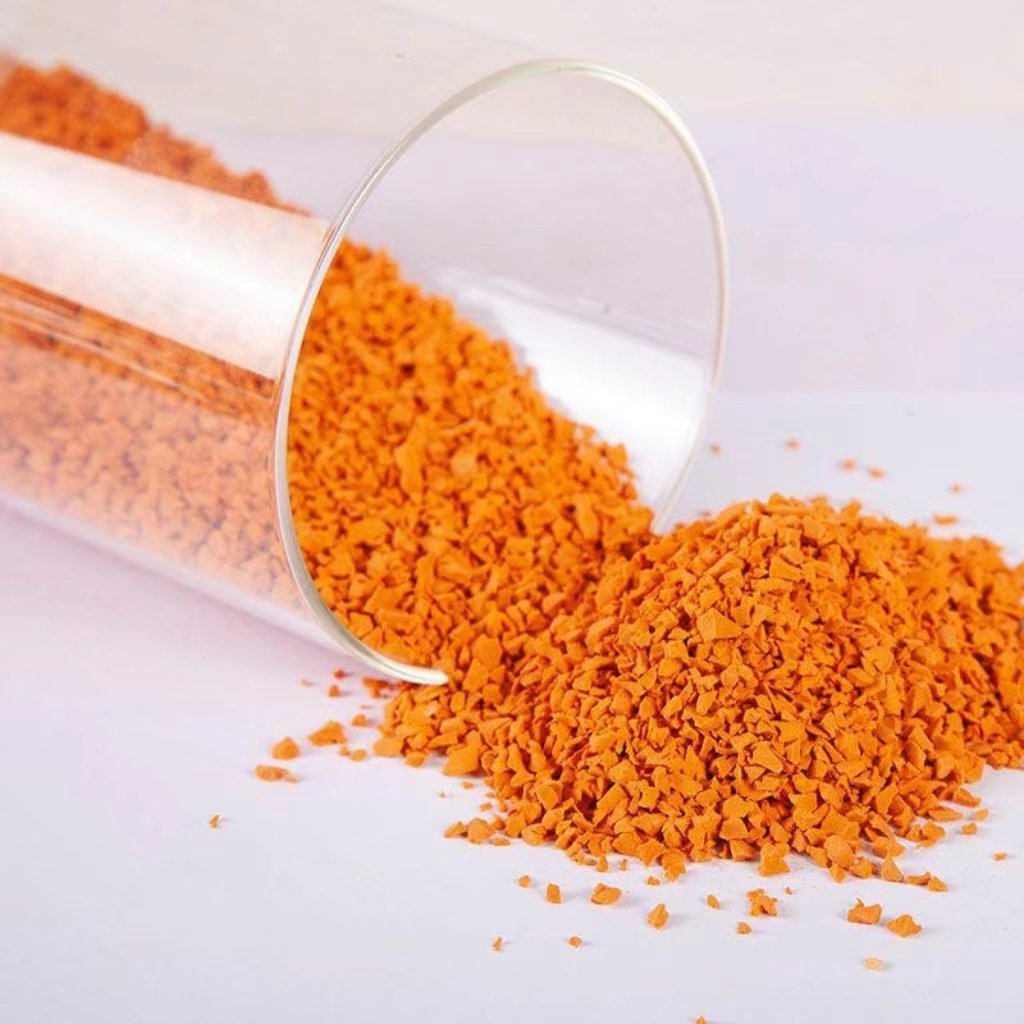
For cities experiencing both extremely hot summers and freezing winters, EPDM granules offer a rare balance of performance. Their resistance to thermal expansion, UV aging, and low-temperature brittleness makes them ideal for urban infrastructure, residential buildings, and public spaces.
This dual-season adaptability is a key reason why EPDM granules continue to replace traditional flooring materials in modern construction projects.
How to Choose EPDM Granules for Winter Use: 5 Key Standards
Selecting the right EPDM granules is critical for winter performance. Here are five essential criteria:
1. Low-Temperature Flexibility
Choose products designed for cold climates, ensuring they remain soft and elastic under freezing conditions.
2. Wear Resistance
High-quality EPDM granules typically reach a Mohs hardness of approximately 6.5, offering excellent abrasion resistance for high-traffic areas.
3. Fire Safety Performance
For public or enclosed areas, prioritize EPDM granules with V-0 flame-retardant rating to improve safety.
4. Color Stability and Variety
Multiple color options allow for customized designs, while superior UV resistance prevents fading and chalking over time.
5. Particle Size and Budget Considerations
Common specifications range from 1–4 mm. Smaller granules provide smoother surfaces but may cost more. Selecting the right size depends on application requirements and budget constraints.
Conclusion: Maximizing EPDM Granules Value in Winter Projects
Winter no longer needs to be a barrier to high-quality outdoor flooring construction. With proper planning, correct installation techniques, and well-chosen materials, EPDM granules deliver outstanding performance even in harsh cold environments.
From winter EPDM running track construction to rooftop insulation and public playgrounds, EPDM granules provide durability, safety, and environmental compliance. For contractors, designers, and project owners aiming to improve winter project success and long-term performance, EPDM granules remain one of the most reliable and cost-effective solutions available today.